Portuguese
  Spanish


Return Of The Sea Eagle To The Baltic Sea Redefines The Map Of Fear In The Finnish Archipelago And Pressures The Invasive American Mink Associated With Reproductive Declines Of Coastal Birds.
The return of the sea eagle to the Baltic Sea area has been producing effects that go beyond the classic scene of a predator catching prey.
In archipelago areas, the constant presence of this top predator has begun to influence how the American mink moves between islands, shortening crossings in open water and reducing the invader’s access to vulnerable coastal bird colonies.
This phenomenon is described as a “risk effect,” in which the predator does not need to attack frequently to alter movement decisions and space use.
-
13-Year-Old Raises Funds to Build Well, Transforming Lives in Cambodian Community Lacking Clean Water

-
Man with Metal Detector Finds Medieval Silver Seal in England, Uncovers 2,000-Year-Old Roman Gem with ‘Richard’s Secret’

-
Thailand Converts 8 Tons of PET Bottles into 3,500 School Backpacks, Showcasing Circular Economy with Over 40 Factories Involved

-
Mysterious Bats Spotted in Paris’s Père Lachaise Cemetery, Drawing Tourists to the “Vampire Cemetery”




By turning certain routes into more dangerous choices, the sea eagle imposes a movement cost that leads the mink to avoid long journeys precisely when it becomes more exposed.
American Mink And The Impact On Coastal Nests
Introduced to Europe from escapes and releases related to fur farming, the American mink found coastal landscapes to be a favorable environment for expansion.
With a broad diet, the ability to swim, and ease in exploring the transition between water and land, the animal adapted to archipelagos, shorelines, and wetlands, where it can find shelter and food throughout the year.

In this type of scenario, mobility and opportunism combine and increase the pressure on the native fauna.
The impact is concentrated mainly on species that depend on predictable sites for reproduction, becoming more vulnerable when a terrestrial predator can reach the area.
Ground-nesting birds, in open areas or near water, fall into this group because eggs, chicks, and incubating females remain exposed for much of the reproductive cycle.
A technical report from the Norwegian Directorate for Nature Management, focused on the status and control of the mink in Norway, describes the animal as a generalist predator and gathers evidence of impacts on native fauna in different regions of northern Europe.
Among the records, significant losses appear in birds associated with aquatic and coastal environments, precisely where reproductive colonies concentrate during a few critical weeks.
Sea Eagle As Top Predator In The Baltic
The same document highlights a less evident aspect in the debate about invasive species: the mink does not occupy a territory free of adversaries.
In parts of its range, it coexists with both competitors and predators capable of taking it down or imposing constant risk on its movement.
Among this set of threats are large raptors, including the sea eagle.
For this reason, the recovery of native predators ceases to be merely an indicator of conservation and begins to have practical implications on how an introduced species uses its space.
In certain contexts, the presence of these predators complicates routes, reduces activity areas, and reorganizes movement patterns of the invader.
Still, the effect does not manifest automatically or uniformly across all landscapes.
The intensity of the influence depends on the configuration of the environment, availability of refuges, and the necessity for the mink to move to access resources.
In archipelagos, this detail becomes crucial, as crossing stretches of water is essential for expanding territorial reach but also represents a moment of greater vulnerability.
Study In The Southwest Archipelago Of Finland
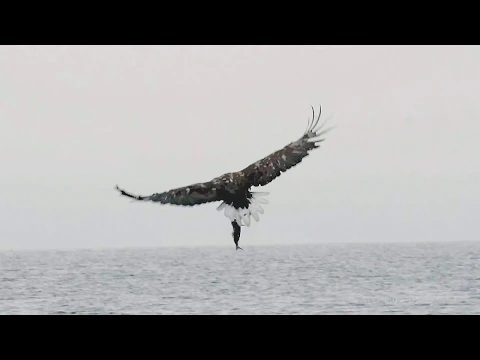

This dynamic has been observed in the outer Baltic archipelago, in southwest Finland, where researchers tracked the movement of minks in areas occupied by the sea eagle.
To understand how the invader chooses its routes, the team equipped the animals with radio collars and compared actual swimming distances between islands with expected distances at random.
The logic behind the analysis is straightforward: in the water, the mammal has fewer escape routes, becomes more visible, and is more exposed to attacks from above.
When the activity of the sea eagle increases, the journey between two land portions ceases to be just a functional path and becomes a calculated risk.
The data revealed a consistent association between indicators of the raptor’s presence and changes in the behavior of the mink, especially among monitored females.
As signs of eagle activity grew, long crossings decreased, and the time spent swimming in open water became less.
In measurable terms, there was a 10% reduction in swimming distance for every ten additional observations of eagles, along with a 5% drop for each kilometer less in relation to the nearest nest in the case of the monitored females.
Among the males, the pattern appeared less clearly, partly due to limitations in sample size.
Nonetheless, the set of results supports the idea that the risk imposed by a top predator can reorganize routes and choices, altering how the invader reaches new islands.
Fewer Crossings And The Effect On Bird Colonies
In island environments, each crossing increases the range of action for a terrestrial predator.
When the mink starts to shorten movements or avoid certain stretches, some of the more isolated islands become less frequently accessed.
As a consequence, pressure on reproductive colonies concentrated in specific points of the archipelago also decreases.
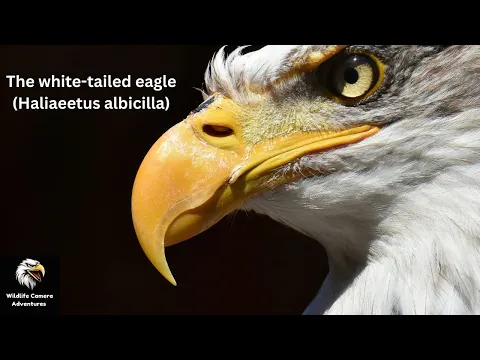
The effect tends to be more relevant where reproduction is predictable and occurs within short time windows.
In coastal colonies, eggs, chicks, and incubating adults create a recurring target, with little margin for defense when the predator arrives at the nest.
The Norwegian report mentions records of predation in eider colonies, a sea duck that breeds in coastal areas and islands.
In these cases, there are reports of attacks on both eggs and incubating females, which directly compromise reproductive success.
By imposing a movement cost, the sea eagle does not need to frequently catch minks to interfere in the system.
It is enough to create zones of higher risk and thus induce the invader to more cautious choices, with shorter reaches and fewer opportunities to explore distant colonies.
Cascade Effects In The Ecological Web
Evidence of this kind fits into a broader concept of ecology, according to which top predators can generate cascade effects by influencing not only the abundance but also the behavior of prey.
When the affected species, in turn, exerts strong pressure on other groups, any limitation on movement tends to reverberate at different levels of fauna.
The report on the mink itself highlights interactions with competitors and predators in aquatic systems, such as the otter, and underscores the need for control strategies in areas where the invader has already caused significant losses.
In this context, large raptors may act as an additional force in certain landscapes, not replacing management policies but altering the daily geography of the invader.
With the sea eagle increasingly present in coastal stretches of the Baltic, the risk begins to shape routes, reduce long crossings, and indirectly protect nests that were previously reached more easily.
If the recovery of a native predator can modify even the distance that an invader dares to swim, how many other introduced species might be restrained by this type of silent pressure, almost imperceptible to the public?