Portuguese
  Spanish


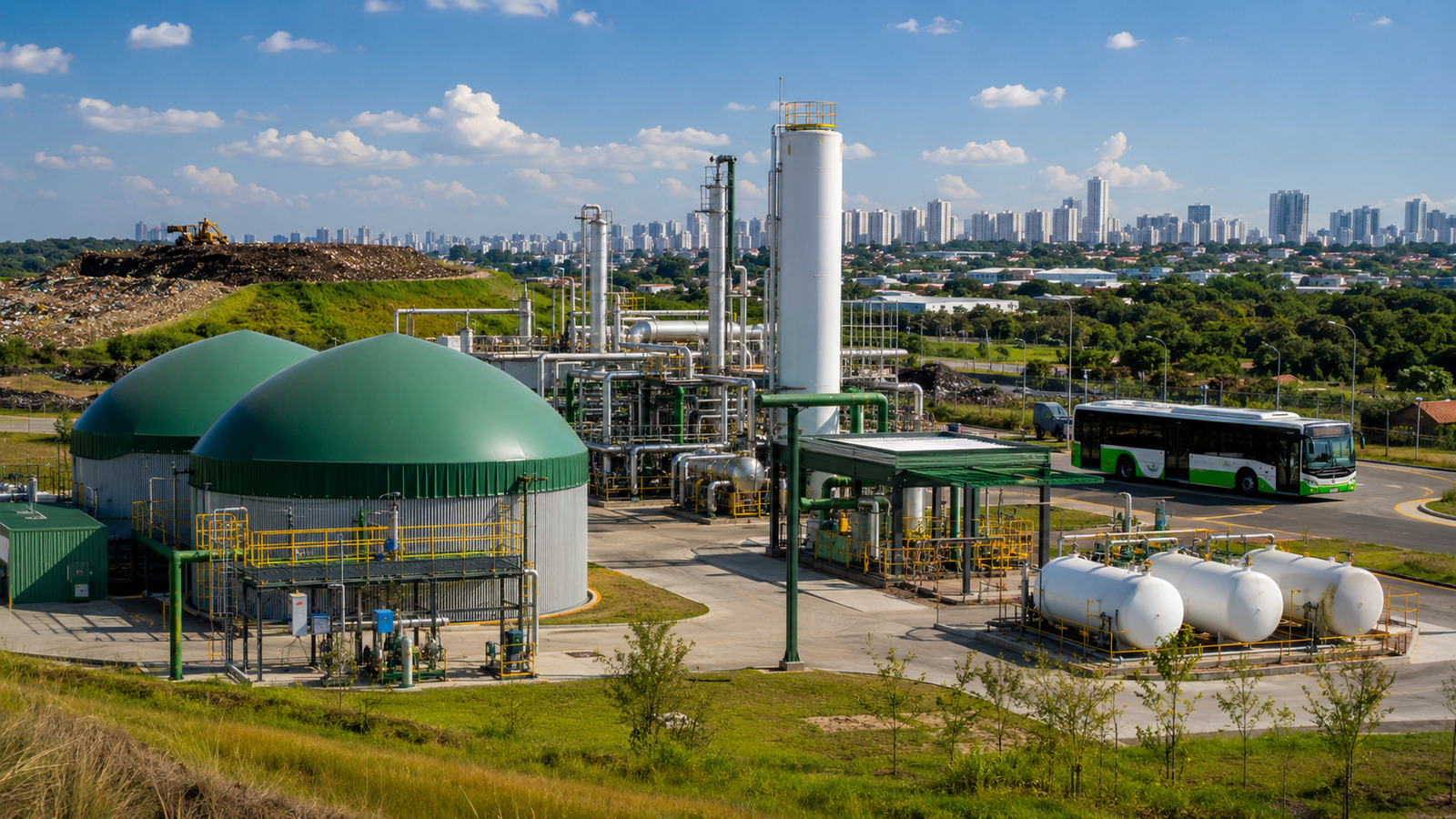

The state of São Paulo is expected to reach a record installed capacity of 1 million cubic meters per day in biogas production by the end of this year, a volume sufficient to supply the 2.8 million residences connected to the São Paulo piped gas network and equivalent to replacing about 4,000 diesel urban buses.


Biomethane in São Paulo advances with agro-industrial waste and landfills
The expansion of biomethane in São Paulo is mainly linked to the use of waste from the agro-industrial sector and landfills.
The state currently hosts some of the country’s main initiatives in this area and concentrates nine of the 19 biomethane plants in operation in Brazil.
-
Ceará brings together 7 giants and R$ 66 billion to transform Pecém into the largest green hydrogen hub in Brazil, with final decisions expected by the end of 2026.

-
H2A to Invest $570 Million in 22 Biomethane Plants in Brazil, Converting Agricultural Waste into 700 Tons of Renewable Fuel Daily

-
Brazil to Introduce B16 Diesel with Increased Soybean Oil Content for Trucks by 2026
-
Brazil Advances with JetBio’s Megaproject to Build the World’s Largest Ethanol-Based Sustainable Aviation Fuel Plant, Aiming to Become a Global Exporter
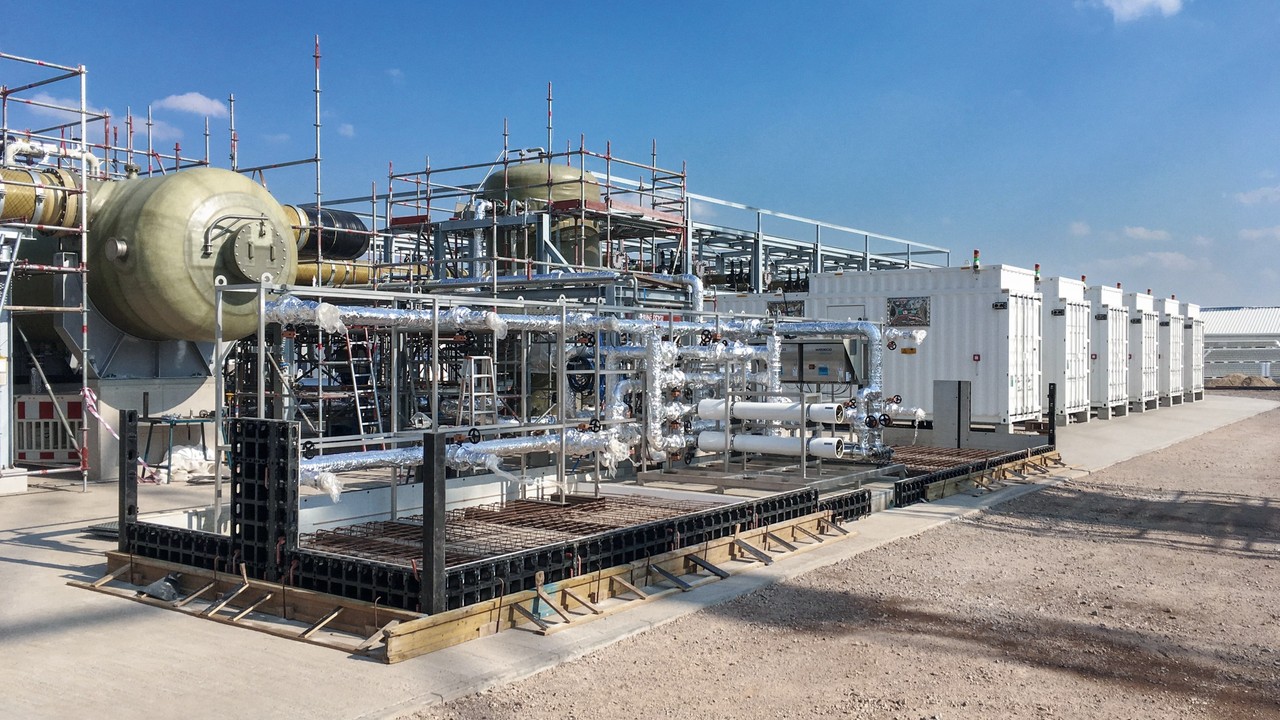


The projected mark of 1 million cubic meters per day, in full operation, places the biofuel at a significant scale for different uses.
The volume would also correspond to 65% of all properties in the city of São Paulo, which has 4.3 million residences, according to Seade data.
Part of São Paulo’s actions was presented by representatives of the Secretariat of Environment, Infrastructure, and Logistics, Semil, during an event focused on accelerating business in biogas and biomethane, held last week.
The meeting brought together regulators, public policy makers, investors, and companies in the sector. The proposal was to discuss ways to unlock projects, boost new business models, and expand the articulation between agents linked to the biomethane chain.
The event was organized by InvestSP, an investment promotion agency linked to the Secretariat of Economic Development, and the Brazilian Biogas Association, ABiogás, with support from Semil, through the Subsecretariat of Energy and Mining.
State concentrates half of the national production and prepares new units
During the event’s opening, Marisa Barros, Deputy Secretary of Energy and Mining of Semil, stated that São Paulo is the main national leader in biogas production.
According to her, the state has infrastructure with an installed capacity exceeding 700 thousand cubic meters per day.
This volume represents about half of the entire country’s production. Besides the plants already in operation, another 11 units are in the authorization phase by the National Agency of Petroleum, Natural Gas, and Biofuels, ANP.
With these projects, São Paulo is preparing to reach about 1 million cubic meters per day by December this year.
The estimated potential for the state is even greater, reaching 6.4 million cubic meters per day, as presented by Semil.
The scale of production helps explain why biogas is being treated as part of São Paulo’s strategy for waste valorization.
The fuel can transform discarded materials into energy for homes, businesses, industries, and transportation.

Heavy transport emerges as a target to replace diesel
The projected installed capacity for biogas in São Paulo also has a direct impact on transportation.
According to a study commissioned by the Federation of Industries of the State of São Paulo, with technical and institutional support from Semil, heavy vehicles are promising candidates for conversion to biogas.
Buses and trucks are among the possible uses, especially because São Paulo’s road transport has significant weight in the energy matrix. The energy consumption of this sector in São Paulo represents 26% of the national consumption and is mainly composed of diesel oil, gasoline, and alcohol.
The comparison with the 4,000 urban diesel buses shows the practical dimension of the planned production. Instead of limiting biogas to residential supply, the state also discusses its use in heavy fleets and mobility systems.
Representatives from SPTrans, linked to the Municipal Secretariat of Mobility and Traffic of the City of São Paulo, presented tests with buses powered by biogas, on an experimental basis. The initiative is part of the BioSP program.
The program was launched to circumvent bottlenecks in the recharging infrastructure for electric vehicles in the city.
In this scenario, biogas appears as a low-carbon alternative for urban fleets.
Environmental licensing seeks to reduce approval time to 60 days
The sector’s progress also depends on licensing, authorization, and connection rules with the network. Allan Cellim da Silva, from the Environmental Control and Licensing Directorate of Cetesb, explained the guidelines and procedures for biomethane and effluent plants.
According to him, the processes have undergone structural modernization in recent years. The goal is to reduce the average approval time to up to 60 days, with clear and standardized rules for the sector.
Allan stated that biomethane is a strategic pillar in the decarbonization of the state of São Paulo, as it replaces fossil fuels such as diesel and natural gas. According to him, the fuel can generate up to 99% fewer greenhouse gas emissions.
Cetesb also highlighted the increasing use of biomethane by the industry. According to Allan, the agency issues about 20,000 environmental licenses per year, with approximately 30 to 40 types of industries already using biomethane in their production processes.
State policies seek traceability and new pipelines
Laís Almada, director of Petroleum, Natural Gas, and Biofuels at Semil, presented state policies aimed at expanding biomethane infrastructure.
One of the points is the gathering of subsidies on biomethane origin certificates in the emission inventories sent to Cetesb.
The proposal is to foster the market for the environmental attribute of biomethane through a voluntary instrument.
The contributions of sector agents will be considered in the construction of a mechanism aimed at fuel traceability.
Laís also highlighted the international partnership established with Swedfund International AB, the Swedish government’s development finance institution. The goal is to conduct technical studies on the investments needed for new biomethane pipelines.
The partnership also aims to assess the recovery potential of digestate and propose business models for the production and commercialization of organic biofertilizers in biomethane plants in the state.
The director related the topic to the State Energy Plan 2050. The plan integrates the São Paulo strategy to achieve carbon emission neutrality by mid-century, in alignment with the global Race to Zero initiative by the UN.
ANP points to an increase in requests for new plants
At the federal level, the ANP is responsible for authorizing and supervising operations of biomethane plants, as well as establishing quality standards for production and distribution.
To obtain authorization, companies need to submit technical information before the construction or modification of the production unit.
Marcos Werner, superintendent of Fuel Production at ANP, stated that the agency has modernized the authorization and commercialization process of biomethane.
According to him, the regulatory framework was aligned with the Future Fuel Law and the National Decarbonization Program.
Werner also highlighted the significant increase in the volume of requests for granting and starting operations of new industrial biomethane plants in Brazil. For 2026, the trend he pointed out is an increase in production.
According to the superintendent, there is diversification of raw materials, with emphasis on Urban Solid Waste sent to landfills and transformed into biogas, as well as agroforestry residues with wide national geographic distribution.
Gas network can bring biomethane to consumers
The interconnection with gas networks was another point discussed at the event. Maria Eugênia Bonomi, manager of Technical Studies, Regulation and Contracts at Arsesp, presented the regulatory action for natural gas and biomethane in São Paulo.
The state has just over three million piped gas consumers. According to Maria Eugênia, the interconnection will allow for a gradual increase in the production of biofuel, with direct injection into existing pipelines and distribution to consumers.
Recently, Arsesp approved the interconnection of the biomethane plant of Solví Essencis Ambiental, at the Caieiras landfill, in the Metropolitan Region of São Paulo, to the piped gas distribution network of Comgás.
The Caieiras experience also appears in the industry. Natura reported that it uses biomethane in its largest operation in Latin America, in Cajamar.
The fuel supplies 45% of industrial processes and powers 100% of the logistics fleet between the factory and Greater São Paulo.
Geo Bio Gas & Carbon presented opportunities for the production of sustainable aviation fuel, SAF, from biogas from biomass residues in the sugar-energy sector. The project is supported by the São Paulo government and international partners.
This article was prepared based on information from the São Paulo Secretary of Environment, Infrastructure and Logistics, InvestSP, ABiogás, Cetesb, ANP, Arsesp, SPTrans, Natura, and Geo Bio Gas & Carbon, with data, numbers, and statements preserved as per the consulted material.