Portuguese
  Spanish


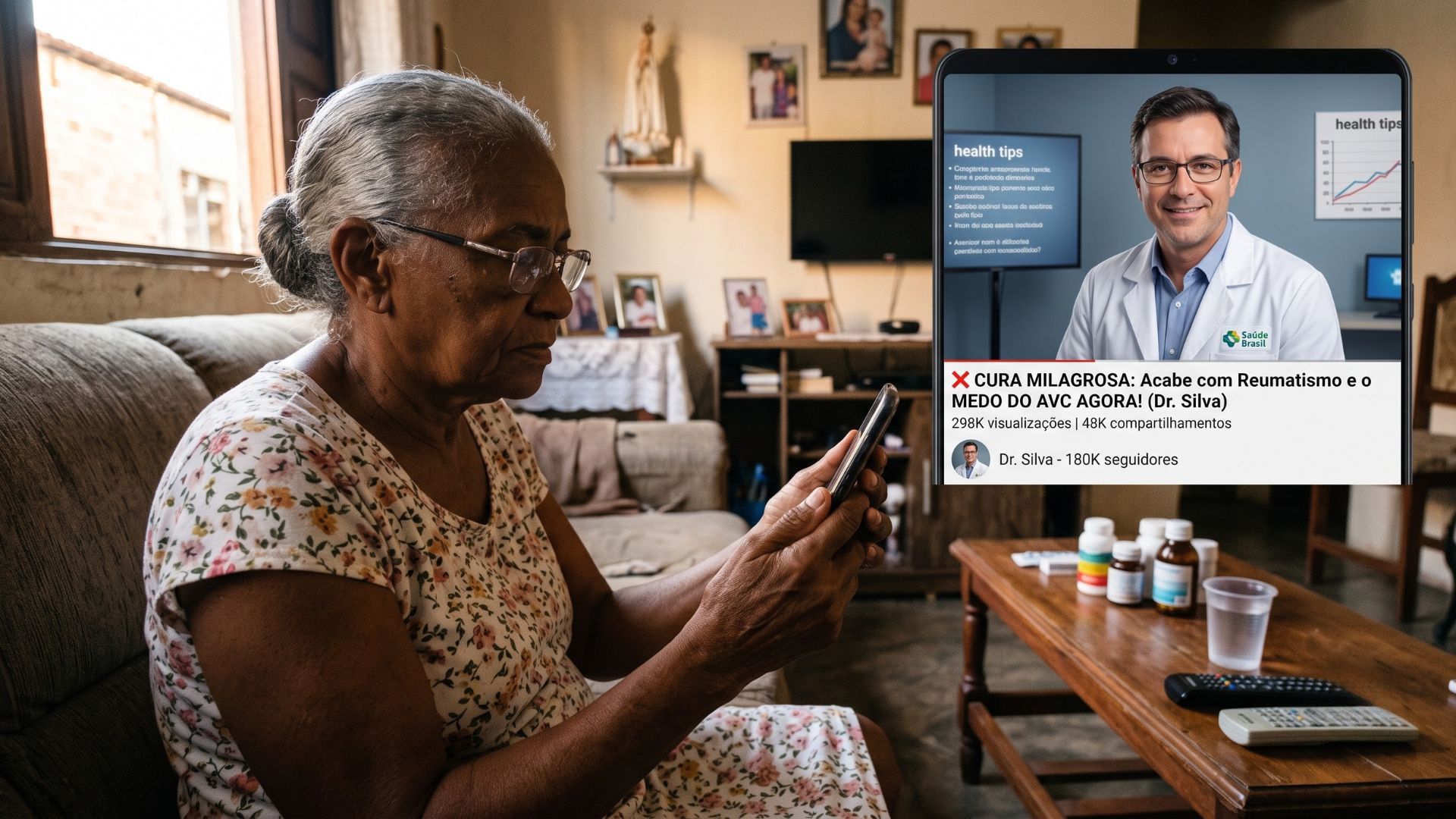

Fake AI Doctors Go Viral on YouTube, Deceive Elderly in Brazil, and Increase Risk of Online Medical Misinformation.
Celi Ferreira, 82 years old, decided not to follow the cataract surgery recommended by her ophthalmologist after watching a YouTube video presented by a supposed doctor. The advice seemed professional, discussing vision, aging, and nutrition, but the specialist on screen did not exist. According to an investigation by BBC News Brasil, the video was part of an industry of fake doctors created by artificial intelligence, primarily targeting the elderly in Brazil and other countries. According to a survey by the organization CTRL+Z, cited by the BBC, Portuguese-language channels with AI medical avatars already have over 70 million views.
Fake AI Doctors on YouTube Become a Threat to Elderly in Brazil Seeking Online Health Guidance
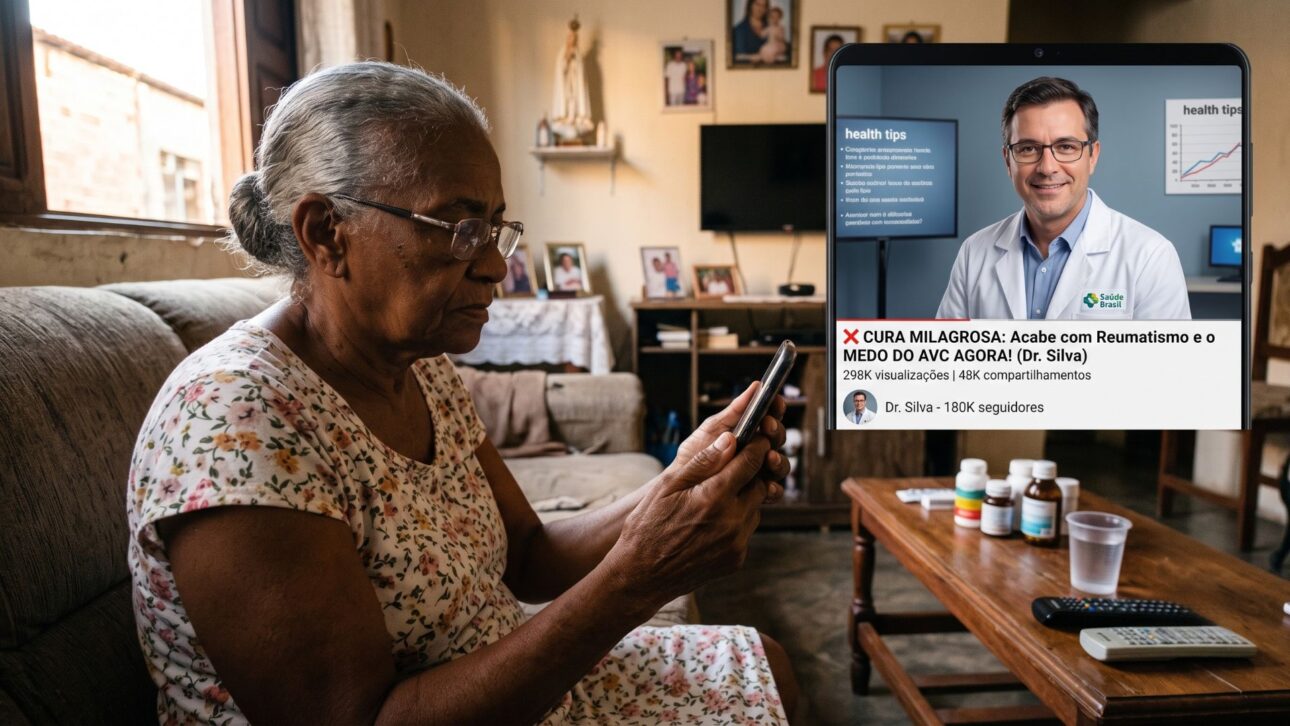
The explosion of videos with AI-generated doctors has created a new problem for digital health. Instead of real professionals, many contents show avatars with lab coats, synthetic voices, and trustworthy appearances, discussing common diseases in old age.

According to BBC News Brasil, these videos cover topics such as cataracts, Alzheimer’s, memory, joint pain, hypertension, diabetes, and healthy aging. The choice of subjects is not random, as they directly affect the elderly audience and generate fear, urgency, and high engagement.
-
Innovative Thermal Battery in Brazil Can Store Renewable Energy for Weeks, Offering Cheap Electricity and Winter Heating

-
High-End Imported Vacuum Targets Pet Hair, Deep Cleaning, and Odors, as Shark Model Gains Popularity in Urban Brazilian Homes with Carpets and Pets

-
Portugal Develops Graphene Coating to Make F-16s Nearly Invisible on Radar, Aiming to Use It for Military Drones and Aircraft
-
Workers Discover 18th-Century Wooden Shipwreck During Routine Pipeline Work in Croatia


The risk lies in the fact that many users believe they are listening to a real doctor. Even when YouTube signals that the content was generated by AI, the identification can go unnoticed by people less familiar with technology.
Celi Ferreira’s Case Shows How Medical Misinformation by Artificial Intelligence Can Influence Real Decisions
The case of Celi Ferreira, aged 82, shows how medical misinformation produced with AI can surpass the digital environment. According to BBC News Brasil, she decided not to undergo the cataract surgery recommended by her ophthalmologist and mentioned in the video that she would follow the advice of the supposed virtual doctor.
The video recommended to Celi promised to protect vision through the consumption of fruits. According to the BBC report, the content reached nearly 300,000 views and about 300 comments, many of them from people who also seemed to believe they were in front of a real health professional.
This type of content is especially concerning because it can lead the elderly to delay consultations, distrust prescribed treatments, or replace medical follow-up with simple promises. In health matters, the appearance of credibility can be as dangerous as explicit false information.
Health channels with AI avatars accumulate more than 70 million views in Portuguese
The scale of the phenomenon is one of the most serious points of the investigation. According to a survey by CTRL+Z, cited by BBC News Brasil, 29 channels in Portuguese dedicated to videos with fake doctors created by AI were identified.
According to the organization, these channels accumulate more than 70 million views and operate on an industrial scale. The production includes standardized scripts, synthetic characters, artificial voices, and titles designed to attract elderly people concerned about diseases.
BBC News Brasil points out that the model did not originate only in Brazil. It is part of an international strategy, copied and adapted by creators from different countries, who see the elderly audience as a highly lucrative niche for videos, e-books, courses, and digital products.
Health scam with artificial intelligence uses fear of Alzheimer’s, cataracts, and memory loss to go viral
The mechanism of these videos going viral relies on strong emotional triggers. Terms related to Alzheimer’s, cataracts, memory loss, vision at risk, silent diseases, and aging appear as bait to capture the audience’s attention.
According to BBC News Brasil, creators of this type of content use alarmist rhetoric to increase retention, comments, and shares. The promise is usually simple: a food, a recipe, a habit, or a product supposedly capable of preventing or solving complex health problems.
This model is dangerous because it mixes generic information, medical appearance, and emotional appeal. For an elderly person concerned with autonomy, vision, memory, or chronic pain, an avatar in a lab coat may seem like a reliable source, even when there is no real doctor, professional registration, or scientific validation behind it.
Market of videos, e-books, and courses turns fake AI doctors into a lucrative business
Medical misinformation with artificial intelligence also has an economic logic. The more videos are published, the greater the chance of generating views, advertising revenue, digital product sales, and traffic to external pages.
According to BBC News Brasil, there are producers who teach others to create this type of content using AI. The process may involve script generation, avatar creation, artificial voice, automated editing, and mass publication on YouTube.
This low production cost helps explain the multiplication of channels. Instead of relying on real doctors, studios, technical teams, and scientific investigation, creators can fabricate synthetic characters at scale, with a professional appearance and language aimed at the elderly audience.
Medical misinformation against the elderly exposes trust failure in digital platforms
The problem is not just the existence of avatars. The most sensitive point is the combination of health, advanced age, fear of disease, and algorithmic recommendation. The user watches a video and starts receiving other similar content, creating a continuous cycle of exposure.
According to the investigation by BBC News Brasil, many comments on the videos show users thanking the supposed doctor, asking for guidance, or reporting an intention to follow recommendations. This indicates that part of the audience does not perceive the difference between generic informative content and real medical guidance.
When the platform allows an avatar to appear professional, speak like a specialist, and reach millions of people, the AI signal may not be enough. For the elderly audience, especially those with low digital familiarity, the appearance of authority may weigh more than the technical warning.
Fake digital doctors raise alert about AI regulation in healthcare and platform responsibility
The multiplication of fake AI doctors raises an urgent debate about responsibility. In entertainment content, a synthetic avatar can be just a creative tool. In healthcare, the same resource can influence medical decisions, delay treatments, and increase misinformation.

The report by BBC News Brasil indicates that experts see potential legal issues when fake characters present themselves as doctors or lead the public to believe they offer professional guidance. Depending on the case, discussions may arise about misleading advertising, illegal practice of medicine, and consumer harm.
The advancement of AI has made it cheaper to fabricate visual authority. The challenge now is to prevent this false authority from being used to exploit fear, illness, and vulnerability. In a country with millions of connected elderly people, the question is direct: how many people will still believe in doctors who never existed?