






 Portuguese
  Spanish


Installed in Finland, the sand battery reduced emissions by 70%, eliminated the use of oil, and stored renewable heat to supply public buildings
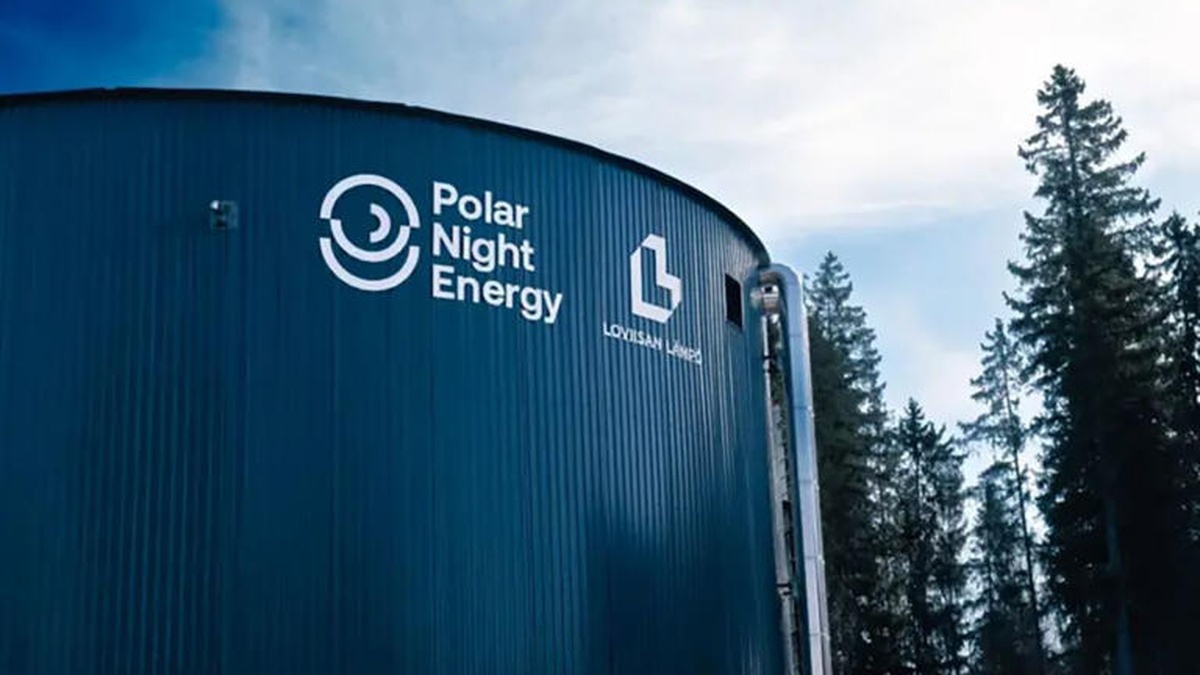
For a city that needs to get through winter with schools, public buildings, and homes heated, storing heat can be as important as producing electricity. This logic transformed a large metal silo, filled with 2,000 tons of crushed soapstone, into a thermal battery capable of storing renewable energy for weeks.
Polar Night Energy put the system into operation in June 2025, in the Finnish city of Pornainen. The installation serves the heating network managed by Loviisan Lämpö.
The company released the first year’s results on June 11, 2026. The numbers showed that the structure met the expected goals and achieved thermal efficiency greater than 85%.
-
High-End Imported Vacuum Targets Pet Hair, Deep Cleaning, and Odors, as Shark Model Gains Popularity in Urban Brazilian Homes with Carpets and Pets

-
Portugal Develops Graphene Coating to Make F-16s Nearly Invisible on Radar, Aiming to Use It for Military Drones and Aircraft

-
Workers Discover 18th-Century Wooden Shipwreck During Routine Pipeline Work in Croatia

-
Scientists Uncover Why Gold Retains Its Shine So Well


The technology does not store electricity like a cell phone or car battery. The system transforms electrical energy into heat, conserves this energy in the granular material, and releases the temperature when the city needs to heat its buildings.
What is inside the sand battery
The structure looks simple but functions as a large-scale thermal reservoir.
The equipment is approximately 13 meters high and 15 meters wide. Its interior contains about 2,000 tons of crushed soapstone, a material chosen to replace common sand in the Pornainen project.
Electric resistors heat the granulate during periods with greater availability of renewable energy. Thermal insulation keeps the heat inside the tank until the time of use.
This reserve corresponds to approximately one month of heating during the summer. In winter, when consumption increases, the capacity ensures about a week of thermal supply.
The principle is similar to what happens when beach sand remains warm after the sun disappears. The technology, however, applies this logic on a large scale and controls the entire process.
The numbers that show if the technology works
The first year of operation revealed the main results of the project.
According to Polar Night Energy, the battery achieved a thermal efficiency greater than 85%. In practice, the system recovered most of the energy used to heat the material as heat.
The heating network reduced climate emissions by 70%. The operation also eliminated oil consumption and decreased biomass usage by 60%.
The main results include:
- 70% reduction in climate emissions;
- more than 85% thermal efficiency;
- complete elimination of oil consumption;
- 60% decrease in biomass usage;
- continuous heat supply;
- expansion of urban network capacity.
The system maintained the supply of thermal energy with a high level of reliability. The battery also expanded the service capacity of the municipal network.

Schools, city hall, and library started receiving heat
The stored heat was not limited to technical tests.
The battery began to serve a large part of the public buildings in Pornainen, including a school, the city hall, and the library. The network also incorporated a new sports arena and a renovated school.
The structure is part of the municipal heating system. Operators use electricity during times of higher supply and lower prices. Then, they distribute the heat when demand increases.
The sector calls this difference between purchase and consumption energy arbitrage. The strategy reduces costs and decreases dependence on the most expensive market hours.
Electricity up to 90% cheaper
The savings also appeared in the price of electricity used to charge the system.
The operation purchased energy at values between 70% and 80% lower than the spot market average. In some months, the difference exceeded 90%, according to Polar Night Energy.
The battery takes advantage of periods of excess wind or solar energy. Instead of losing this production, the system converts the electricity into heat and stores the energy for another time.
This mechanism combines emission reduction, supply stability, and less exposure to the most expensive periods of the energy market.
From the city to the industries
The next step could take technology to sectors that use large volumes of heat.
Cement, steel, and food industries rely on high temperatures in their production processes. Many still use fossil fuels to meet this demand.
The thermal battery can replace part of these fuels with heat generated from renewable electricity. Companies could charge the system during periods of higher generation and lower cost.
Sauli Antila, operational partner at CapMan Infra, stated that the results of the first year reduce uncertainties for other organizations interested in the solution.
Liisa Naskali, operations director at Polar Night Energy, described the project as a concrete example of the energy transition. According to her, the proposal replaces combustion with stored renewable electricity.
To an outside observer, the battery looks just like a large metal tank. Inside, however, tons of crushed stone store enough heat to supply public buildings for weeks.
The Pornainen project shows that renewable energy storage does not necessarily depend on lithium or electrochemical systems. In some situations, simple materials can conserve heat until the moment of use.
The sand battery reduced emissions by 70%, eliminated oil, decreased biomass use, and utilized electricity up to 90% cheaper. The result transforms a silo full of stone into a relevant piece for urban heating and industrial decarbonization.
And you, do you believe that thermal batteries like this could help Brazilian cities and industries make better use of solar and wind energy? Tell us in the comments.


