






 Portuguese
  Spanish


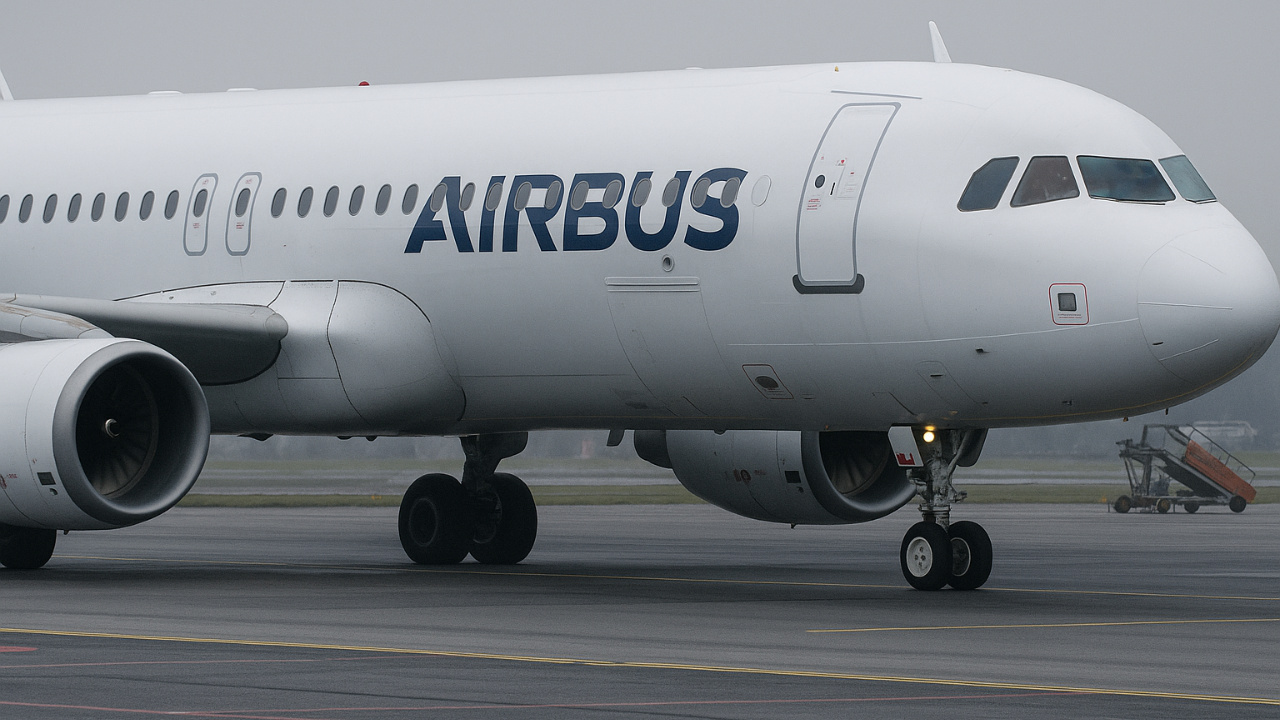
After Recall Announcement, Airbus Confirms Another Failure in A320 Planes. Understand the Origin of the Defect and Its Impact on Global Operations.
After the recall announcement, Airbus confirms another failure in A320 planes, affecting part of the world’s most widely used fleet of aircraft.
The European manufacturer reported on Monday (1st) that it identified a defect in the metal panels of the model, leading to immediate inspections in several countries.
The problem, according to the company, involves “a limited number” of parts supplied by an external partner.
-
Brazil Welcomes Spanish Wamos Air and Nigerian Air Peace, Potentially Transforming International Routes and Increasing Competition

-
Offshore air transport soars in Brazil, surpasses 2.5 million passengers, and reveals how oil has transformed Rio’s airports into key pieces of national logistics.

-
Latin America becomes the “global champion” of aviation taxes, tickets may become more expensive in Brazil, and IATA’s warning exposes risk for flights, tourism, and passengers.
-
Brazil has lost 85 air routes since 2019 and is still flying less than before the pandemic, leaving passengers with fewer destinations, fewer frequencies, and a more limited air network.


This detection comes just days after the alert for an emergency software update issued on Friday (28), which reignites concerns about operational safety.
The company claims to be acting quickly because identifying the failure was crucial to avoid additional risks and because the regulatory and financial impact has already begun to be felt in international markets.
Metal Panels Show Restricted Failure, Says Airbus
According to a spokesperson, the new defect is related to a “supplier quality issue.”
Airbus clarified that all potentially affected aircraft are undergoing inspection, although it expects that only a small portion will require additional corrective actions.
The representative stated that they have identified and contained the source of the problem in the metal panels and that all newly produced panels comply with all requirements.
The company stated that only a very limited number of A320 aircraft have been affected, but emphasized that this incident increases pressure on the company at a time of global expansion in commercial aviation.
As an immediate consequence, Airbus shares fell 5.7%, extending losses that had already been observed since the first alert revealed by Reuters.
After Recall Announcement, Airbus Confirms Another Failure in A320 Planes and Repercussions Increase
The new statement comes right after the recall alert issued on Friday (28), when Airbus had already determined that thousands of aircraft from the A320 family needed an urgent software update.
A recent incident prompted the measure by revealing a critical vulnerability: intense solar radiation could corrupt essential flight system data and potentially cause pilots to lose control of the aircraft.
This technical scenario gained international attention and prompted immediate mobilization from airlines.
Incident with JetBlue Flight Set Off Alarm in the Industry
Thus, the emergency recommendation arose after the episode with JetBlue flight 1230 on October 30.
The A320 departed Cancun, Mexico, heading to Newark, United States, when it suddenly lost altitude.
Faced with the instability, the pilots made an emergency landing in Tampa, Florida.
The response teams took about 15 people to the hospital.
The case received significant attention because it demonstrated that the failure could occur under normal operating conditions, reinforcing the urgency for large-scale repairs.
Global Race to Fix Over 6,000 Aircraft
Over the weekend, airlines worldwide rushed to implement the recommended software update.
The initial estimate was that 6,000 aircraft needed immediate correction, prompting technical teams to mobilize across various time zones.
On Monday (1st), Airbus updated the status and stated on its website that the “vast majority” of the planes have already received the necessary modification.
Thus, fewer than 100 aircraft remain pending, and the manufacturer claims to be directly supporting the companies responsible for them.







-

1 person reacted to this.