






 Portuguese
  Spanish


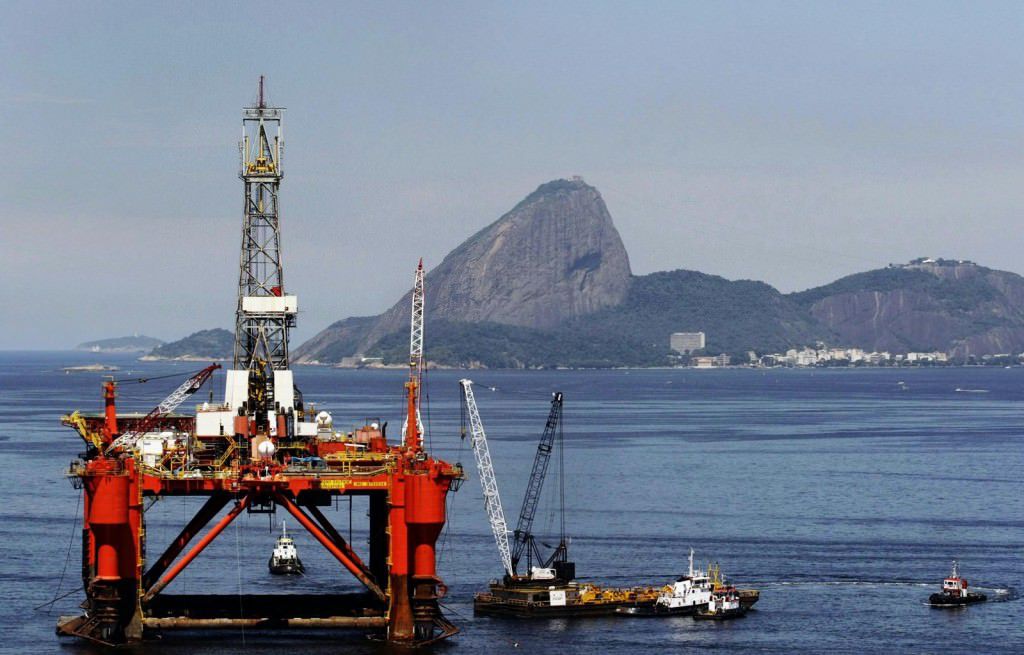

The Bill Authorizes a Reduction to 3% in the ICMS Calculation Base for Oil and Natural Gas Extraction and Production Operations in Rio de Janeiro
The project that changes the taxation regime for oil will have a new version. The Taxation, Budget, and Economy Committees of the Legislative Assembly of the State of Rio de Janeiro (Alerj) analyzed, yesterday (06/02), the 42 amendments presented to bill No. 1771/19. Brazil remains consistent and closes the month of April with a daily production of 2.958 million barrels of oil
Read Also
- Job openings for high school graduates offered by a large company in the naval sector
- Many job openings at all levels in operational and administrative areas for RJ and SP open today
- Welders, boilermakers, platform workers, technicians, engineers, and more called for offshore and onshore positions at the European multinational Worldserv
Bill No. 1771/19 authorizes a reduction to 3% in the ICMS calculation base for oil and natural gas extraction and production operations in Rio de Janeiro.
-
OPEC+ Boosts Oil Supply by 188,000 Barrels per Day in July 2026, Leading to Price Drop from $112 to $89 per Barrel in Under Two Months

-
TotalEnergies Signs 20-Year Deal to Purchase 2 Million Tons of LNG from Alaska, Boosting Project Viability
-
Turkey Deploys Çağrı Bey Drilling Ship to Explore New Oil Frontier Off Somalia’s Coast
-
Golden Pass LNG Ships First Liquefied Gas Cargo from the U.S., Completing $10 Billion QatarEnergy and ExxonMobil Investment


The discount refers to the acquisition in the domestic market or the import of goods or merchandise from abroad by companies holding onerous assignment, of contracts under a sharing regime and of concession or authorization to conduct oil and natural gas exploration and production activities in Brazil.
According to the chairman of the taxation committee and one of the authors of the bill, deputy Luiz Paulo, the project was presented for the first time to the deputies in the third quarter of 2019, when the national agreement 220/19 of the National Council of Tax Policy (Confaz) did not yet exist – which defined new rules on the exemption and the reduction of the ICMS calculation base for oil exploration and production operations, altering, including, Agreement 3/18, which also dealt with the subject in the Special Customs Regime for the Export and Import of Goods Intended for Oil and Gas Production Activities (Repetro).
Luiz Paulo also reiterated that the project advances in three areas. “With it, we change the taxation at the destination. We also removed the zero rate from national companies, and now they would start paying 3%. Additionally, there will be no possibility of crediting. These are the three significant advances that we propose with this text,” the parliamentarian explained.
Luiz Paulo also states that 80% of the companies exploring the pre-salt in the state are from outside Rio de Janeiro, and only 20% of the productive chain is established in the state, which, on the other hand, produces more than 75% of the national oil.
Oil Exploration in Rio de Janeiro
The president of the House, deputy André Ceciliano, emphasized that the state of Rio de Janeiro needs to have a differentiated ICMS percentage. “80% of the pre-salt is in Rio, 12% in São Paulo, and 8% in Espírito Santo. It is not fair that our profits are not proportional to our exploration. We must also consider that it is much better to produce in the pre-salt, given that the big companies in the world are in the pre-salt, than to produce in Saudi Arabia, which is the only place that has a lower cost than in Brazil, but has the risk of transport,” concluded the parliamentarian.






