Portuguese
  Spanish


China And Cuba Unite To Explore Oil And Gas Onshore: Strategic Partnership May Transform The Island’s Energy Matrix
As the world increasingly seeks to secure its own energy supply amid rising geopolitical tensions, Cuba and China have decided to strengthen a historic collaboration in a strategic sector: exploration of new oil and gas fields on Cuban territory.
The project, which advances through cooperation between the Cuban Petroleum Union Research Center (CUPET) and the Geological Service of the People’s Republic of China, aims to open new opportunities for an island that still relies heavily on energy imports to sustain its economy and electrical system.
According to a report by Cuban state television aired on June 4, the initiative aims to assess the potential for onshore oil and gas reserves, with the expectation of discovering yet unexplored fields that could boost the country’s finances.
-
Rio de Janeiro Buses Stop Accepting Cash: How to Pay and Maintain Fare Integration

-
Toll Fees in São Paulo’s Countryside Drop by Up to 50% Starting Today

-
Petrobras Invests $2.3 Billion in Brazilian Coastal Shipyards, Creating Over 5,000 Jobs and Revitalizing the Naval Industry

-
$2.5 Billion Amazon Potash Mine Aims to Reduce Brazil’s 95% Import Dependency


“The goal is clear: the more oil we manage to find, the greater the capacity to extract and use these resources for the economic development of the nation”, stated Dr. C. Enrique Castellanos Avella, Director of Geology at the Ministry of Energy and Mines of Cuba.
An Strategic Priority For The Cuban Economy
This action does not happen in isolation. It is part of a broad government program, aimed at promoting the gradual recovery of the National Electric System (SEN), which in recent years has been facing blackouts and limitations due to a combination of internal factors and external restrictions.
The plan includes both actions to optimize the production of existing oil fields as well as new investments in energy exploration, with the goal of ensuring a more stable energy supply for homes and industries.
The energy cooperation between Cuba and China is not new, but in the current context it takes on an even more strategic character. For the island, which deals with the impacts of the economic blockade imposed by the United States and seeks to diversify its sources of development, the partnership with Beijing represents an important opportunity.
Much More Than Energy: A Long-Range Partnership
According to Cuban authorities, the collaboration in the energy and mineral sectors is now considered “fundamental” to ensure the well-being of the population and strengthen national sovereignty.
However, cooperation is not limited to oil and gas. As reported by the Xinhua agency, Cuba and China are also developing joint projects in telecommunications, digital transformation, biopharmaceuticals, and health.
These projects demonstrate the commitment of both governments to building a socialism model adapted to their realities, aimed at addressing challenges such as climate change, technological inequalities, and external economic restrictions.
According to Carlos Fernández de Cossío, Deputy Minister of Foreign Affairs of Cuba, collaboration with China is “an essential component of our development strategy”. In this sense, joint work in the energy sector seeks not only to sustain current infrastructure but also to promote a more just and balanced international system, in the words of authorities from both countries.
The Energy Potential Of Cuba
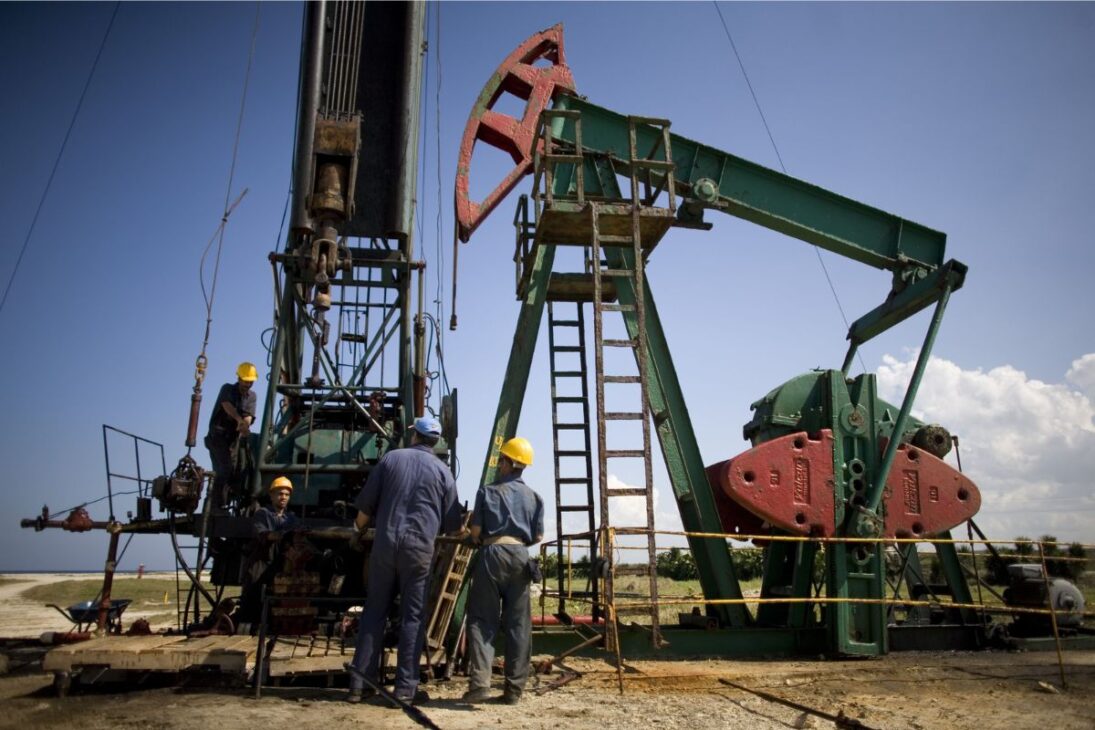
Although Cuba is not traditionally recognized as an oil power, the country has some natural resources that could be better explored.
Currently, the island produces about 40% of its domestic oil demand, according to data from the Ministry of Energy and Mines itself. The remainder is imported, mainly from Venezuela, with some coming from other Asian suppliers.
In this scenario, the possibility of identifying new onshore fields represents considerable encouragement for Cuba’s economic planning.
Experts say that the regions with the highest potential are located in the provinces of Matanzas, Ciego de Ávila, and Camagüey, although less explored areas are also being investigated.
In turn, China contributes to the project not only with advanced exploration technology but also with a long-term vision that aligns with Cuba’s energy sustainability strategy.
Towards A More Promising Scenario
In recent years, the rapprochement between Havana and Beijing has been intensifying. According to the Economic Complexity Observatory, China is currently Cuba’s second-largest trading partner, behind only Venezuela.
The agreements in the energy sector are part of a broader package of cooperation that includes investments in infrastructure, technology, and innovation.
As highlighted by the portal Energy Voice, China has been expanding its presence in Latin America not only as a buyer of raw materials but also as a technological and financial partner in energy and mining projects.
For Cuba, this support is essential at a time of financial difficulties and international restrictions.
Exploring New Energy Opportunities
While the results of this new exploration phase are still preliminary, Cuban and Chinese authorities demonstrate optimism.
Dr. Castellanos Avella himself highlighted that more accurate assessments are expected in the coming months, which will enable concrete exploration plans to be defined if studies confirm the expected potential.
For now, what is clear is that the energy partnership between China and Cuba goes far beyond a single project. It is a comprehensive cooperation strategy that both parties consider essential to face the challenges of an increasingly unstable world.
In the words of Zhang Xiangchen, China’s representative at the WTO, “cooperation between our countries in sectors like energy helps build a more equitable international system and reduce inequalities in access to strategic resources.
As explorations advance and joint projects evolve, Cuba hopes to strengthen its energy autonomy and consolidate a more resilient development model, relying on the support of a strategic partner like China.