






 Portuguese
  Spanish
  4 min of reading
  0 comments


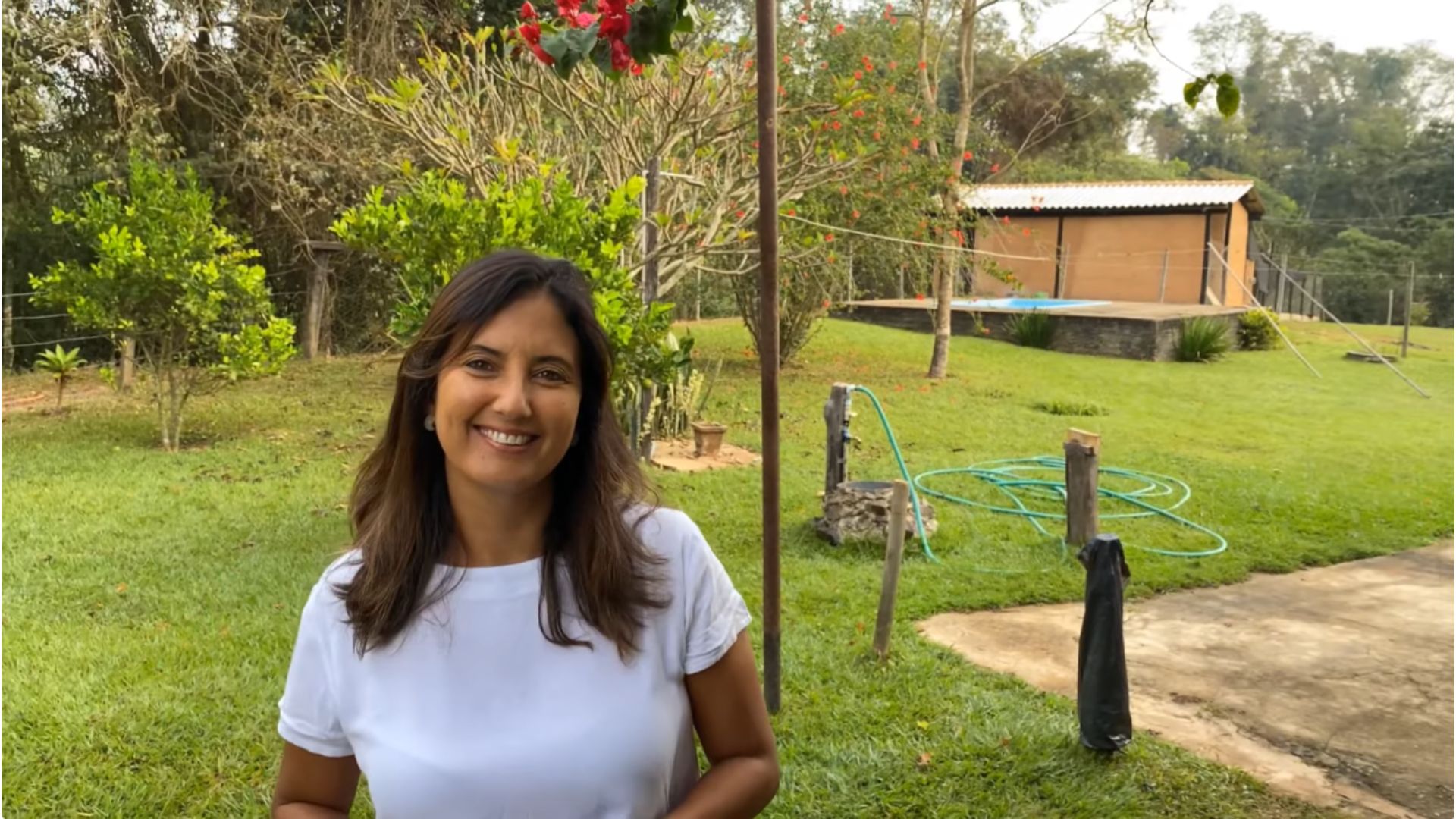
Story of courage, transformation, and life in the country that reveals how a risky decision can become a successful business in Brazilian rural tourism
Aline made a decision that many people only dream of, but few have the courage to execute. She quit her job, left the city, and with only R$ 50,000, decided to bet everything on a life project in the countryside. The initial scenario, however, was far from ideal: the family property had no running water, no electricity, and was overgrown with weeds, ant hills, and structural challenges.
Even so, it was precisely in this environment that one of the most inspiring rural tourism projects in Serra da Canastra was born. Gradually, with constant work and a lot of dedication, Aline began to transform the space. Initially, she built only a chalet — simple, but made with care and attention to detail. This first step marked the beginning of a journey that would completely change her life.
Moreover, it is important to highlight that the entire process was done without luxury or large external investments. Each improvement was the result of her own effort, planning, and reinvestment of what was generated on the property itself. In this way, growth happened organically and sustainably.
-
After swapping sewing for cement, a woman from Paraná became a mason, spent 12 years on construction sites, started building her own house, and even gained fame for restoring old Opalas.

-
Tired of relying on a conventional house, a young woman with no construction experience built an off-grid studio apartment with solar energy, rainwater, a biodigester bathroom, and a routine designed to live with more autonomy.
-
The European city hall that transformed an old urban avenue back into a canal, recovered a section that was filled in the 1970s, and delivered a new public space with water, vegetation, and pedestrian paths.
-
Buenos Aires and Montevideo are about 200 kilometers apart in a straight line, but the road trip can exceed 570 kilometers and take up to 8 hours and 30 minutes; see how long the journey takes by plane, ferry, car, and bus.


Simple routine in the farm becomes an experience valued by tourists

As time went by, what was once just a dream began to attract visitors. This is because Aline realized something essential: what was routine for her — milking cows, making cheese, taking care of the animals — became a unique experience for many people.
Today, those who visit the place can participate in typical rural life activities. Guests accompany the milking of the cows, taste freshly milked milk, and even help in the artisanal production of cheeses. In fact, Aline’s father remains active in the daily life of the property, being a fundamental part of this experience.
Additionally, the breakfast served on-site has become one of the major highlights. With products made right there, such as cheese bread, cornbread, curds, jams, and artisanal cheeses, the gastronomic experience further reinforces the concept of authentic rural tourism.
The information was shared by “Canal Eduardo Pádua,” which closely followed the routine on the property and showed how the simplicity of the countryside transformed into a competitive differential in the tourism sector.
Investment of R$ 50,000 led to structure with chalets and experiences

What started as a single cabin, built on a limited budget, has now transformed into a complete accommodation structure. Currently, the space features several cabins, each with unique characteristics, comfort, and integration with nature.
One of the most striking examples is the Hummingbird cabin, built on the chassis of an old family truck. The João de Barro cabin uses techniques inspired by clay constructions, reinforcing the connection with the rural environment. Additionally, there are options for couples, families, and groups, expanding the audience served.
Another noteworthy point is the strategic location. Situated about 6 km from the city, the site offers easy access while maintaining the tranquility and isolation that many tourists seek. Consequently, the location has become a reference in the region and has begun to attract visitors from various parts of Brazil.
It is also worth highlighting that the growth did not happen immediately. It took years of work, continuous improvements, and reinvestment. However, the result shows that persistence was essential to consolidate the business.


Life in the country, united family, and personal fulfillment
More than a tourism venture, Aline’s project represents a complete lifestyle change. Upon returning to the site, she reconnected with her roots and began to value family togetherness even more.
Her father, who once worked as a truck driver, was the one who acquired the site after selling everything he had at the time. Since then, the family has gradually built the entire existing structure. Therefore, each space carries a story of effort, overcoming, and achievement.
Furthermore, Aline emphasizes that she does not intend to return to the city. According to her, life in the country offers quality of life, peace, and purpose—factors that are often not found in urban environments.
Thus, what began as a risky decision has transformed into an inspiring example of rural entrepreneurship. At the same time, it shows that it is possible to build a new reality even starting with limited resources.





Be the first to react!