






 Portuguese
  Spanish
  5 min of reading
  0 comments


On the map, Bir Tawil has no owner, flag, or law, wedged between Egypt and Sudan. But the reputation of no man’s land hides a bustling reality: prospectors searching for gold, nomadic tribes claiming ownership of the place, and a collection of foreigners who have self-proclaimed themselves kings via the internet.
Imagine a piece of land the size of a medium city that no country in the world accepts as its own. Not because it is at war, but because claiming it would be unprofitable. This place exists, it is called Bir Tawil and it is squeezed between Egypt and Sudan, in the heart of the desert. It is often called the only habitable no man’s land on the planet, outside Antarctica, a very rare case of territory left over in the border game.
The story seems like a geography joke, but there is cold logic behind it. And, contrary to what the nickname suggests, this no man’s land is neither empty nor forgotten. Beneath the label of a place without an owner, Bir Tawil has become a stage for gold mining, disputes among desert peoples, and a tragicomic line of people from all over the world declaring themselves king of a kingdom that only exists in the imagination. Let’s break it down.
Why, on paper, no one wants Bir Tawil
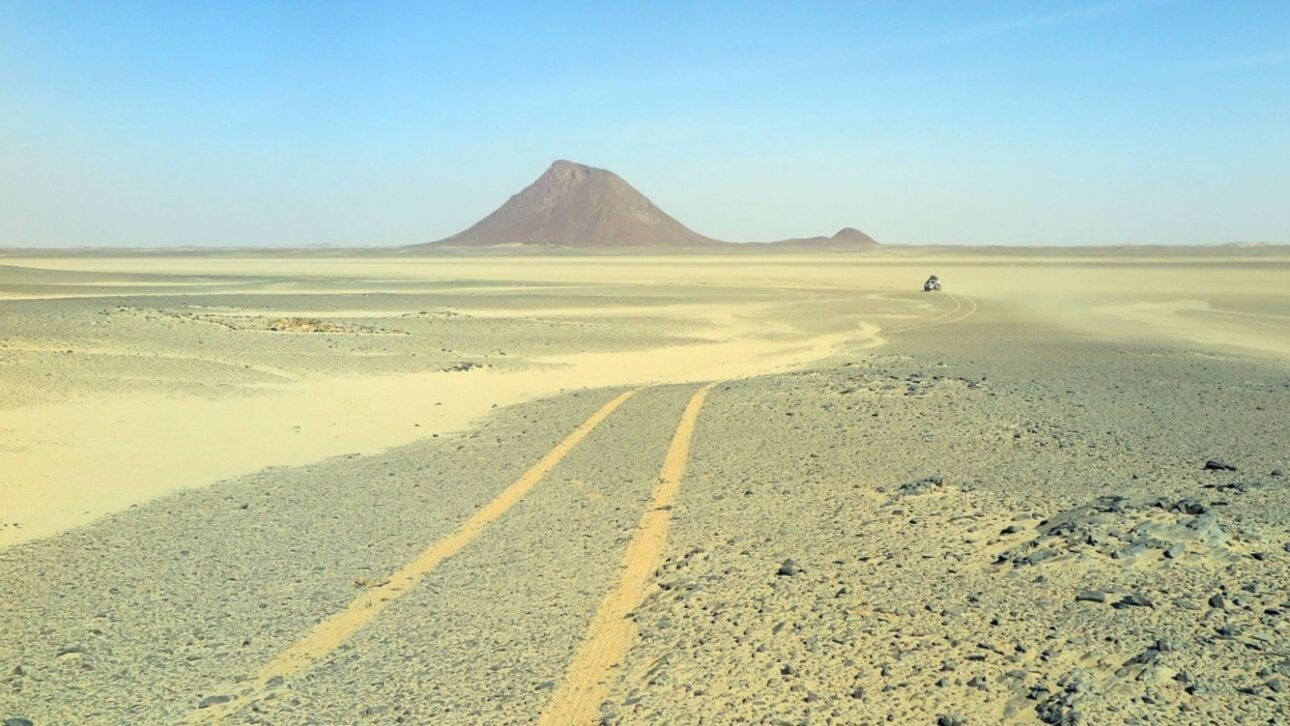
The paradox was born from two lines on the map. As explained by Wikipedia, in 1899 the United Kingdom defined the border between Egypt and Sudan by the 22nd parallel, a straight line. Then in 1902, the British drew a second administrative boundary, based on the actual use of the land by the tribes. By this second line, Bir Tawil was linked to Egypt, while a neighboring area, the Halaib Triangle, was linked to Sudan.
-
Swimming champion Shavarsh Karapetyan dove about 40 times into a frozen lake in Armenia to rescue a sunken bus, saved 20 lives, and lost his career because of it.

-
Júlia Pimentel, an 11-year-old from Minas Gerais, independently invented a new formula to calculate the square root using simple addition and multiplication, and her method was published in one of the most important mathematical scientific journals in Brazil.
-
New portable bathroom is ready in 90 seconds, measures 2.18 meters, fits in the car when closed, and offers privacy for showering and changing clothes.

-
They planted a sea of eucalyptus to produce cellulose, but the monoculture turned into a green desert, dried up springs and rivers, and pushed families out of regions in Minas Gerais and Bahia.


The problem is that the two regions move together, but in opposite directions. Egypt supports the 1899 line, which would give it the coveted Halaib Triangle, much larger, with access to the Red Sea. Sudan supports the 1902 line, which would guarantee it the same Halaib. The cruel detail is that, to keep Halaib, each country needs to give up Bir Tawil. Since no one wants to lose the valuable triangle, both reject the no man’s land, which is about 2,060 square kilometers, has no access to the sea, and is known as an inhospitable desert. Claiming it would, in practice, hand over the big prize to the neighbor.
But the no man’s land is full of people
This is where the part that the label hides begins. Bir Tawil may not have an owner in international law, but it has an ancient human presence. Nomadic peoples like the Ababda and the Bisharin have crossed that desert for centuries, long before any colonial line, following herding routes that ignore modern borders. For them, the idea that that land “belongs to no one” simply doesn’t make sense.
The relationship is so concrete that, according to reports gathered by the site ZME Science, Ababda elders have already made it clear that they consider Bir Tawil their territory, and that any visitor would need permission to enter. In other words, while the world treats the region as a legal void, those who really live and move around there exercise de facto control. The no man’s land, on the ground, does have someone in charge, even without a flag recognized by the UN.
The gold that changed everything
What made Bir Tawil even more contested was gold. In the last two decades, Sudan has experienced a gold rush, with the explosion of artisanal mining across the desert, and the no man’s land became part of this route. Informal mining camps emerged within and around Bir Tawil, attracting people willing to settle in a place that, officially, belongs to no state, precisely because it is far from oversight.
The dark side of this gold rush is environmental and sanitary. Artisanal mining often uses mercury to separate the metal, forming an amalgam that is then heated to evaporate the mercury and leave pure gold. This process releases toxic vapors and can contaminate soil and water, a serious risk even in a desert. In a region without law or owner, there is no one to enforce environmental rules, which turns the no man’s land into an open-air laboratory of the dangers of uncontrolled mining between Egypt and Sudan.
The line of fake kings
If gold attracts prospectors, the vacuum of sovereignty attracts dreamers and pranksters. Being officially no man’s land, Bir Tawil has become a favorite target for people who want to found their own country. The most famous case, reported by Al Jazeera, is that of the American Jeremiah Heaton, who in 2014 traveled there, planted a flag, and declared himself king of the “Kingdom of North Sudan,” just to fulfill his young daughter’s wish to become a princess.
However, Heaton is far from the only one. As listed by Young Pioneer Tours, an Indian businessman proclaimed himself king of the “Kingdom of Dixit” in 2017, and the next day, a Russian DJ claimed the same land as the “Kingdom of Middle-earth,” inspired by Tolkien. There have also been lawyers, businesswomen, and even kings declared only by blog, offering citizenship through online forms. None of these crowns are worth anything, as no claim has been recognized by any government or international organization. They are fake kingdoms over a very real no man’s land.
What Bir Tawil Teaches About Borders
Ultimately, the case of Bir Tawil is a lesson on how borders are human inventions. The region is not disputed in the usual sense, where two countries fight to claim it. It’s the opposite: it is rejected by both because accepting it would mean losing something more valuable. This exposes how the boundaries between nations, often inherited from old colonial decisions, have more to do with political calculation than with geography or with who actually lives there.
At the same time, the life that pulses in this no man’s land, with tribes, gold prospectors, and even fake kings, shows that humans cannot stand emptiness. Where the state does not reach, someone arrives: to herd, to mine, to dream of a crown. Between Egypt and Sudan, Bir Tawil remains a curious reminder that a map may say “nobody,” while reality insists on saying “everybody.”
Bir Tawil is one of those places that seem like an invention but really exist. A no man’s land between Egypt and Sudan, with no official owner, but with gold mining, nomadic peoples, and a legion of fantasy kings. It’s geography, geopolitics, and human comedy in the same piece of desert.
And you, would you be curious to step into a place that no country in the world wants to call its own, or would you prefer to leave this no man’s land to its fake kings? Tell us in the comments what you would do.


Be the first to react!