






 Portuguese
  Spanish
  4 min of reading
  0 comments


Platform supported by central banks of China, Hong Kong, Thailand, United Arab Emirates, and Saudi Arabia expands competition for new international financial networks
China is advancing preparations to commercially launch mBridge, an international digital payments system that can speed up transactions between countries, reduce costs, and expand the use of the digital renminbi amid the reorganization of global financial networks.
According to the Financial Times, the platform is led by Beijing and is supported by the central banks of Mainland China, Hong Kong, Thailand, United Arab Emirates, and Saudi Arabia. Additionally, an entity based in Hong Kong is expected to be created to oversee the system’s operations.
There is no official date yet for the commercial launch of mBridge. However, preparations are in an advanced stage, and the fees charged by the platform are expected to be about half the costs of traditional international payment systems.
-
Chinese aircraft carrier Liaoning conducts about 170 takeoffs and landings in the Western Pacific, but Japanese surveillance turns the training into a regional alert: Beijing denies specific targeting while Tokyo monitors the fleet that passed 590 km from Miyakojima, reigniting tension in Asia.

-
China did not like the decision by the U.S. to place BYD, Alibaba, and Baidu on a list linked to the Chinese military sector.

-
China imposes sanctions on the Philippine Defense chief, bans entry to Hong Kong and Macau, and turns criticisms over the South China Sea into a new diplomatic crisis that could bring Manila even closer to the US.
-
Somali referee was close to fulfilling his dream of officiating at the World Cup, was barred in the USA and returned home welcomed as a hero in Somalia




It is expected that small businesses will be among the main users of the solution. After all, this group often faces difficulties with conventional platforms like Swift, which are often considered expensive and complex for international operations.
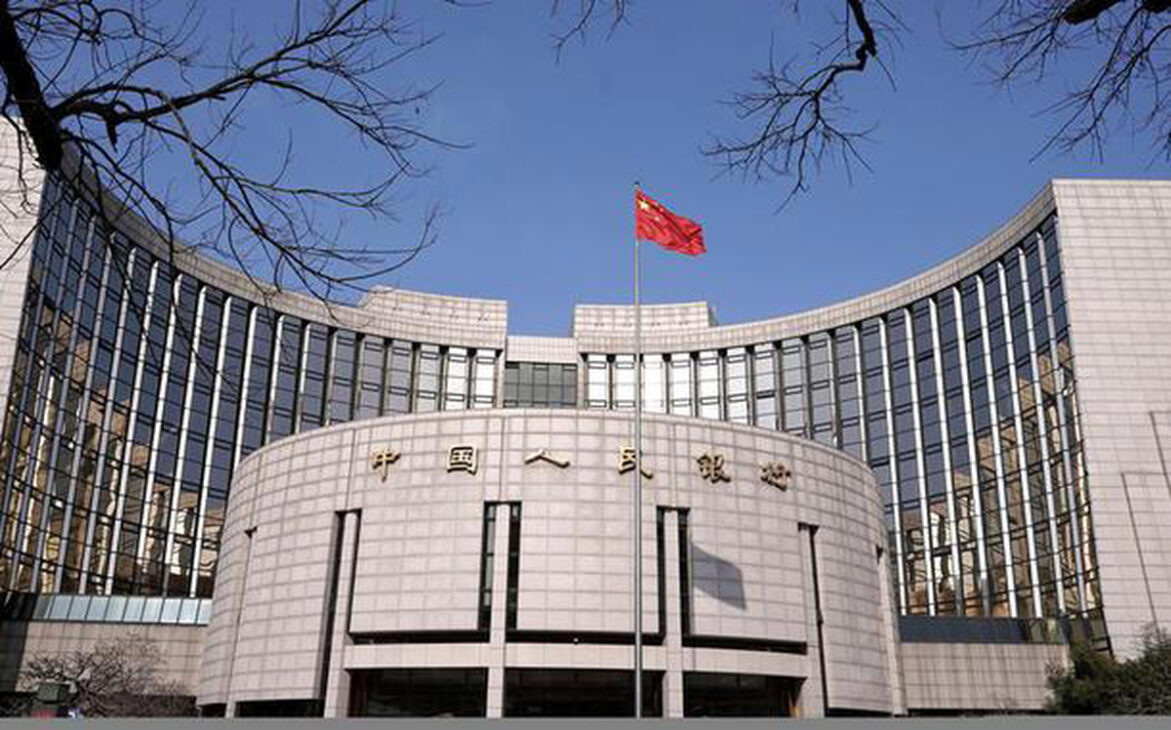
Digital renminbi gains strength in Beijing’s financial strategy
The advancement of mBridge comes at a time when China seeks to expand the global presence of its currency. This movement gained momentum after the war in Iran, a period during which the adoption of Cips, China’s cross-border renminbi clearing and payment system, increased.
Despite frequent comparisons with Swift, Cips has a different function from mBridge. In this sense, the new system appears as a separate and complementary initiative aimed at strengthening the digital renminbi, also known as e-CNY.
In practice, the platform aims to enable international transactions in a more direct, faster, and cheaper way. Additionally, the project emerges in a scenario of growing regional and private alternatives to traditional financial systems.
Initiatives like Sepa, linked to the European Central Bank, and cross-border QR code networks developed by the private sector, such as those of the Ant Group, also aim to make smaller, instantaneous, and international payments more accessible for tourists and businesses.
Competition for alternative financial networks grows behind the scenes
The advancement of these initiatives shows a reorganization of the global payment system, historically dominated by Swift. Therefore, experts assess that there is a silent competition for new financial infrastructures.
Tom Keatinge, founding director of the Centre for Financial Crime and Security Studies at RUSI, told the Financial Times that there is a “silent arms race” of alternative financial systems happening behind the scenes.
According to Keatinge, China is trying to secure a significant role for its digital currency in global finance through platforms like mBridge. For him, the project can be seen as a New Silk Road of digital currency.
Gene Ma, head of China research at the Institute of International Finance, assesses that the global payment landscape is no longer concentrated in a single network. Now, according to him, the market is divided among competing platforms.

Origin of mBridge involves Hong Kong, Thailand, and BIS
The mBridge originated from a previous initiative between the Hong Kong Monetary Authority and the Bank of Thailand, called Inthanon-LionRock. In 2021, the project adopted its current name and format.
In that year, the initiative began to include participation from the Bank for International Settlements, as well as the central banks of Dubai, China, and the United Arab Emirates.
Since then, the system has been closely monitored by authorities and analysts. One of the main concerns involves the possibility of countries or entities reducing their dependence on the dollar and circumventing international sanctions.
In 2024, the Bank for International Settlements transferred the project to its partners. The decision occurred amid questions about pressure from Washington, although Agustín Carstens, then general manager of the BIS, denied this influence.
The BIS and authorities from the People’s Bank of China state that mBridge follows anti-money laundering rules of the Financial Action Task Force, the global body responsible for tackling illicit financing.
Blockchain can enable international transactions in seconds
The technology used by mBridge allows direct transactions between central banks with their own digital currencies. To achieve this, the system operates through blockchain and reduces the need to use the dollar as an intermediary currency in exchange operations.
Commercial banks will also be able to participate in the transactions, provided they are under the supervision of their respective central banks. In this way, the platform combines digital settlement with local regulatory oversight.
The promise is that international operations will be completed in seconds. Currently, conventional systems may rely on longer timeframes, especially in cross-border payments involving multiple institutions.
So far, mBridge has already processed about 470 billion yuan, equivalent to approximately US$ 69 billion, according to sources cited by the Financial Times.
Chinese exporters may gain financial relief
Analysts assess that the platform can strengthen China’s position in international trade and deepen financial ties with regional partners, especially those linked to the Belt and Road Initiative.
Wang Jian, chief analyst of the financial sector at Guosen Securities, stated that for exporters, the system accelerates cash flow and reduces risks of liquidity tensions.
More broadly, Wang assesses that mBridge can strengthen China’s voice in the global monetary order and support the internationalization of the renminbi.
The People’s Bank of China did not comment on the matter.








Be the first to react!