






 Portuguese
  Spanish
  4 min of reading
  0 comments


Cara Brookins’ story shows how a 325 m² project, made with internet tutorials and help from her children, became a family restart, without professional experience and with practical learning in foundation, walls, plumbing, and electrical
A mother of four left behind an unsafe family environment, watched internet tutorials, and built a 325 m² house in Arkansas, United States, with her own family.
The information was published by CBS News, a U.S. news outlet that publishes general news. The case involves Cara Brookins, her four children, and a project undertaken without professional construction experience.
What seemed impossible became a learning routine. The family had to understand, in practice, stages like foundation, walls, plumbing, and electrical, using YouTube videos as support to build the house.
-
Brazilians build modern houses 10 minutes from Disney, with luxury finishes, 3 bedrooms, 3 bathrooms, a $227 condo fee, and potential for Airbnb, targeting investors who want to use the property in Orlando and rent it out when they are not in the United States.

-
A city with fewer than 2,000 residents believed that 3D-printed houses would solve its housing crisis, but the project stalled, walls cracked, the printer disappeared from the site, and the FBI got involved in the case.
-
India transforms coconut husk into biodegradable mats to reinforce rural roads, uses natural fibers under asphalt, stabilizes unstable soils, and demonstrates how agricultural waste can replace petroleum derivatives in projects subject to heavy rain and traffic.
-
Iron ore falls to 762 yuan in China as real estate sales decline and steel production hits lowest level since 2018




The house was built after Cara Brookins decided to restart away from an unsafe family environment
Cara Brookins left a situation where she needed to rebuild her life with her four children. The house emerged in this context, not as an internet adventure, but as an attempt to create a new space for the family.
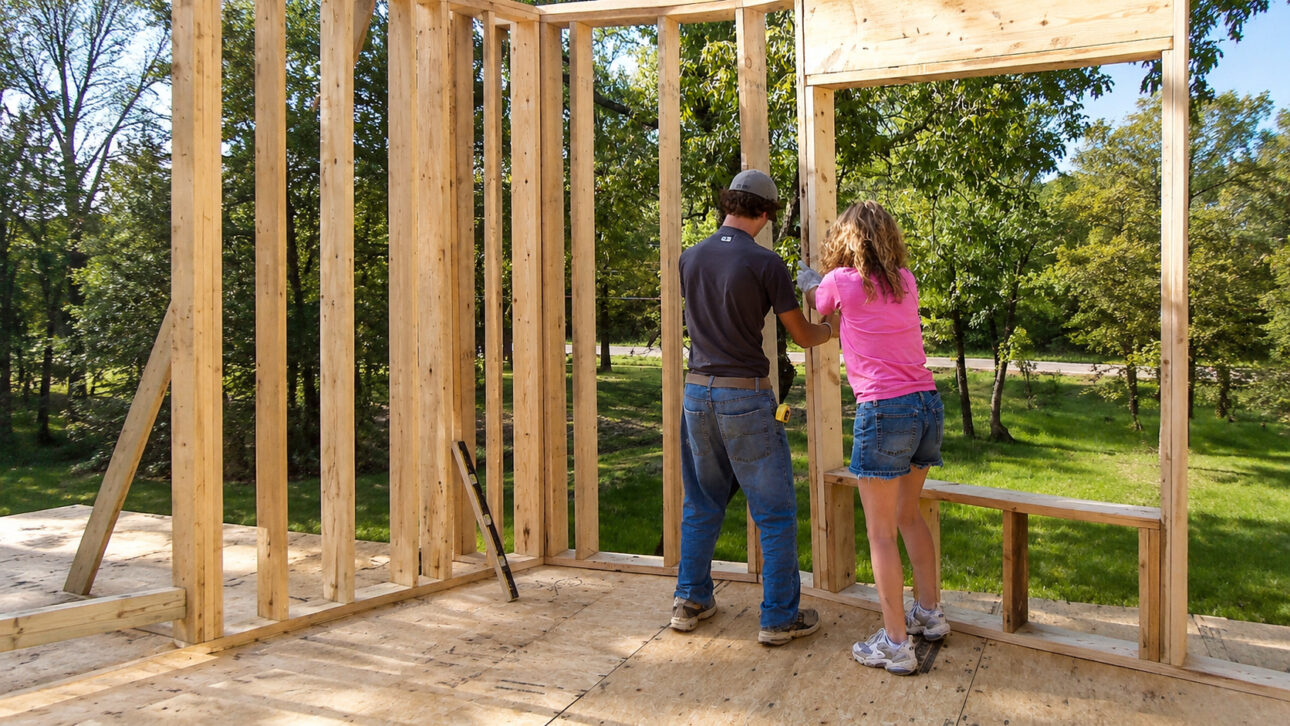
She had no professional experience in construction. Even so, she decided to undertake an entire project because she couldn’t buy a ready-made house that met the family’s needs at that time.
The construction took place outside Little Rock, Arkansas. The location became the scene of a profound change: a mother and her children went from being just residents seeking shelter to building their own home.
YouTube tutorials taught each step before the family got hands-on with the project
The family used YouTube to learn tasks that typically require experienced professionals. Before starting a step, they watched videos, compared explanations, and tried to understand the safest way to do it.
This learning included fundamental parts of construction. The foundation is the base that supports the house. The walls give shape to the building. The plumbing involves pipes and water. The electrical involves wires, outlets, and energy.
For those who have never built, each of these phases may seem too distant. Even so, the family progressed little by little, turning videos into practical guidance on the construction site.
CBS News reported that the project took nine months and involved the four children
CBS News, a U.S. news outlet that publishes general news, detailed that the construction took nine months. During this period, Cara Brookins and the children worked on different parts of the project.
At the time, the children were 17, 15, 11, and 2 years old. Each helped as much as possible. The older ones participated in heavier tasks, while the family’s routine also needed to include school, work, and caring for the youngest child.
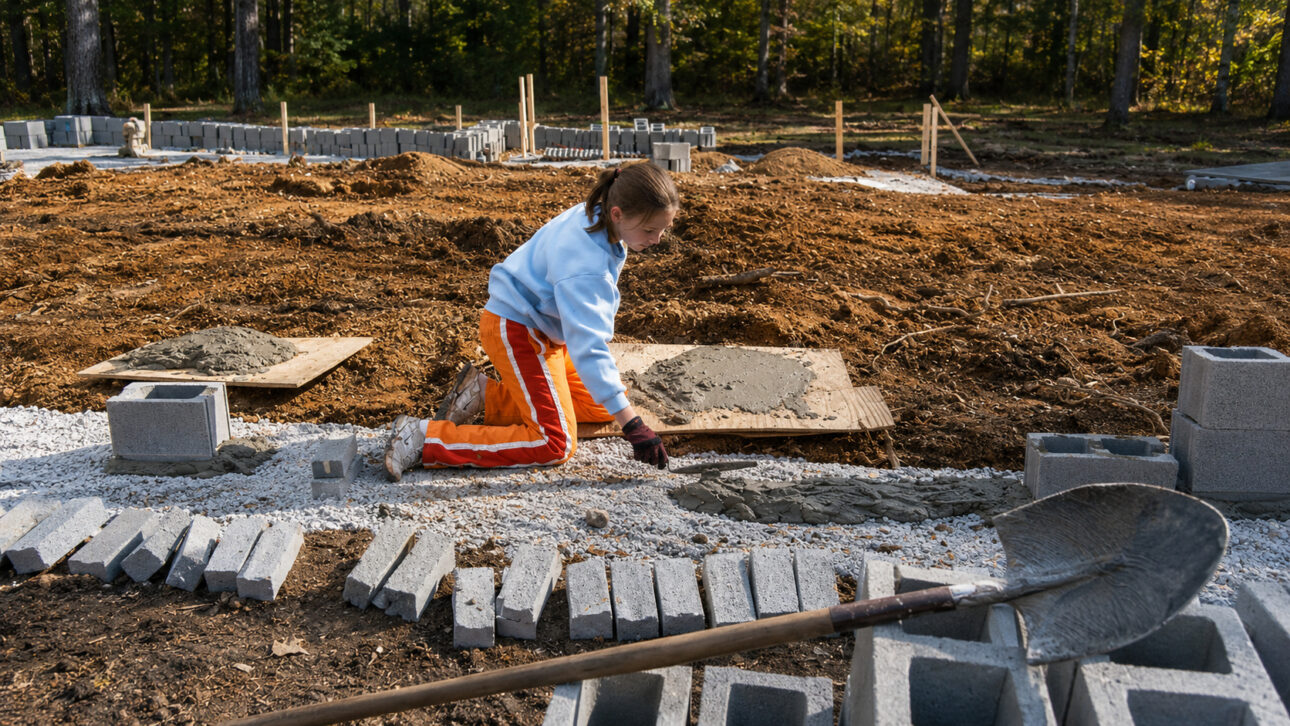
The project was neither simple nor quick. Building a house requires physical effort, time, and attention. Even with videos on the internet, the family had to deal with doubts, mistakes, and difficult tasks until they saw the house completed.
The 325 m² house shows the scale of the challenge
The house was approximately 325 m². For the Brazilian reader, this number helps to understand the scale of the project. It wasn’t a small renovation, nor an extra room in the backyard.
A house with 325 m² is large by the standards of many families in Brazil. This makes the case even more impressive because the family wasn’t just doing finishing work or assembling furniture.
They were building an entire residence, with foundation, walls, installations, and enough spaces for everyone. The size of the house shows that the challenge was much greater than just following videos on the internet.
Family work transformed the construction into a symbol of autonomy
The project also had a strong emotional weight. For Cara Brookins, building the house was a way to regain control after a phase marked by fear. For the children, participating in the construction meant seeing something concrete born from their own hands.
The process combined physical effort and life change. Each wall raised showed that the family was advancing. Each completed stage reinforced the idea that the new home depended not only on money but also on courage and persistence.
The story also shows the power and the limit of internet tutorials
Internet tutorials helped Cara Brookins and her children understand what needed to be done. They served as a visual guide, especially for a family without professional construction experience.
Even so, the story does not turn online videos into a magic solution. Building a house involves risk, responsibility, and decisions that affect the safety of everyone who will live in it.
The case draws attention because it combines digital learning and real effort. The internet opened a door, but the house only came off the ground because the family worked for nine months and faced each stage with dedication.
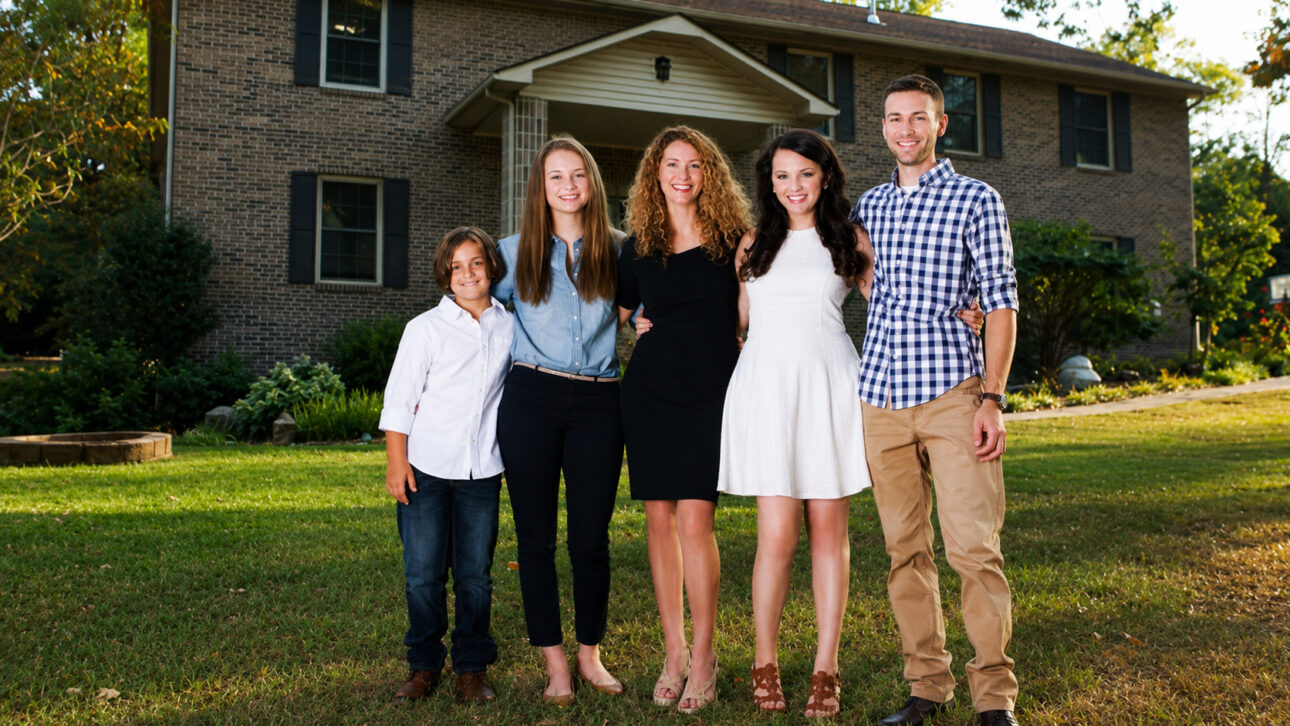
The 325 m² house built by Cara Brookins and her four children was marked by something greater than the construction itself. It became a symbol of a new beginning, with a family learning construction in practice and turning tutorials into a new home.
The story leaves a strong question: when life demands starting from scratch, how far can courage, the internet, and a family’s effort take someone?






Be the first to react!