






 Portuguese
  Spanish
 5 min of reading
  0 comments


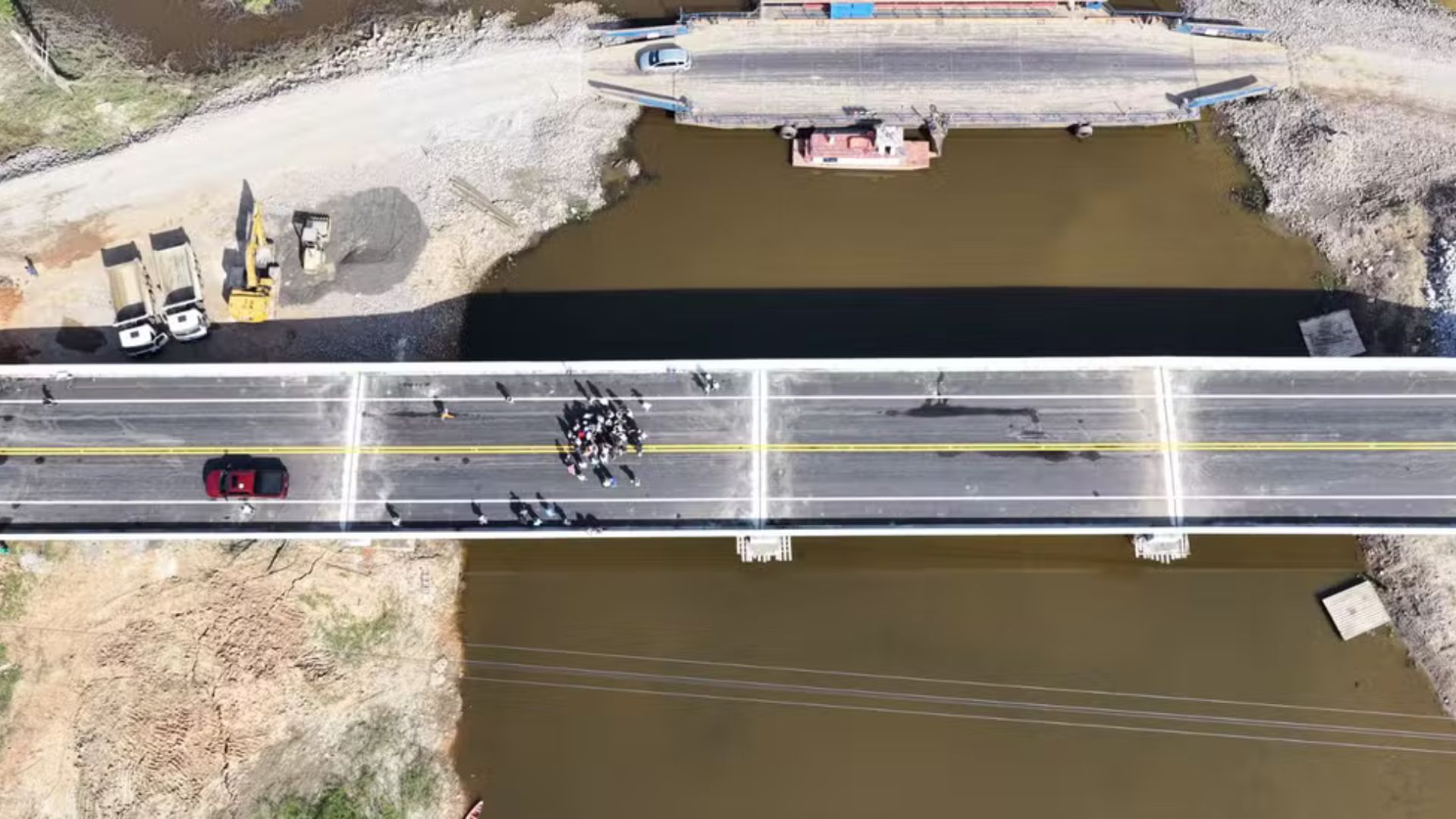
Reconstruction Of The Crossing Over The Autaz-Mirim River Exposes Geotechnical Challenges On BR-319 And Leads DNIT To Redesign Foundations After Collapse Registered In 2022, With An Estimated Investment Of R$ 30 Million And Expected Completion In The First Quarter Of 2026.
The new bridge over the Autaz-Mirim River, on BR-319, will have 210 meters in length and an estimated investment of R$ 30 million, according to DNIT, which decided to redesign the foundations after technical assessments indicated restrictions of the terrain and the compromising of the old bases.
BR-319 Connects Manaus To Porto Velho And Concentrates Strategic Flow
Located in Amazonas, BR-319 connects Manaus to Porto Velho and concentrates, at certain times of the year, a significant portion of the movement of people and the transport of goods, making each bridge a critical point for regional circulation and supply.
When a structure fails in this corridor, the impact usually goes beyond the immediate blockage, as the interruption affects supply routes, access to services, and the mobility of communities that depend on specific windows of trafficability throughout the Amazonian calendar.
-
Bolivian Female Construction Workers Form Association to Combat Discrimination and 38% Pay Gap in the Industry

-
Near Amsterdam, residents buy land and discover they must also build streets, manage drainage, handle waste, and grow food on half their plot.
-
Brazil’s WEG to Open New Factory in China by 2027, Expanding Production of Large Rotating Electric Machines and Low to Medium Voltage Motors in Rugao

-
Chinese Shipyard Secures $1 Billion in Orders for Low-Carbon Container Ships Amid Global Fleet Renewal Efforts


Collapse In 2022 Increased Pressure For Technical Review
The Autaz-Mirim bridge collapsed on October 8, 2022, hours after being closed due to risk, in an incident with no recorded victims, as reported at the time with information from authorities and DNIT itself.

At that time, BR-319 was already under alert for problems in nearby structures, and the sequence of occurrences increased the pressure for technical reassessments, especially after another collapse on the highway days earlier that resulted in fatalities.
Given this history, the reconstruction began to be treated internally as a “test project,” not by its length in meters, but because the decisive stage would be precisely that which almost does not appear in images: the relationship between foundation and subsoil.
Weak Soil Led DNIT To Redesign Foundations
With the advancement of studies and initial interventions, DNIT stated that it needed to abandon the strategy of reusing elements from the previous foundation, opting for a new design of bases and piles, compatible with the conditions of the riparian terrain.
In reports published at the end of 2025, local vehicles reported, based on information attributed to the agency, that analyses indicated that the soil would not support the original project, which led to reinforcement, expansion, and revision of planning.
The requirement to redo foundations under these conditions often alters the pace of the construction site because it shifts effort to deeper excavations and the execution of new bases, a stage that must be completed before the consistent advancement of the deck.
Foundation Engineering Is Decisive In The Amazon
In riparian environments, the subsoil can vary over short distances, with more recent and saturated layers alternating with more resistant materials at depth, which requires geotechnical investigations and sometimes adjustments during execution to avoid settling.
In this logic, the bridge cannot depend on an unstable “floor,” as displacements can compromise alignment, support devices, and joints, in addition to reducing durability under heavy traffic, vibration, thermal variations, and flooding cycles.

Therefore, when “weak soil” emerges as a determining factor, the technical focus shifts to the sizing of piles and the transfer of load to more competent layers, even if this implies reconfiguring the project and revising deadlines.
Drought Influences Construction Timeline
Still in 2025, DNIT emphasized that the initial phase of the work depended on the dry season to execute excavations and concrete placements, noting that it was operating with equipment dedicated to excavation and the placement of concrete in the structure.
In practice, this means concentrating sensitive tasks in more favorable windows because the behavior of the river and access to the riverbed directly influence productivity, especially when work fronts need to operate safely in floodable areas.
Even with planning, the progress of a bridge in this context requires additional controls, as the dynamics of ebb and flow can interfere with logistics of equipment, stability of work fronts, and supply of materials to the construction site.
Expected Delivery In The First Quarter Of 2026
In an institutional report released in early 2026, DNIT informed that the Autaz-Mirim Bridge was progressing at an “accelerated pace” and maintained the expected completion in the first quarter of 2026, as part of the actions following the collapse of 2022.
Prior to this, in December 2025, local reports already indicated that the delivery had been postponed to 2026 precisely to accommodate technical changes, including reinforcements and structural adjustments related to the limitations identified in the subsoil.
Final Phase Includes Piles, Beams, And Slab Preparation


In the first half of February 2026, new updates reported by local outlets and profiles, with attribution to official DNIT data, indicated progress towards the final phase, with the concreting of the last piles and the start of beam placement.
The same information also indicated that the slab was entering preparation and concreting stages, a sequence that usually occurs when the “invisible part” of the work, related to the foundations, has already reached conditions to receive the upper elements.
Although the bridge does not rank among the longest in the country, the case gained significance because it condensed engineering decisions that rarely become explicit to the public, such as redoing bases, deepening piles, and adjusting the design to the behavior of the terrain.
In the end, the reconstruction of the Autaz-Mirim exposes a recurring point in infrastructure projects in the Amazon: the success of a crossing depends less on what appears above the waterline and more on the quality of what supports everything below.
If the subsoil can change an entire project in the middle of the process, how many other Brazilian bridges might reveal similar challenges only when the works finally start to “talk” with the terrain?





-

-

3 people reacted to this.