






 Portuguese
  Spanish


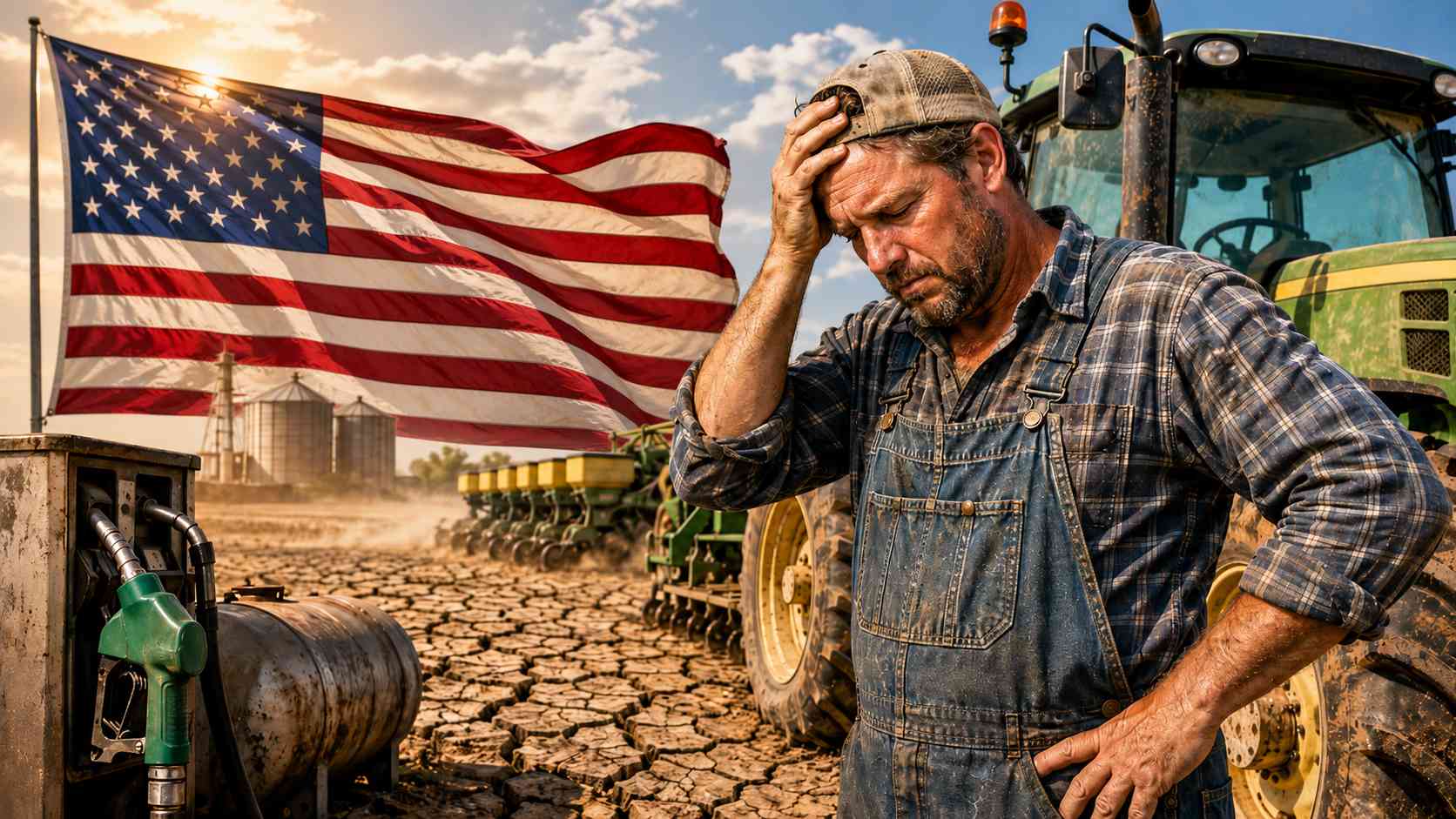

American farmers face rising diesel prices in the middle of planting season, after billions in losses from tariffs, strained fertilizer supplies, drought in productive areas, and credit difficulties that hit small family farms and Black-operated farms hardest.
American farmers are facing financial pressure from rising diesel prices, drought, and the effects of trade tariffs during the spring planting season. A report from The Guardian showed that rising costs threaten small family farms, reduce profit margins, and amplify difficulties in recent years.
The last few years have been tough for farmers in the United States. Last year, producers lost an estimated US$34.6 billion after former trading partners stopped buying American products amidst tariffs. Now, the war with Iran has also affected fertilizer supplies and driven up diesel prices.
American agriculture relies heavily on diesel-powered engines to operate tractors, trucks, and farm machinery. The increase comes precisely during the spring planting season.
-
Producer receives news and had to cull almost the entire herd, bounced back with the help of compensation, and is now producing 450 liters of milk per day in SC.

-
Quail Eggs Reveal a “Secret Code” on Their Shells Explaining Unique Patterns and Colors

-
Rare Tropical Fruit Canistel, with Egg Yolk Color and Caramel Flavor, Gains Interest from Researchers and Small Producers in Brazil
-
Brazilian Farmers Develop Wheeled Metal Lever to Ease Cassava Harvesting Without Heavy Machinery



Farmers face rising diesel prices during planting season
Blake Gendebien, owner of a 485-hectare dairy farm in Lisbon, New York, said rising costs came at a difficult time. His property has 500 cows, and he uses about 75,700 liters of fuel to plant and harvest crops.
In April of last year, Gendebien paid US$2.65 per gallon for off-road diesel. This fuel is used by agricultural vehicles and equipment that do not circulate on public roads, and is exempt from federal and state taxes.
This year, off-road diesel is approaching US$5 per gallon. Recent data shows that 86% of American farmers manage small family farms with annual gross incomes of US$350,000 or less.
Many of these properties operate with profit margins of up to 10%. According to Gendebien, the increase in fuel represents a direct threat to farms that were already facing difficulties.
Drought and costs reduce rural producers’ margins
In the Fountain Creek Valley, south of Colorado Springs, Sam Frost is also monitoring rising fuel prices. A fourth-generation farmer and CEO of Frost Livestock Company, he works with hay production, an activity that generates gross revenue close to US$200,000.
His brother, Will Frost, is responsible for producing organic meat and vegetables sold at local markets and in baskets.
Together, they operate two diesel-powered trucks and eight tractors used to plow, plant, and harvest approximately 425 acres. On March 2, Frost paid US$3.13 per gallon for on-road diesel and US$3.08 for off-road diesel.
Last month, agricultural fuel in his region reached US$4.43 per gallon. Frost would normally have bought twice as much diesel, but the drought delayed the start of field preparation for planting.
To cope with higher costs, he plans to reduce other farm expenses. Even so, he stated that part of the expenses will likely be passed on to consumers.
In northeastern North Carolina, cotton farmer Julius Tillery changed his planting process to reduce diesel consumption. Owner of a 125-acre farm started by his great-great-grandfather in the early 20th century, he said he is more careful with planting dates.
Tillery explained that he cannot risk planting in bad weather and losing fuel to an early frost. Before the price hike, he used part of his stock to try to start planting earlier.
Now, he said, that safety margin no longer exists. To save money, Tillery said he started consuming cheaper foods, including instant noodles.
Black farmers report more financial difficulties
The difficulties are greater for Black farmers who operate small rural properties. Data from the 2022 Agricultural Census show that 55% of farms operated by Black people earned less than US$5,000 per year, while only 12% reached US$100,000 or more.
Between 2017 and 2022, the total number of farmers fell by 4%, remaining below 47,000 producers. Properties operated by Black individuals saw an even greater decline, with an 8% reduction.
Of the 1.9 million American rural properties, only 32,600 were operated by Black individuals. Critics of the survey state that the real number could range between 5,000 and 18,000 properties.
According to Tillery, many Black farmers face difficulties in obtaining credit. Therefore, relying on loans to buy fuel is not considered a viable alternative.
Even during the Biden administration, the USDA granted direct loans to only 36% of Black farmers who applied. Among white farmers, the rate reached 72%.
The Trump administration recently canceled a $300 million program aimed at Black farmers and other underrepresented groups. The goal was to expand capital and prevent land loss.
John Boyd, founder of the National Black Farmers Association, raises Angus cattle and grows soybeans, corn, wheat, and hemp on 800 hectares in Virginia. He estimates paying approximately $6 per gallon for diesel.
Boyd stated that a 100-horsepower tractor consumes about 100 gallons of fuel in just one or one and a half days of planting. According to him, there are nearly 200 pending foreclosure notices for properties owned by Black farmers.
Farmers demand action from the American government
Gendebien believes there is a disconnect between Washington and the rural population. He stated that there is a lack of farmers in the American Congress and criticized the delay in approving a new farm bill.
The House approved its version of the bill on April 30, while the Senate is still expected to present another proposal in the coming weeks. Gendebien also announced his candidacy for Congress against Elise Stefanik.
Among the measures advocated by farmers is the end of the tariff war. Gendebien stated that producers prefer to earn income through fair trade, without relying on public money.
Sam Frost also called for reinforcement in federal agencies that have experienced mass layoffs. According to him, the lack of staff hinders access to subsidies and technical evaluations necessary for agricultural projects.
Despite financial difficulties, advancing drought, and rising diesel prices, farmers remain determined to stay on the land. Boyd stated that agriculture provides him with freedom and assured that he does not intend to give up at this time.








