






 Portuguese
  Spanish


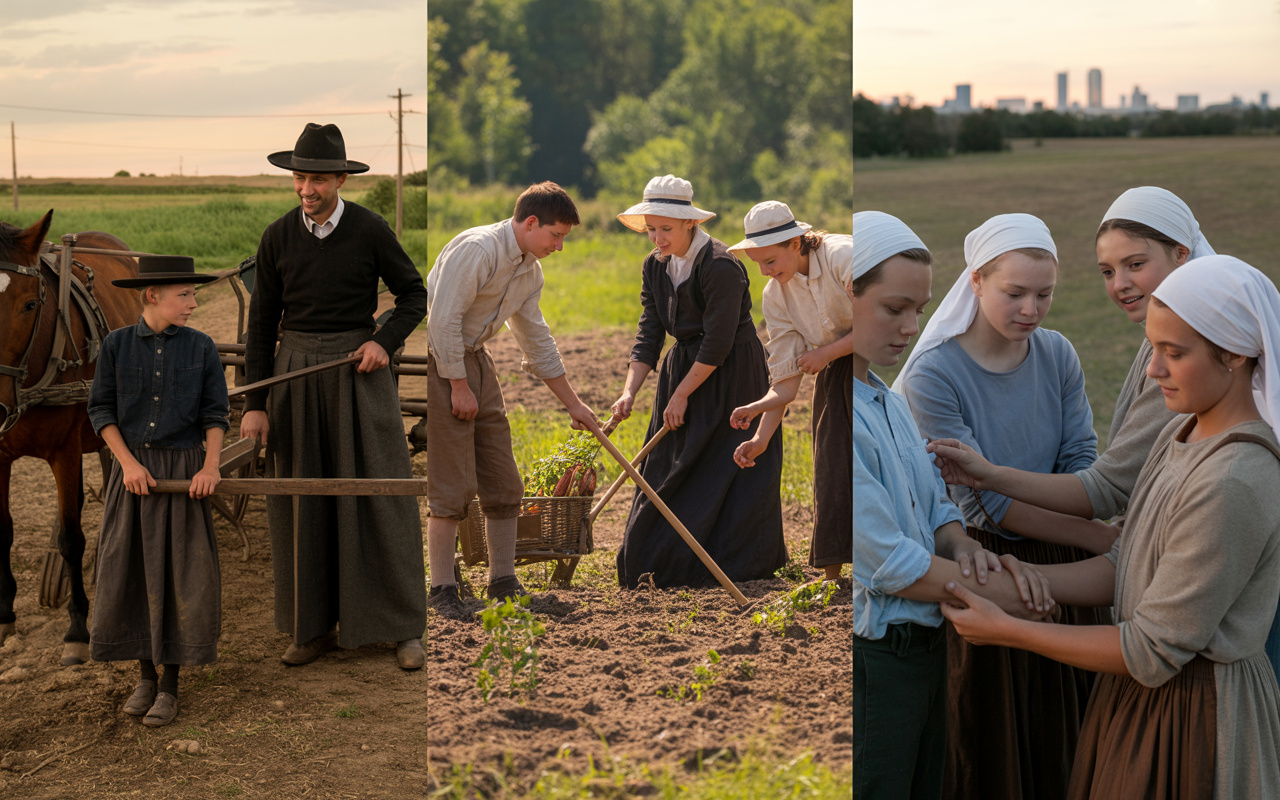


They Live Without Electricity, Cars, Internet, or Banks by Their Own Choice. Amish, Menonites, and Hutterites Maintain Schools, Farms, and Their Own Economy in the 21st Century Challenging Modern Life.
In 2026, humanity is hyperconnected, dependent on smartphones, power grids, satellites, artificial intelligence, and digital platforms for basic tasks such as studying, working, shopping, or communicating. In this context, it may seem impossible to imagine entire communities living without electricity, without cars, without internet, without television, and without cell phones, not out of poverty, but by religious, cultural, and philosophical choice.
This is the case for the Amish, Menonites, and Hutterites, Christian groups of Anabaptist origin that have maintained a way of life based on simplicity, manual labor, rural living, family presence, and community self-sufficiency since the 16th century. They have not disconnected from the world—they have never connected in the way we know.
Today, while large cities compete for renewable energy, 5G expansion, green hydrogen, and AI chips, these communities operate a parallel society, functional, stable, with their own economy, and without dependence on the state, which draws the attention of anthropologists, sociologists, economists, and cultural resilience specialists.
-
Driver Crosses 100-Year-Old Railway Bridge Over Uruguay River, Encounters Rural Couple Preserving Traditional Farming Methods

-
Rural Producer Returns to Brazilian Farmland, Builds Family Agricultural Business with Children’s Support and Industry Backing
-
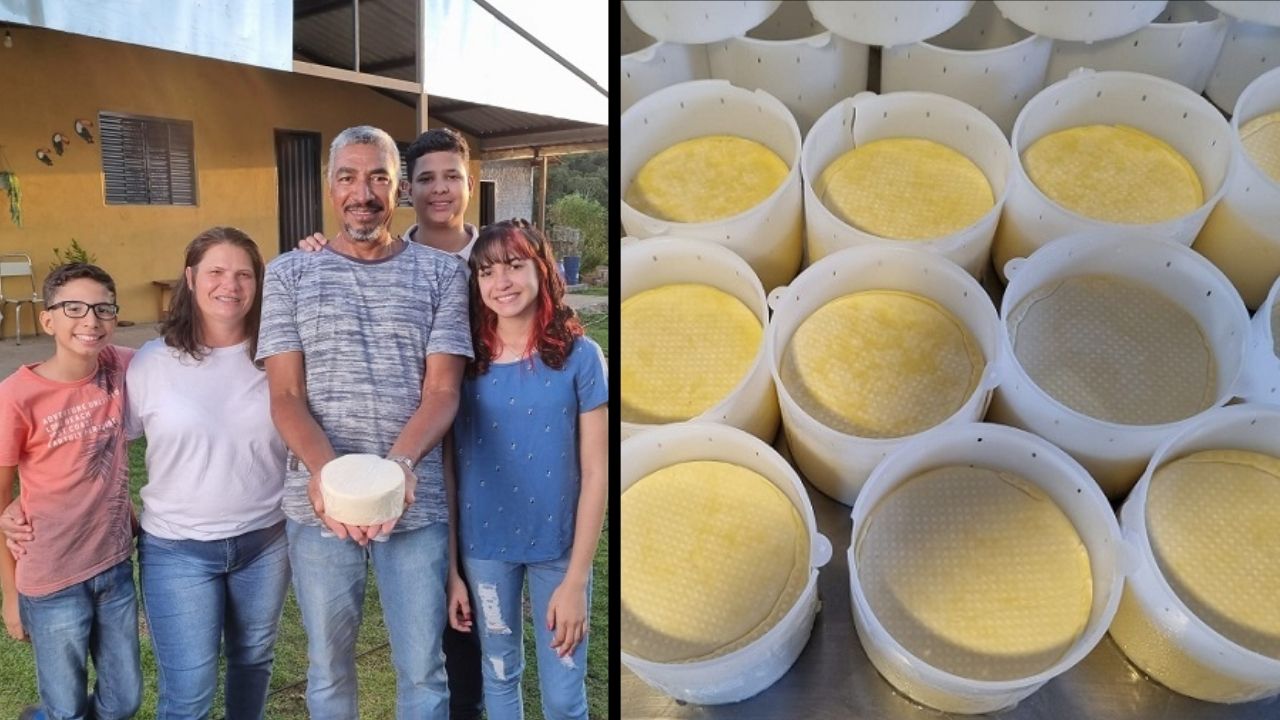
Goiás Couple Boosts Artisan Cheese Production from 25 to 70 Kilos Daily with Technical Support, Transforming Family Life in Rural Brazil
-
13-Year-Old Discovers Ancient Roman Ring Near Mount Carmel, Now Set for Display in Jerusalem



Historical Origins: A Break with Modernity Before Modernity
The Amish, Menonites, and Hutterites emerged in the context of the Protestant Reformation in Central Europe. Persecuted for not accepting infant baptism and insisting on independent and egalitarian communities, many migrated between the 17th and 19th centuries to North America, where they found ideal rural territories to live their way of life.
Amish
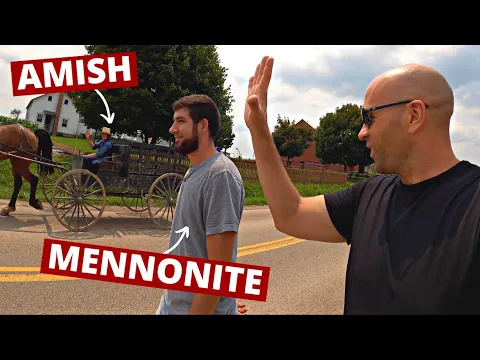

- They emerged in the 17th century in Switzerland under the leadership of Jakob Amman.
- They predominantly migrated to the USA in the 18th century.
- Today, they are concentrated in Pennsylvania, Ohio, Indiana, with a rapidly growing population due to high birth rates.
Menonitas

- They derive from the followers of Menno Simons (16th century).
- They are the most internally diverse group: ranging from ultratraditional communities to moderate groups that use electricity.
Hutteritas

- Founded by Jakob Hutter in the 16th century.
- They stand out for their communal collective living: work, income, and property are shared.
These three groups inherited a worldview that does not measure progress by technology, but by social cohesion, religious discipline, and agricultural autonomy.
Why Do They Reject Electricity, Cars, and Internet?
The rejection is neither irrational nor anti-scientific. For these communities, technology is not neutral: it changes behaviors, creates dependency, and can generate internal inequality. Their question has never been “does this make life easier?” but “does this destroy the community?”.
For example:
- Electricity connected to the public grid can bring television, internet, cell phones, and individual entertainment—which, for them, weakens community life.
- Private cars allow young people to move away from the communities, leading to family dispersion.
- Internet opens doors to individualism, consumerism, and external culture, which clashes with the religious and social values of the group.
Additionally, these communities value manual labor, self-sufficiency, circular economy, family closeness, and spiritual life, which contrasts directly with the urban pace based on productivity, speed, and consumption.
Life Without Electricity: What Is the Daily Life of a Society That Rejects the Electric Circuit

It is common to imagine that living without electricity means misery, but in the case of the Amish and some Menonites and Hutterites it is the opposite: life without modern energy requires social organization, self-sufficiency, and technological ingenuity.
Sources of Light
- Kerosene lantern
- Candles
- Gas lamps
- Strategically positioned windows
Refrigeration
- Natural ice
- Underground houses
- Ammonia refrigeration (some groups allow)
Kitchen
- Wood stoves
- Brick ovens
- Propane stoves
Communication
- No cell phone, no internet, no television
- Use of letters, messengers, or in-person visits
Transportation
- Horse and buggy for the Amish
- Bicycles in some Menonite communities
- Tractors without rubber tires to avoid “excessive” mechanization
Education
Education is community-based, in-person, and practical. Children learn:
- Arithmetic
- Reading and writing
- Agriculture
- Cabinet-making
- Sewing
- Home management
Unlike modern schools, there are no computers, screens, or devices.
Self-Sufficient Economy: How Do These Communities Survive Without State and Consumer Capitalism

There is a common misconception that these groups live in “total isolation.” This is not true. They interact economically with the world, but in a structurally limited way.
Amish
They have a strong agricultural economy, producing:
- Dairy products
- Grains
- Vegetables
- Meats
- Handicrafts
- Furniture
- Construction
Many Amish work as highly skilled carpenters and contractors. They accept cash but rarely use banks.
Menonitas
Some groups operate their own businesses, schools, and hospitals. Others live in rural colonies and follow stricter routines.
Hutteritas
They are known for their large-scale agricultural production thanks to the communal model. They operate with high economic efficiency, using collective property, division of labor, and productive discipline.
Selective Technology: They Do Not Reject Everything, But Evaluate Everything
Contrary to popular myth, these communities do not completely reject technology. They have strict criteria for adoption:
Does it weaken the community?
If it undermines collective life, it is rejected.
Does it create internal inequality?
If it puts one above the other, it is rejected.
Does it replace essential work?
If it diminishes the value of manual labor, it is avoided.
This explains why:
- Amish may use solar panels for water pumps, but not internet.
- Hutterites may have modern tractors, but not personal cars.
- Moderate Menonites may have electricity, but without television.
Technology that saves lives or increases productivity without destroying social cohesion is admitted.
In the 21st Century, These Communities Survive for a Simple Reason: They Work
Amid the digital age, these groups have not disappeared, they have grown. There are three central reasons:
High birth rate
Amish families typically have between 5 and 8 children.
Low cultural dropout
Between 80% and 90% of young people decide to stay in the community after their choice phase (Rumspringa).
Low external dependency
They produce most of what they consume.
While urban societies face crises of mental health, digital loneliness, indebtedness, and hyperconnectivity, these groups show opposite indicators: strong social cohesion, low crime, low technological anxiety, economic autonomy, and a strong sense of belonging.
What These Communities Reveal About the Modern World
When observed from the outside, Amish, Menonites, and Hutterites may seem “backward.” But when analyzed through the lens of cultural resilience, self-sufficiency, and community health, one question arises:
Who Is Adapted to What?
While modern societies depend on:
- Power grids
- Internet
- Banks
- Supermarkets
- Motorized transport
- Medical technology
- Digital consumption
These groups depend on:
- Family
- Community
- Physical labor
- Land
- Manual skill
- Faith
- Food autonomy
They do not represent the past; they represent another possible future, necessarily minority, but functional.





Hutterites have electricity, vehicles, cellphones and most use the internet. The same it true for most Mennonites.