Portuguese
  Spanish


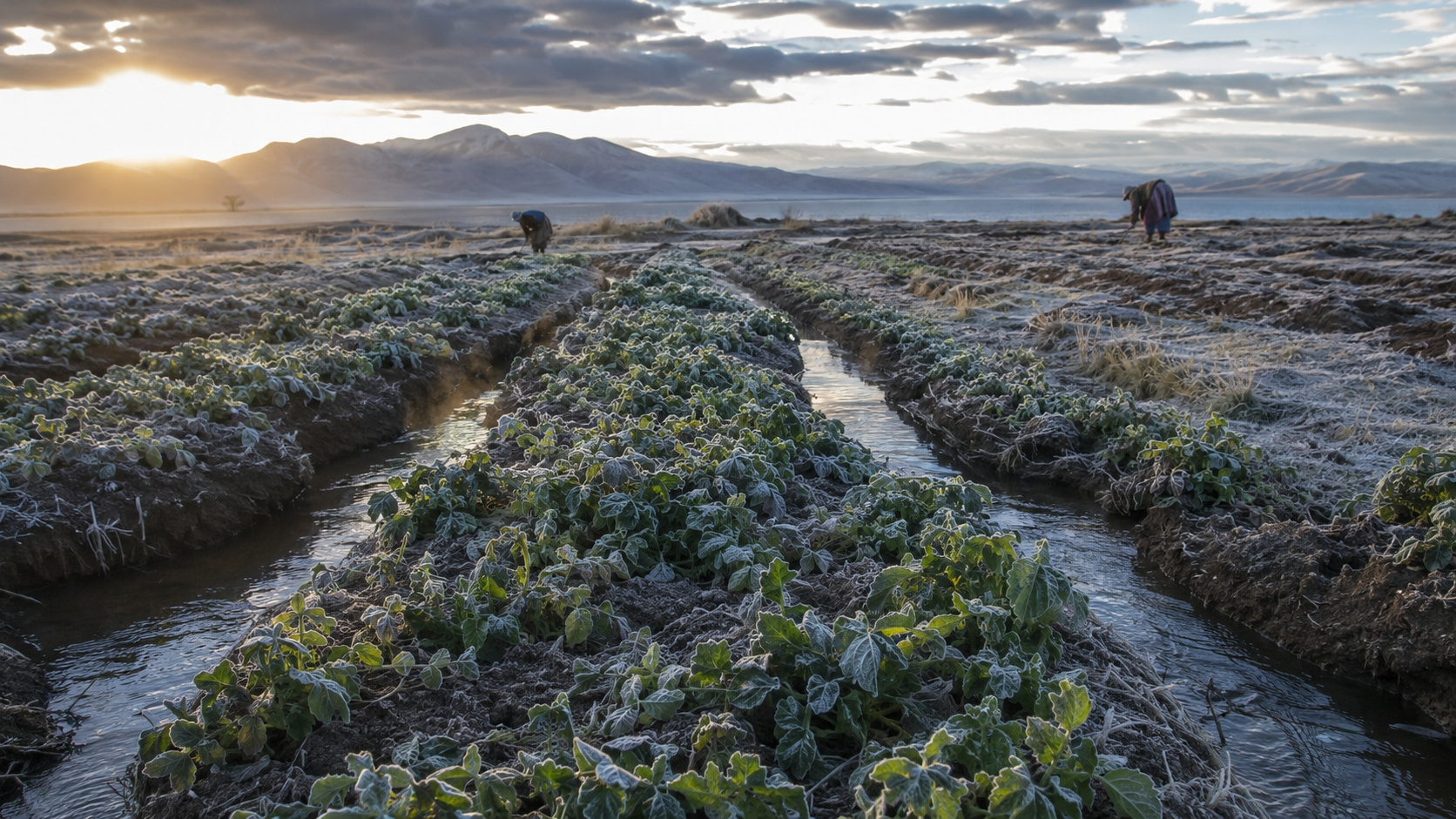

Recovered agricultural technique near Lake Titicaca uses raised fields and water channels to reduce frost damage, control floods, and produce potatoes in one of the most challenging agricultural areas of Peru.
During a frosty night on the Peruvian altiplano, the temperature plummets over crops located at approximately 3,800 meters above sea level. In the waru waru, however, the beds are elevated and surrounded by channels whose water helps retain some of the heat received during the day.
This 3,000-year-old agricultural technique has been reused in abandoned lands near Lake Titicaca. The system also helps control rainwater, maintains moisture near the crops, and allows sediments and organic matter to return to the soil.
The information was published by FAO, the United Nations agency for food and agriculture. The recovery work began with approximately 500 families from ten communities in the Huatta region and later reached more than 30 communities in the altiplano.
-
While imposing a 25% tariff on Brazilian products, the Trump administration is visiting 9 cities in Brazil to convince companies to open operations in the US and turn commercial pressure into an offensive to attract investments, factories, and branches to the American market.

-
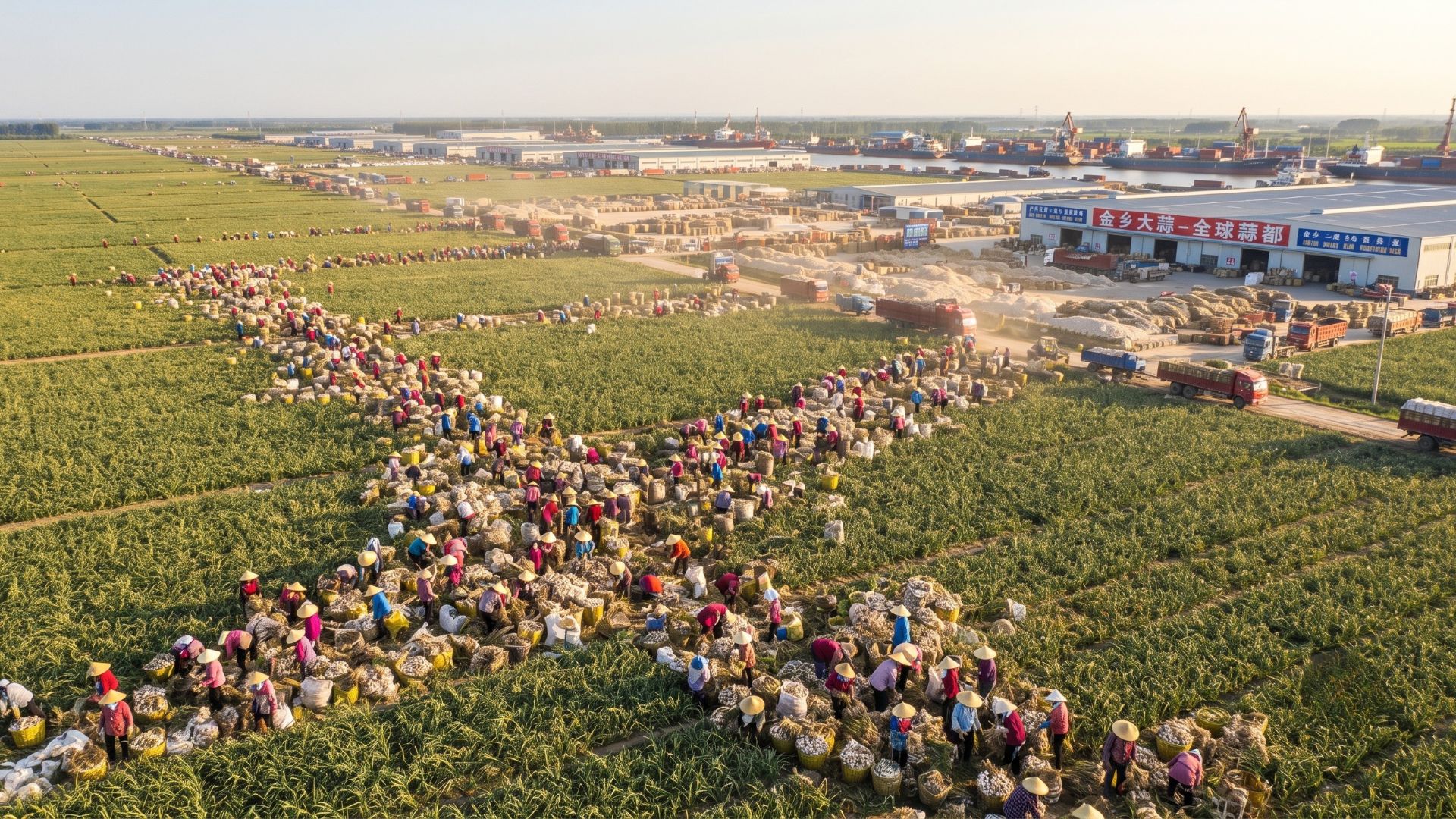
Garlic Empire: China produces 21.3 million tons per year, harvests 58 thousand tons per day, and controls 73% of all garlic consumed on the planet.

-
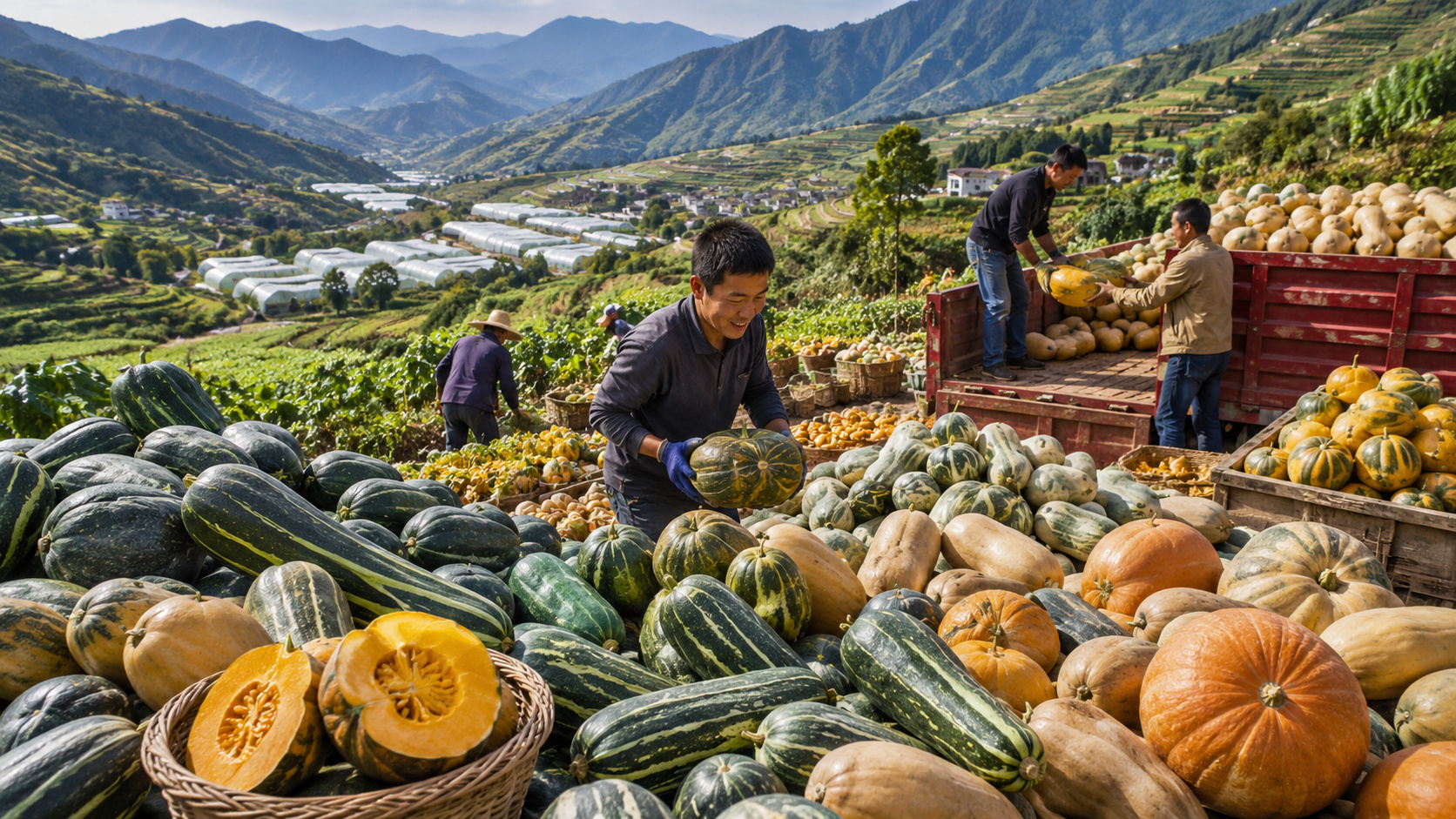
China harvests 7.37 million tons of pumpkins, zucchinis, and gourds in a single year, dominates 31.2% of global production, and transforms mountainous areas into export hubs.

-
An executive left his career in the city to restore the family’s small property, started with an organic garden of just one thousand square meters, and transformed the land into a farm that supplies supermarkets, employs hundreds of people, and became a national reference in organic food.

Waru waru created an agricultural technique before the Inca Empire
The waru waru are long strips of land raised above the natural terrain level. Between them, the farmers open channels capable of receiving water, sediments, and plant remains.


Pre-Inca farmers developed this design to cope with the conditions of the altiplano. The region has irregular rainfall, poor soils, and strong frosts during a short growing period.
In a flat field, excess water can cover the roots and destroy the crop. In the raised fields, part of this water runs into the side channels, while the plants remain in a higher area.
The system did not rely solely on the construction of the beds. Terraces, lowered areas, and community forms of organization also helped maintain more secure production in difficult environmental conditions.
Water from the channels absorbs heat during the day and releases part of it at night
The water warms slowly when it receives sunlight. After night falls and the temperature drops, it loses this heat gradually, mitigating the cold around the beds.
This process creates a small, more protected environment near the plants. The water does not turn a cold night into a warm night, but it can reduce the intensity of the cold near the plantation.
The elevated position of the beds also favors the contact of the plants with the heat released by the channels. Thus, the design combines height, water, and land organization to reduce the exposure of potatoes to frost.
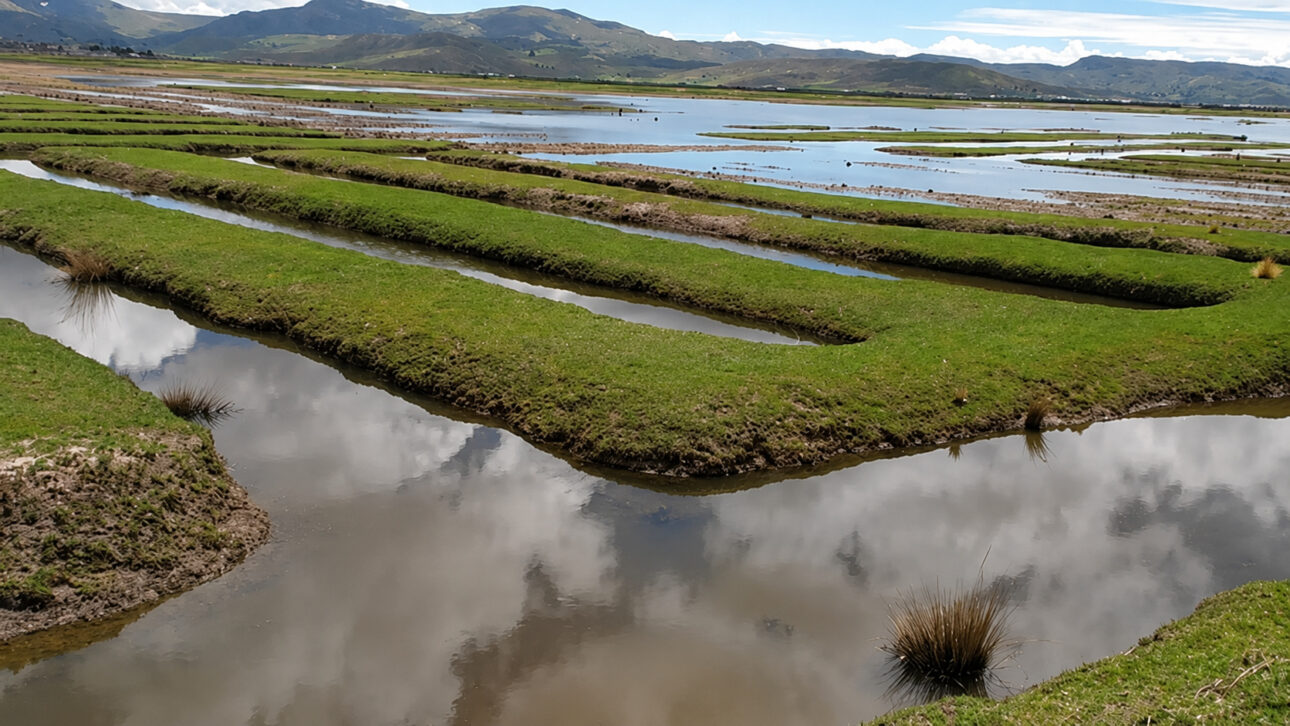
The protection is especially important at 3,800 meters of altitude, where intense cold can compromise a crop in a few hours. The operation does not require machines to heat the field or industrial temperature control systems.
Modern fields were flooded while the ancient beds resisted
Part of the ancient waru waru fell into disuse, while thousands of hectares were affected by modern and expensive irrigation projects. These interventions failed to improve agricultural productivity as expected.
The difference between the models became evident during a flood. Hundreds of hectares of wheat and potatoes prepared with machines were destroyed, while elevated fields located nearby remained protected.
The channels received part of the excess water and prevented it from immediately covering the entire planted area. The simple operation turned the lateral spaces into a form of drainage, that is, an outlet for the accumulated water.
In periods with little rain, the water retained in the channels also helps to conserve moisture near the cultivated soil. The system, therefore, improves the field’s ability to cope with both excess and reduction of water.
Recovery through agricultural technique involved 500 families and reached more than 30 communities
The revival began with agricultural organizations from Huatta, which gathered about 500 families distributed across ten communities. The farmers rebuilt the beds and tested adjustments to adapt the ancient technique to the conditions found on their lands.
In 1986, the Peruvian government took over the program. The recovery advanced and came to involve more than 30 highland communities.
The FAO, United Nations agency for food and agriculture, recorded that community participation was decisive for the advancement of the work. The producers themselves participated in the experiments conducted in the fields.
The construction required between 200 and 900 person-days of work per hectare. The difference depended on the physical conditions of each location, but the number reveals that the waru waru do not represent a quick or easy solution.
Collective work sustains the fields and keeps the channels functioning
The recovery of the waru waru required individual, family, and community work. Many fields were built on lands of the communities themselves that were unused.
After construction, the channels need to remain clean and the beds must receive maintenance. Without this care, the water may stop circulating and the structure loses part of its capacity to protect the crops.
The channels also accumulate sediments and organic matter. Aquatic plants, animal manure, and crop residues are incorporated into the soil to return nutrients to the land.
This process reduces dependence on purchased products but does not eliminate the necessary effort. The system trades part of the use of industrial inputs for agricultural knowledge, constant maintenance, and cooperation among farmers.
Potatoes yielded between 8 and 14 tons per hectare
The documented experiences achieved between 8 and 14 tons of potatoes per hectare, without industrial fertilizers or pesticides. The result belongs to the monitored fields and cannot be treated as guaranteed productivity for the entire region.
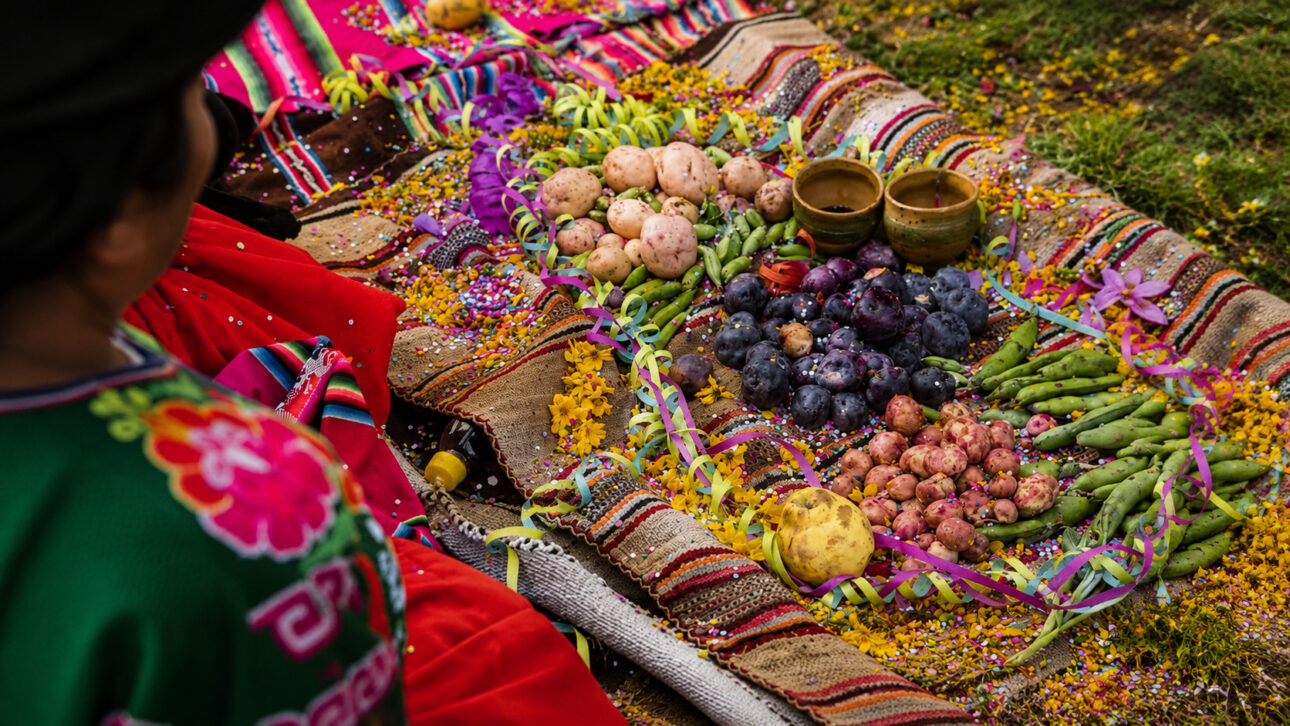
Fertility was maintained with aquatic plants, manure, and residues from the crops themselves. These materials feed the soil and help preserve the necessary conditions for cultivation.
In addition to potatoes, the fields allowed for planting oats, wheat, and barley during the winter. The variety of crops increases land use without altering the basic functioning of the beds and channels.
The most important data is not just in the quantity harvested. The waru waru combined agricultural production, frost protection, flood control, and reduced dependence on industrial inputs.
Peruvian technique offers a reference, but not a ready-made recipe for Brazil
Producers in the South of Brazil also deal with frosts, while farmers in flood-prone areas use raised beds to keep roots away from excess water. This does not mean that Brazilian conditions are the same as those of the Peruvian highlands.
Soil, terrain, temperature, amount of rainfall, and availability of workers vary between regions. Therefore, copying the format without assessing local characteristics may not produce the same result.
The Peruvian experience shows that controlling water and planting height can increase a crop’s resilience. It also demonstrates that ancient agricultural techniques can remain useful when they solve clear production problems.
The waru waru reclaimed abandoned lands through a simple structure, formed by raised earth and channels. The system helps to face frosts, floods, and dry periods while returning organic matter to the soil.
However, its efficiency depends on collective effort and continuous maintenance. The 3,000-year-old technique remains linked to a form of organization in which families and communities share the work necessary to maintain the fields.
In the face of increasingly challenging climatic events for agriculture, should Brazil study ancient techniques like the waru waru or focus efforts solely on modern solutions? Leave your opinion in the comments.