Portuguese
  Spanish


Three gold torcs from the Bronze Age were found by detectorists near Carlisle on May 23, 2026, during a rally in Harker, an area considered for a National Grid project with a substation and 28km overhead line, reigniting debate on preservation, infrastructure, and historical value in British Cumbria.
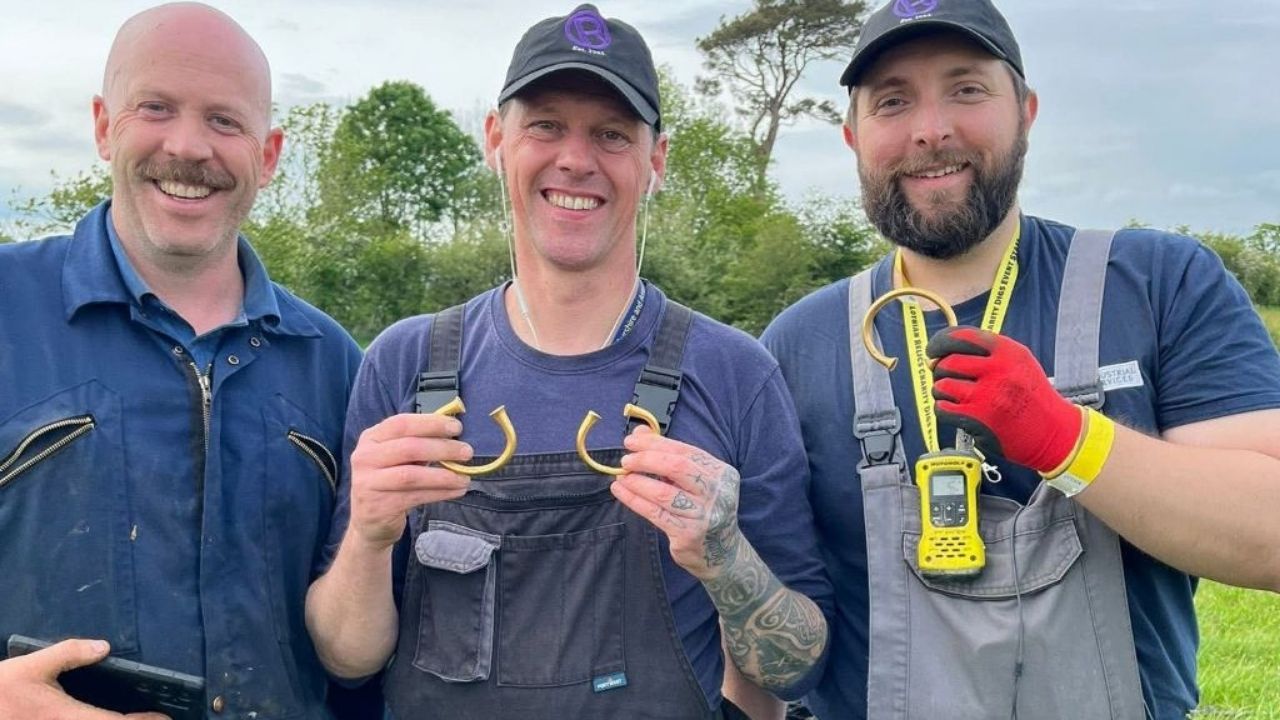
Three gold torcs from the Bronze Age, estimated to be around 3,000 years old, were found by metal detectorists near Carlisle, in Cumbria, northern England. The find occurred on May 23, 2026, during an event organized by Lothian Relics Metal Detecting, in an area near Harker.
The information was published by Cumbria Crack on May 27, 2026. According to the report, the objects were found on land that National Grid is evaluating for the Cross Border Connection project, which may include a new substation and a 28km overhead electricity line in the region.
Rare find emerged during detectorists rally
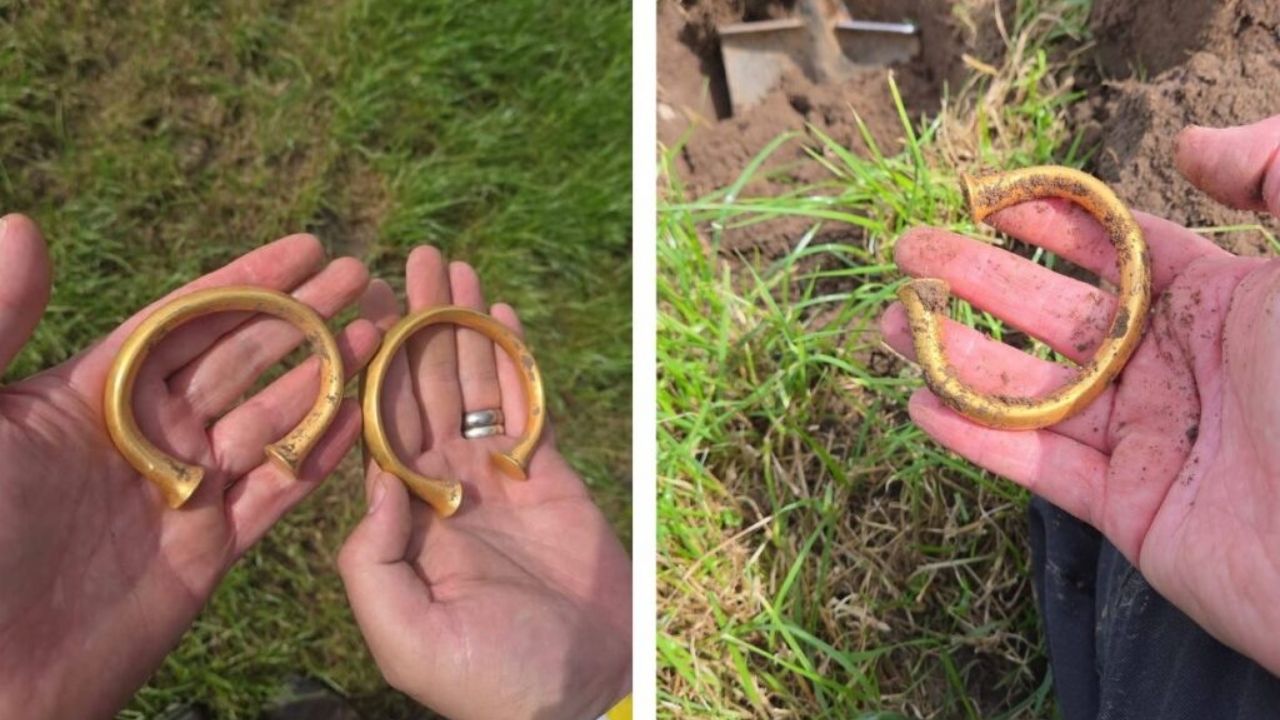
The torcs were found by detectorists Alan Daniels and Andy, both from Scotland, during a metal detecting rally that gathered 180 people. The event took place in a large area, with about 50 fields and 470 acres surveyed over four days.
-
He throws ice cubes into the dough to bake the pizza and the result turns into parmesan cream: at 73 years old, pizzaiolo Sudário Silva makes a pizza in São Roque that he claims is unique in all of Brazil.

-
Instead of demolishing slums and building housing projects, Thailand transferred the money directly to resident cooperatives, which renegotiated the land and rebuilt their own neighborhoods in the same place; there are already more than 90,000 families in about 1,500 communities.
-
The public school that educates from teenagers to the elderly in the same class: in Araraquara, EJA graduated 36 students at once, including Dona Lourdes, aged 83, who now wants to enter college.
-
Deaf boy heard his parents for the first time, smiled upon recognizing the family’s voices, and tried to repeat “mama” and “papa” with the help of a hearing device, turning a rehabilitation appointment into an emotional video that reached over 5.9 million views on social media.


The first object caught attention due to its shine and weight. Shortly after, participants returned to the initial point and located another torc a few meters away. A third specimen appeared about 10 meters from there. The sequence transformed a common search into a find considered rare even by experienced detectorists.
Torcs may be around 3,000 years old
The objects are described as gold torcs from the Bronze Age, a period marked by ornamental metal pieces and objects associated with status, rituals, and the circulation of wealth. According to those involved in the find, the pieces may be approximately 3,000 years old.
One of the torcs might be damaged, possibly due to plowing or contact with agricultural machinery over time. Even so, the set drew attention for its preservation and rarity. Finding three pieces together changes the interpretation of the site, as it may indicate an intentional deposit rather than just an isolated loss.
Organizers see national importance in the set
Gary Robertson, rally organizer and affiliated with Lothian Relics Metal Detecting, stated that he believes the torcs have great national importance. He highlighted that finds of this type usually appear in isolation, and that three pieces together may point to a broader archaeological site.
According to him, the region had already revealed other objects during the event, including medieval coins, Roman coins, and a Viking brooch. The quantity of materials found in different fields reinforced the perception that the area may hold historical layers from various periods.
Site may indicate ancient ritual burial
The hypothesis raised by participants is that the torcs may be linked to a ritual deposit from the Bronze Age. This interpretation still depends on official evaluation, proper recording, and archaeological analysis, but the set found clean and relatively concentrated increased interest in the site.
The finds were reported to the finds liaison officers in Carlisle, responsible for helping members of the public and detectorists identify and record archaeological objects. This process is essential for the discovery to be analyzed with scientific rigor, without relying solely on the visual or commercial value of the pieces.
Estimated value may reach £500,000 per piece
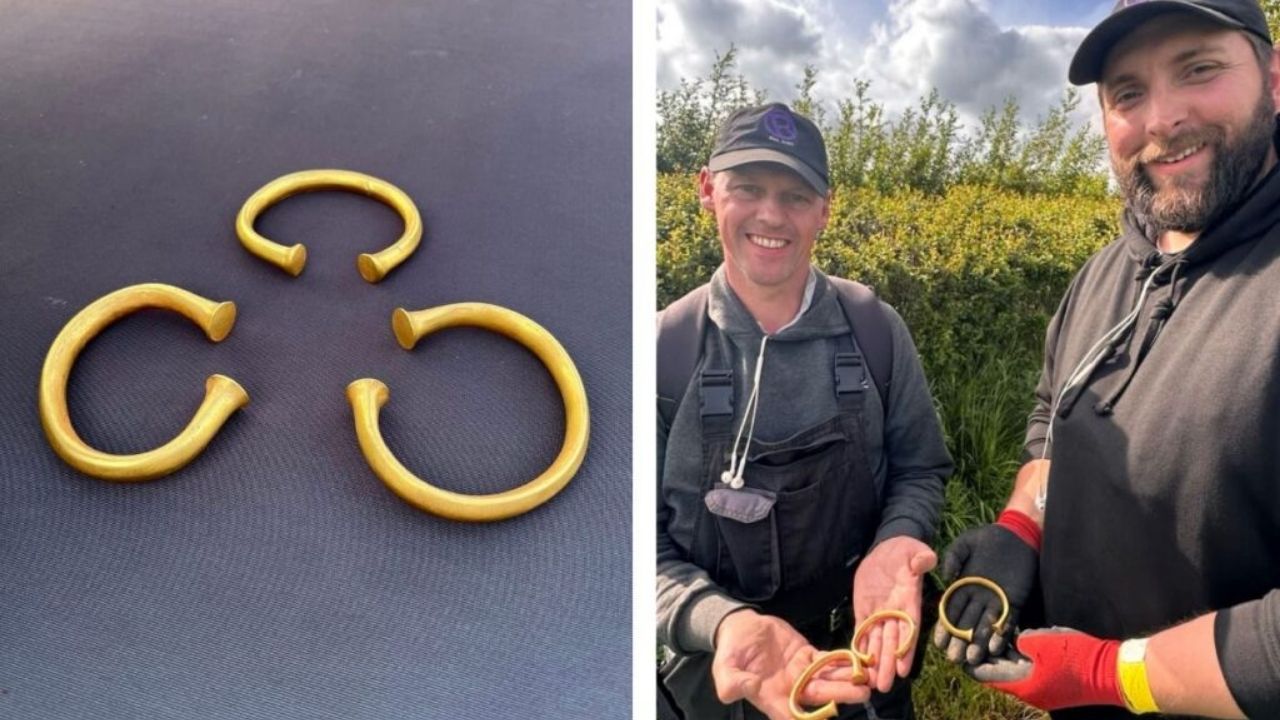
Gary Robertson estimated that each torc could be worth about £500,000, but this value still depends on evaluation and a process that may take years. If a museum decides to acquire the objects, the finders and the landowners may receive a reward, according to the procedure applicable to this type of find.
Although the financial estimate draws attention, the main weight of the discovery lies in its historical value. A Bronze Age gold torc is not just an ancient jewel, but a piece capable of helping researchers understand the social, symbolic, and territorial practices of communities that lived in the region millennia ago.
Energy project passes through the same area
The torcs were found on land assessed by the National Grid for the Cross Border Connection project. The proposal includes electrical infrastructure between the England-Scotland border and a new substation, with one of the options involving about 28km of overhead line.
The route called option A would end at a substation north of Carlisle, near the current Harker substation, and would pass through the area where the rally took place. Option B proposes a longer route, about 47km, south of Carlisle, crossing the Hadrian’s Wall World Heritage Site region where there are underground remains of the wall.
Owners call for attention to local heritage
The rally was organized with the support of rural landowners in the region, including Allan Harty, from Whamtown, as well as other landowners. Some local residents and owners oppose the project for fear of impacts on the landscape, properties, and community routine.
Allan stated that the search for artifacts would help understand the heritage value of the area before any infrastructure advances. For residents opposed to the project, the torcs reinforce the need to assess whether the territory deserves some type of archaeological protection.
National Grid says it considers verified findings
A National Grid spokesperson stated that the company takes discoveries of this type seriously. According to the published statement, the development of the proposals considers detailed surveys, feedback from public consultations, and specialized heritage assessments.
The company also informed that it maintains contact with the Cumberland Council and Historic England. Verified findings will be considered in the project evaluation, and discoveries must be recorded through the Portable Antiquities Scheme to contribute to the archaeological record.
Council awaits details on location and materials
The Cumberland Council stated that its Historic Environment Service is aware of the finds made at the metal detection rally near Blackford. The agency reported that it is awaiting more details about the exact locations and the materials recovered.
The eventual official designation of archaeological protection is up to Historic England. Evaluation requests can be submitted to the institution, which analyzes whether a certain site should receive formal recognition. For now, the discovery increases the pressure for investigation, but it does not alone determine the fate of the area.
New consultation expected to occur in 2027
The National Grid conducted consultations on the project between October and December of the year prior to the report. The company is still analyzing the feedback received and developing more detailed proposals for the planned infrastructure in the region.
The updated proposals are expected to be presented in a second round of consultation scheduled for 2027. Until then, the gold torques from the Bronze Age enter the debate as a new element, capable of increasing the weight of discussions on heritage, landscape, and energy planning.
Ancient gold puts past and infrastructure face to face
The case near Carlisle shows how an archaeological discovery can change the perception of an area previously seen only as a possible route for infrastructure. Three gold torques from the Bronze Age, found in sequence, opened a discussion that involves history, energy, rural property, and preservation.
The question now is how authorities, archaeologists, residents, and the National Grid will balance the need for new electrical structures with the protection of a possible historical site. Do you think finds like this should halt infrastructure projects or just require more studies before construction? Share your opinion.