






 Portuguese
  Spanish
  5 min of reading
  0 comments


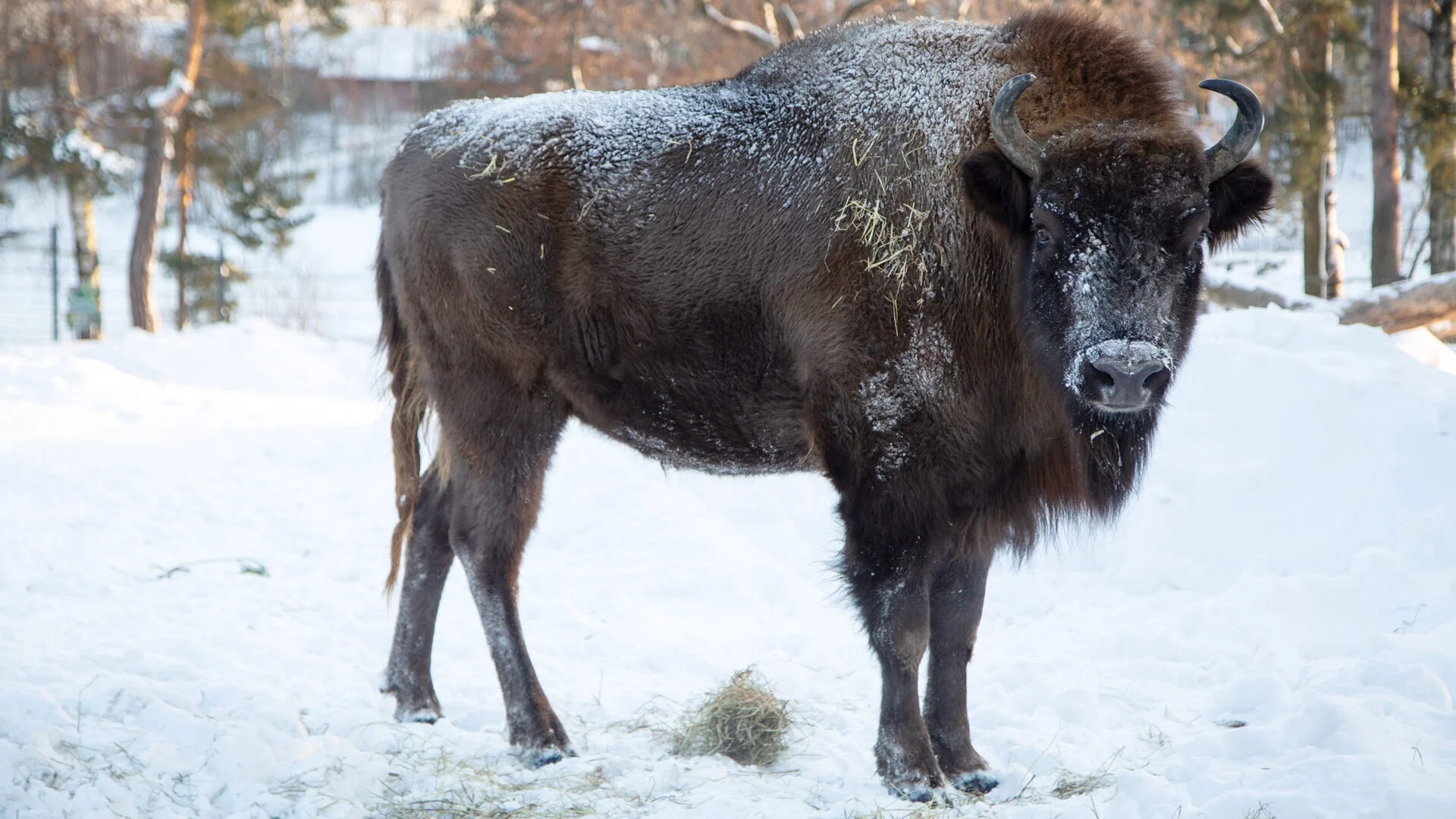
European Bison, A 3.5-Meter, 1000 Kg Giant, Accelerates Environmental Recovery and Boosts Tourism, But Also Increases Tensions With Those Who Rely on Livestock and Agriculture.
The european bison has returned to roam freely in the mountains of Central Europe and has gained fame as a landscape engineer for altering forests, pastures, and even the economies of villages.
The expansion is happening from the Carpathians and the Rhodope Mountains, with rapid population growth, while new conflicts arise with livestock farmers and agriculturists living near these animals.
What Happened and Why It Gained Attention
In the early 2010s, the number of free-living european bison on the continent was just over 2,500. Today, the total is between 7,000 and 9,000.
-
Survivor of 1966 SS Daniel J. Morrell Shipwreck in Lake Huron Recounts 38-Hour Ordeal in Extreme Cold

-
The Greatest Hoax in World Cup History? The Film That Denied Brazil’s 1958 Victory and Exposed How Fake Evidence Can Seem Convincing on TV
-
Fake South Korean Online Stores Offer Shopping Thrill Without Spending Money or Receiving Products
-
The War of Jenkins’ Ear: How a Severed Ear Sparked One of the 18th Century’s Most Unusual Conflicts


This advance is the result of captive breeding, translocations, and reintroduction projects that gained momentum in different regions.
The southern Carpathians in Romania and the Rhodope Mountains in Bulgaria have become showcases of this return, with initiatives supported by Rewilding Europe, WWF, and the LIFE programs of the European Union.
How Reintroduction Advanced in the Carpathians and the Rhodope Mountains
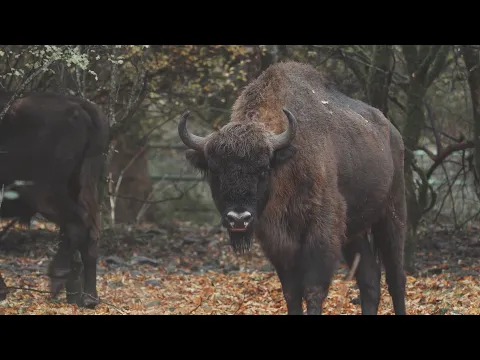

In the southern Carpathians, the european bison had disappeared over 200 years due to hunting and habitat loss. Starting in 2014, waves of reintroduction with animals from 32 captive breeding centers in Europe formed a free population of more than 100 individuals in the Țarcu Mountains.
In the Bulgarian Rhodope Mountains, the first group was reintroduced in 2013. The herd grew from an initial phase to over twenty animals, with new arrivals expanding the area of the experiment.
The declared goal is to achieve a viable and self-sustaining population capable of thriving in the environment without relying on continuous reinforcements.
The Size and Strength of the Bison, Europe’s Largest Land Animal, Explain Why It Changes the Environment
The european bison is the largest land animal in Europe and catches the eye at first glance due to its unusual size.
An adult can measure between 2.1 and 3.5 meters long and reach up to 1.95 meters tall at the shoulder, placing it above any other wild mammal on the continent.
The weight reinforces this impressiveness. Females typically range from 400 to 600 kg, while males can weigh between 600 and 920 kg, with records reaching up to 1,000 kg.
The short and curved horns, found in both males and females, are used for defense and territorial disputes. Combined with the muscular hump, the broad neck, and the thick fur, they help explain why the animal can knock down vegetation, clearings, and alter the natural layout of forests and pastures.
How Bisons Change Forests and Pastures in Practice
The european bison is a large herbivore, and its daily routine includes feeding on vegetation, trampling the soil, rolling in mud, and dispersing seeds. This combination makes the animal an active player in creating open areas.
GPS tracking indicates that herds use areas over 90 km², roaming between forests, clearings, and pastures in search of food according to the season.
By consuming branches, bark, and young shoots, the bison creates clearings, reduces the spread of dense thickets, and helps maintain a mosaic of pastures, lighter woodlands, and patches of shrubs, which benefits flowers, pollinating insects, and birds that feed on insects.
Water, Soil, and Carcasses: Effects That Almost No One Sees
The tracks and wallowing spots create small depressions that accumulate rainwater. Over time, puddles and micro-wet areas emerge on slopes and valley bottoms that were previously just pastures.
In these areas, animals like deer and wild boars reappear, along with predators like the wolf. The return also affects the presence of scavengers, a group often overlooked.
When a bison dies, the carcass becomes a hub of activity for vultures, crows, and foxes, while the remains help enrich the soil and nearby waters, aiding rapid nutrient recycling, pathogen control, and water quality regulation.
Nature Tourism Grows and Becomes a Source of Income
The restoration of large herbivores has also entered the radar due to climate-related impacts. Modeling indicates that a free population of about 170 bison in 48 km² of pasture can multiply the carbon capture capacity of these areas by ten, keeping vegetation active through grazing and reusing organic matter.
In the southern Carpathians, there is an estimate of tens of thousands of tons of additional carbon captured per year in the landscape, equivalent to the annual emissions of tens of thousands of cars.
In Romanian villages near the Țarcu Mountains, the motto Bison Means Business has become a driving force for trails, observatories, and rural accommodations, creating nature safaris to see bison, bears, and wolves just hours away from Timișoara.
The Difficult Side: Damage, Fear, and Conflict with Residents

The enthusiasm of those who see bison as a symbol of restored nature does not always match the reality of those who share roads, pastures, and forests with these animals.
In nearby villages, the perception is growing that the bison causes more conflict than other herbivores, primarily due to crop damage, impacts on young forest plantations, and restrictions on the use of woodland areas.
The compensation system for damage, managed by state authorities, does not always work. In some areas of the Carpathians, over 60% of the damage caused by bison is not effectively reported, which fuels feelings of injustice and resentment.
Coexistence Measures and What May Happen From Now On
To reduce problems, projects in Romania and Bulgaria combine practical actions with local agreements. One measure is winter supplementary feeding at strategic points to keep herds away from more vulnerable agricultural areas.
Temporary fences and the planting of decoy crops are also introduced, directing bison to locations where the impact is more tolerable.
Another front is distributing the profits from tourism. In the southern Carpathians, part of the income generated from bison-related tours and accommodations goes to community funds and local projects, reinforcing the idea of concrete benefits in exchange for risks and restrictions.
The advancement of the european bison, with a jump from 2,500 to 7,000 to 9,000 free animals, shows how the reintroduction of large herbivores can reshape landscapes and open up space for new nature-based economies.
At the same time, coexistence requires rules, prevention, and real agreements with those living in forest and pasture areas, as the most direct impact falls on farmers and livestock producers who are on the front lines of this change.
This article was produced with information from Rewilding Europe





-

-

-

-

-

-

65 people reacted to this.