Portuguese
  Spanish


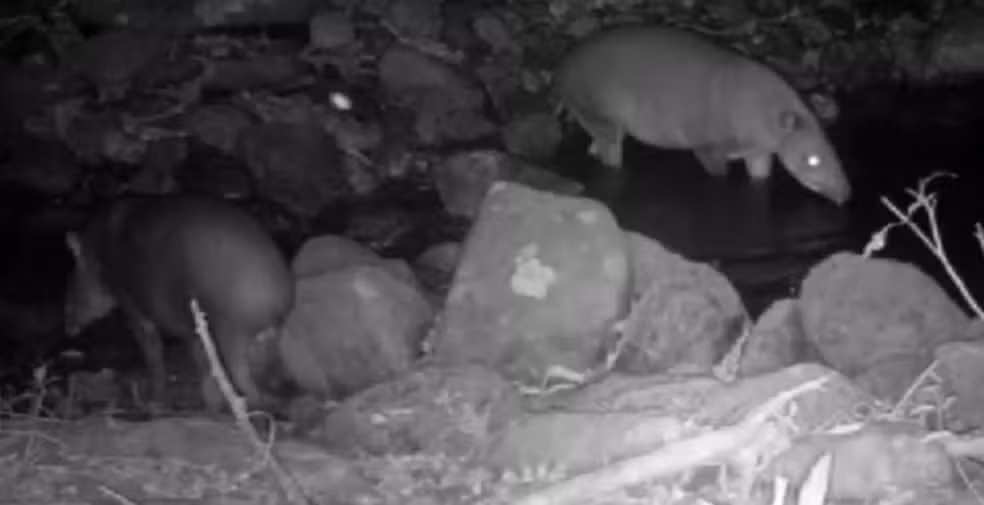


Rare Species, Considered Locally Extinct, Spotted After More Than a Century, Surprising Scientists and Driving Environmental Conservation Initiatives.
In November of last year, after more than 100 years without records, the tapir (Tapirus terrestris) was spotted again in the state of Rio de Janeiro. The images, which quickly went viral on the internet, show a mother and two calves walking through the Atlantic Forest. The records were made in January by hidden cameras installed by the State Institute for the Environment of Rio de Janeiro (INEA).
The sighting of the tapir is considered a milestone in the history of environmental conservation. The last time this herbivore was seen in the region was in 1914, in the Serra dos Órgãos National Park.
Since then, it was believed that the species was locally extinct. Urbanization, deforestation, and illegal hunting were some of the factors that threatened its survival.
-
College Dropout Turned Window Cleaner Builds $1 Million Cleaning Business with Subscription Model After 18 Years of Door-to-Door Work

-
North Korean Soldier Risks Crossing One of the World’s Most Dangerous Borders, Detained in South Korea

-
Stingless Bee Honey from Brazil Can Cost Up to $120 a Liter, Surprises with Flavors of Wood, Citrus, and Even Cheese
-
Woman Claims to Have Spotted a Technical Pattern in Recent FIFA Tournaments, Predicts Possible World Cup Winner


The cameras captured 108 photos and videos of the animals in the Cunhambebe State Park (PEC). Established in 2008, the park covers 38,000 hectares and aims to preserve endangered species. The images, published on the park’s Instagram, show the tapirs approaching the cameras at night.
Marcelo Cupello, a biologist from INEA, highlighted the significance of the event. “The spontaneous return of the tapirs shows that the forests of Rio de Janeiro can still sustain large mammals, ”he said. He explained that this indicates the existence of natural forest corridors, which allow the movement and dispersal of local fauna.
The tapir, also known as the Brazilian tapir, is the largest land animal in South America. It can weigh up to 317 kg and plays a fundamental role in tropical forest ecosystems. Nicknamed “gardeners of the forest,” they help in seed dispersal by consuming plants and spreading them through their feces.
Another curious aspect of the species is its ability to use its prehensile trunk as a snorkel while swimming. This skill facilitates its adaptation to the flooded environments of the forest.
The resurgence of the tapir is seen as a positive sign for the region’s biodiversity. Ecologists and conservationists celebrate the event as proof of the success of conservation projects. The sighting reinforces the importance of protected areas and environmental conservation for the recovery of endangered species.
With information from G1.