Portuguese
  Spanish


The structure was assembled in an area near the highway and then taken to the final point with self-propelled modular transporters, in a 12-hour operation that reduced closures, sped up the work, and avoided months of traffic blockages.
In 2013, the Rawson Avenue Bridge in Oak Creek, in the U.S. state of Wisconsin, became a real example of how a bridge can be built next to the highway and then transported ready to its final position.
The project used a technique known as accelerated bridge construction, in which structural parts are pre-assembled to reduce traffic blockages and shorten the intervention time over busy roads.
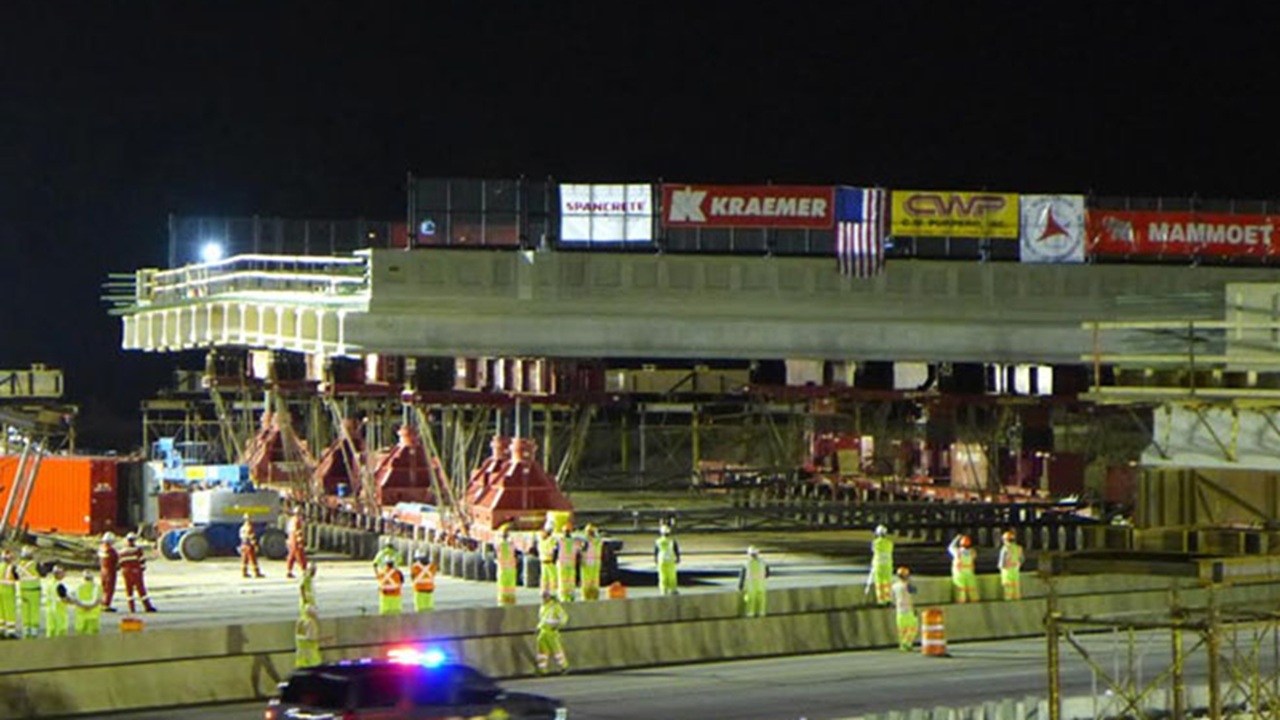
Bridge was assembled outside the final work site
The case occurred in the reconstruction of the Rawson Avenue Bridge over Interstate 94, in the Milwaukee area. Instead of performing all the work directly over the highway, the bridge’s superstructure was built on temporary shoring towers, near Rawson Avenue.
-
Brazilian Fishing Couple Spends 4 Years Building Solar-Powered Floating Home on the Paraguay River, Now a Navy-Approved Vessel with Leisure Area and Tour Demand

-
While the World Opens New Airports and High-Speed Trains, Brazil Rushes to Complete Projects Stalled for 40 Years
-
Brazil Invests in Massive Waterway to Transport Soybeans by Barge, Reducing Costly Truck Reliance
-
Bridge Rebuilt in Just One Year Reconnects Two Brazilian States


,After completion, the structure was moved to the final location using self-propelled modular transporters, known by the acronym SPMT.
These vehicles function as heavy platforms with multiple axles, capable of lifting, carrying, and positioning large structures with precision.
In the Wisconsin project, the bridge spans were constructed on temporary supports within the work’s domain and moved to the final point during a concentrated operation in one night.
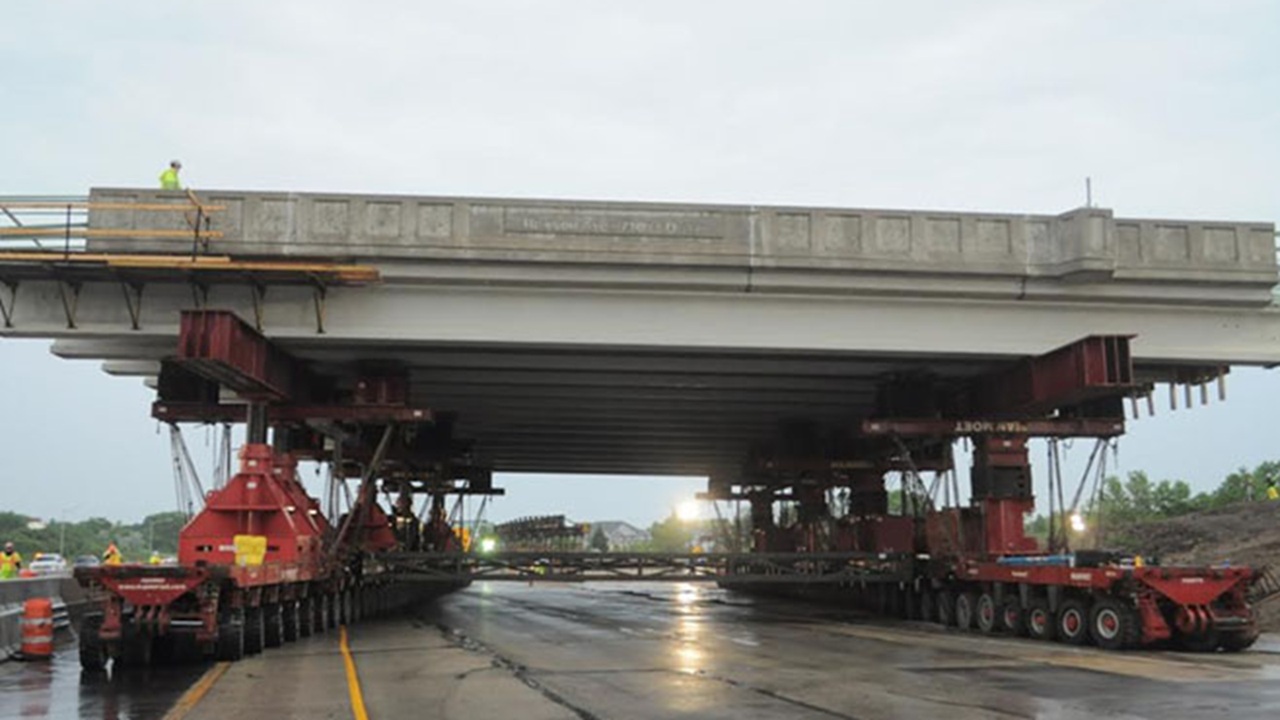
Technique reduced months of traffic blockages
The main advantage of the method was to reduce the impact on drivers. According to Bloom Companies, a company involved in the project, Interstate 94 needed to be closed for only 12 hours during the bridge movement.
The closure of Rawson Avenue was also reduced to about three weeks, a much shorter period than the six to nine months estimated with a conventional method.
A technical sheet of the project states that the method was adopted precisely to reduce lane closures and allow heavily trafficked roads to return to operation more quickly. The document also points out that the bridge used about 671 cubic meters of concrete in the deck, in addition to 28 concrete beams approximately 1.14 meters deep and pillar caps of about 41 metric tons.
Project was pioneering in the use of SPMT in Wisconsin


The reconstruction of the Rawson Avenue Bridge also marked a technical advancement in the state. According to Bloom Companies, the project was the first use of SPMTs in Wisconsin to quickly construct a bridge. The company also states that the project was the first bridge in the state to incorporate a precast concrete pier with multiple columns.
GRAEF, the engineering company that managed the construction, also describes the project as a pilot project of the Wisconsin Department of Transportation for the use of SPMT in this type of construction. According to the company, the spans were assembled on temporary supports and moved to the final position over the new pier and bridge abutments during a single night.
How accelerated bridge construction works
The technique is part of the concept of Accelerated Bridge Construction, or ABC, used to reduce timelines, risks, and traffic impacts. A manual from the Federal Highway Administration, a federal highway agency of the United States, explains that this type of construction uses innovative planning, design, materials, and methods to accelerate works and improve execution management.
In practice, the method allows the bridge to be prepared in a more controlled area, while the highway continues to operate for a longer period. When the structure is ready, the road is closed for a short period for demolition, removal, or installation of the new elements. In the case of the Rawson Avenue Bridge, this process prevented the work from requiring long months of closure over the I-94.
The information is true but needs to be explained accurately
Therefore, it is correct to state that the Rawson Avenue Bridge was built next to the highway and then moved ready to the final location. The more precise formulation is to say that the bridge spans were assembled on temporary structures near the site and transported by SPMTs to the final position over Interstate 94.
The operation does not mean that an entire bridge was “dragged” in a simple manner, but rather that large parts of the superstructure were pre-constructed, lifted, and moved with specialized equipment.
The case is a confirmed example of engineering applied to reduce traffic disruptions, speed up public works, and increase worker safety in an intervention over a busy highway.
Source: bloomcos.