






 Portuguese
  Spanish
  3 min of reading
  0 comments


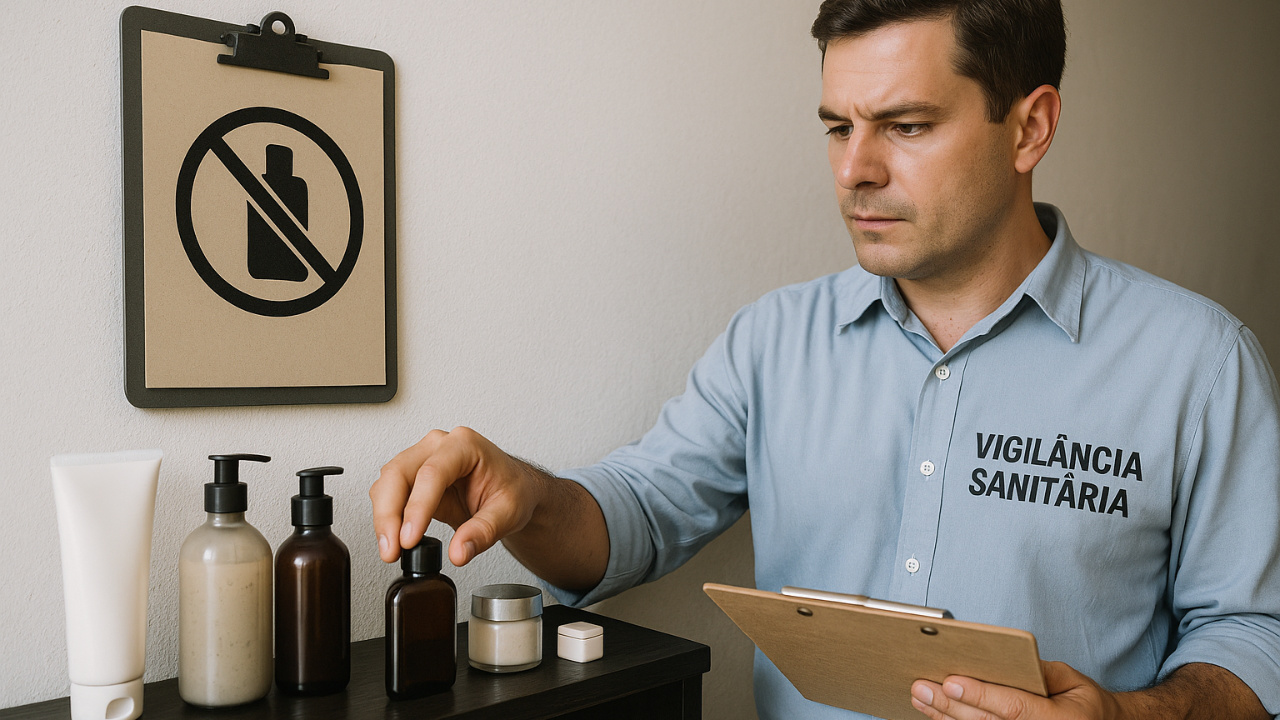
Cosmetics Prohibited by Anvisa Due to Lack of Registration Raise Alert from Health Surveillance About Risks to Consumer Safety.
The National Health Surveillance Agency (Anvisa) determined, this Thursday (11), the immediate prohibition of two cosmetic products sold in Brazil due to lack of registration, a measure that affects manufacturers, distributors, retailers, and consumers throughout the country.
The decision was made following notifications regarding the illegal sale of the items and aims to protect consumer safety in light of the risks associated with the use of cosmetics not evaluated by the health authority.
The Anvisa measure applies throughout the national territory and prohibits the production, distribution, commercialization, disclosure, and use of the irregular products.
-
Detran RJ starts requiring a toxicological test for those obtaining their first driver’s license in the car and motorcycle category starting June 29; see who will be affected.

-
Florida takes TikTok to court and accuses the Chinese giant ByteDance of ignoring the law that bars minors under 14, while parents and authorities demand more protection for children on social networks.
-
Chamber approves constitutional amendment reducing the age of criminal responsibility from 18 to 16 years; what now?

-
Justice confirms that old debts in tax executions that have been stalled for more than 15 years can no longer be collected through judicial or administrative means.


According to the agency, registration is mandatory for cosmetics classified as higher risk, as it ensures they have undergone technical assessments related to composition, labeling, and safety for health.
What Are the Cosmetics Prohibited by Anvisa
Among the prohibited cosmetics is the Deo Colônia Amantikir, manufactured by Aon Indústria de Cosméticos Naturais Ltda..
The other banned item is the Hair Makeup Mavi Pang Hair Shadow, whose origin has not been identified by health authorities.
Anvisa reported that it became aware of the sale of these products through notifications, but found that none of them had the proper registration.
This irregularity prevents verification that the cosmetics meet the standards required by Brazilian health legislation.
Why Lack of Registration Poses a Health Risk
The lack of registration is not just a bureaucratic failure.
According to health surveillance, cosmetics classified as higher risk need to undergo specific evaluations, as they come into direct contact with the skin, scalp, or respiratory pathways.
Without this control, there are no guarantees about the provenance of the raw materials, the concentration of chemical substances, or possible adverse effects.
Therefore, Anvisa considers that the absence of registration directly compromises consumer safety, potentially causing allergies, poisonings, and other health damages.
Measure Reinforces the Role of Health Surveillance
By prohibiting the products, Anvisa reinforces the strategic role of health surveillance in monitoring the cosmetics market in Brazil.
The agency works to prevent unverified items from reaching consumers, especially in a sector with a large circulation of handmade or unverified products.
Moreover, the action serves as a warning to manufacturers and retailers about the need to fully comply with regulatory standards before placing any cosmetic on sale.
Failure to comply with these rules may result in administrative sanctions, fines, and seizure of goods.
Impact of the Decision on Companies and Consumers
For companies, Anvisa’s decision signals zero tolerance with the sale of cosmetics without registration.
Manufacturers and distributors need to ensure that all products are properly regulated before reaching the market.
For consumers, the recommendation is to be extra cautious when purchasing. Anvisa advises the public to check if the cosmetic has a registration or notification number on the label, in addition to being wary of products without clear information about the manufacturer and origin.
Consumer Safety Should Be a Priority
The prohibition of cosmetics reinforces that consumer safety must come before any commercial strategy.
Furthermore, products applied directly to the body require strict control, and registration with Anvisa is the main tool to ensure this standard.
The agency also emphasizes that complaints made by the public are crucial for identifying irregularities in the market.
Thus, consumers who find indications of the sale of irregular cosmetics can report to official health surveillance channels.
Anvisa Maintains Active Monitoring in the Cosmetics Sector
The recent actions demonstrate that Anvisa continues to monitor the cosmetics sector continuously, especially those considered higher risk.
The monitoring aims to prevent harm to public health and ensure that only safe products remain available to the public.
Through this, the agency reaffirms its commitment to public health and the rigorous enforcement of health legislation, strengthening consumer confidence in the regulated market.





-

1 person reacted to this.