






 Portuguese
  Spanish
  6 min of reading
  0 comments


Technology uses sand or similar materials to store renewable energy in the form of heat and can help cities and industries rely less on fossil fuels
The so-called sand battery is gaining ground as one of the most curious solutions to an old clean energy problem: what to do when there is excess sun and wind, but the demand for energy arises at another time. Instead of storing electricity like a lithium battery, the system converts this surplus into heat and keeps it stored in a large insulated reservoir.
The technology became more well-known after installations in Finland, where companies began using this heat for urban heating networks. The concept is simple to understand but powerful in practice: heating sand, crushed soapstone, or another granular material and releasing this energy later, when homes, buildings, or industries need heat.
The proposal is not to replace cell phone batteries, electric cars, or small domestic systems. The focus is on urban heating, industrial steam, hot air, and processes that consume a lot of thermal energy, precisely areas where replacing gas, oil, or coal is still difficult.
-
17-Year-Old Homeschooler from the Bahamas Solves 40-Year-Old Math Puzzle, Earns Direct PhD Admission

-
Giant South American Tree Stores Water in Its Trunk, Survives for Years in Dry Regions
-
Brazilian Man Transforms Degraded Area in São Paulo into Urban Forest with 40,000 Trees
-
11-Year-Old Brazilian Prodigy Develops New Math Formula, Seeks Publication in Leading Scientific Journal



Therefore, the sand battery draws attention not only for its “giant silo” appearance but for the role it can play in the energy transition. It attempts to solve a less discussed part of the energy crisis, the need for constant, cheap, and less polluting heat.
The secret is in storing heat, not electricity
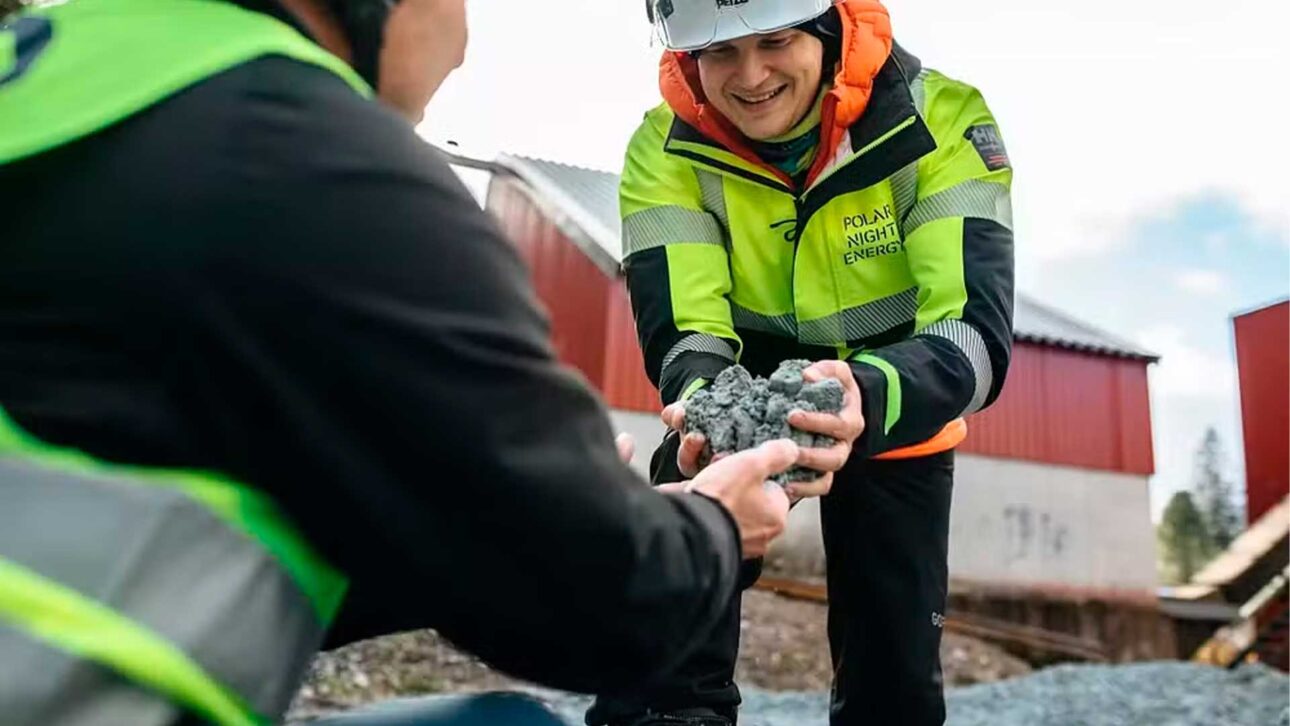
According to Polar Night Energy, the Finnish company responsible for the most well-known projects, the sand battery is a high-temperature thermal storage system. The electrical energy, usually coming from the grid or renewable sources like solar and wind, is used to heat the material inside an insulated reservoir.
When energy needs to be used, heat is extracted through heat exchangers. Thus, the system can produce hot water, hot air, or steam, depending on the application. In such installations, the output temperature can serve heating networks and industrial processes.
This difference is essential to avoid confusion. The sand battery does not deliver electricity directly like a conventional battery. It delivers heat, and this heat can be very valuable in cold countries, factories, industrial dryers, neighborhood heating, and systems that need to operate even when the wind drops or the sun disappears.
The main attraction lies in the material used. Sand, crushed stone, and industrial by-products are more abundant and less critical than metals used in chemical batteries. This reduces pressure on supply chains and makes the idea interesting for large-scale applications.
The largest installation in operation shows why Finland has become a showcase
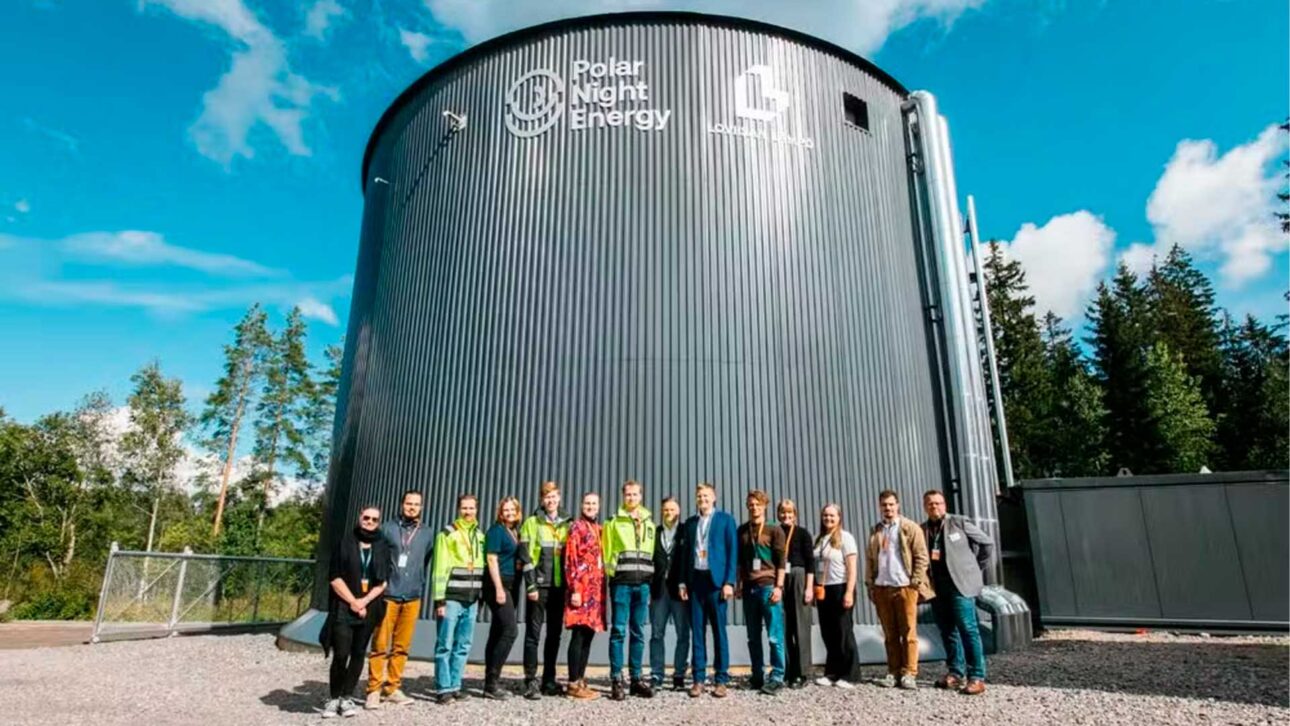
The most advanced case is in Pornainen, Finland. The installation was inaugurated in August 2025 and began operating as part of the local heating network. The system has 1 MW of thermal power and a capacity of 100 MWh, about ten times larger in scale than the first commercial unit installed in Kankaanpää in 2022.
According to information from the project’s developer, the structure is approximately 13 meters high and 15 meters wide. The reservoir uses thousands of tons of granular material, including crushed soapstone, a by-product of fireplace manufacturing, which also reinforces the aspect of circular economy.
The environmental impact is the most striking point. The Pornainen installation was designed to reduce greenhouse gas emissions by about 70% from the local heating network. The project’s reported expectation is to cut approximately 160 tons of CO₂ equivalent per year.
Another relevant data point is the reduction in the use of wood chips. The traditional plant continues as support and peak service but is no longer the main source. This shows that the sand battery does not need to eliminate all existing infrastructure to make a difference; it can function as a strategic complement.
Why this technology is so interesting for renewable energy
The strength of solar and wind energy is also its greatest difficulty: they vary. There are moments of excess generation and moments of low production. Without storage, part of this potential can be wasted or sold at very low prices.
As reported by Live Science in April 2026, engineers in Finland are also advancing a pilot to convert stored heat back into electricity, in a process known as power-to-heat-to-power. This step is important because it would expand the function of the sand battery beyond heating, allowing direct support to the power grid.
Still, this path is more complex. Converting heat into electricity involves losses and higher costs. For now, the most mature and efficient application is in the direct use of heat, especially when the demand is for hot water, steam, or heated air.
This is precisely where the technology gains strength. Many industries not only need electricity but also controlled temperature heat over long periods. In these cases, storing heat when electricity is cheaper can reduce costs and decrease dependence on fossil fuels.
Reuters reported in April 2026 that thermal storage is gaining attention because it can use materials like sand, rock, concrete, and molten salts, with the potential for lower costs than lithium-ion batteries in certain industrial applications. The decisive point, however, is the local economy: energy price, heat demand, incentives, and grid integration.
What still prevents the sand battery from reaching everywhere
Despite the progress, the sand battery is not a magic solution. The initial investment still weighs heavily, especially in large projects. It is also necessary to have a constant demand for heat nearby, which makes more sense in urban heating networks, factories, greenhouses, dryers, or industrial processes.
Another limitation is individual residential use. For a typical house, the size, metal structure, and heat exchange system still make the solution impractical. Experts point out that the current design works better on a collective scale, where the cost is diluted and the heat can serve many consumers.
Data from the United States National Renewable Energy Laboratory also indicate that sand can be used in long-duration thermal storage systems, including to provide heat or energy for several days. This reinforces that the technology is not limited to the Finnish model, although each application requires its own engineering.
In Brazil, the idea could attract attention in industrial sectors that need heat, but its adoption would depend on local studies. The country has strong renewable generation, but also has a different climate, power grid, and consumption patterns compared to Nordic countries. Therefore, the most realistic path would be to start with industrial uses and pilot projects, not residences.
The simple idea that can change a forgotten part of clean energy
The sand battery draws attention because it transforms a common material into a piece of a strategic discussion. While the world talks a lot about electric cars and solar panels, a huge part of the energy consumed still appears in the form of heat, especially in industry and building heating.
The advancement of technology shows that the energy transition does not depend on a single solution. Chemical batteries, hydroelectric power, thermal storage, hydrogen, smart grids, and energy efficiency can play different roles within the same system.
In the case of sand, the great promise lies in its simplicity: using clean electricity when it is available, storing that value in the form of heat, and delivering thermal energy when it is really needed. It is not a common battery, but it may be exactly the type of solution that was missing to reduce waste and make renewables more useful in daily life.
The future of this technology will depend on scale, cost, and performance outside of Finland. Even so, the projects already in operation show that storing energy in simple materials has ceased to be just a laboratory curiosity and has become part of the list of real alternatives for cities and industries.
Do you believe that a simple technology like the sand battery can help countries like Brazil make better use of solar and wind energy? Leave your opinion in the comments and tell us if this solution would make sense for industries, cities, or renewable energy projects here.




Be the first to react!