






 Portuguese
  Spanish


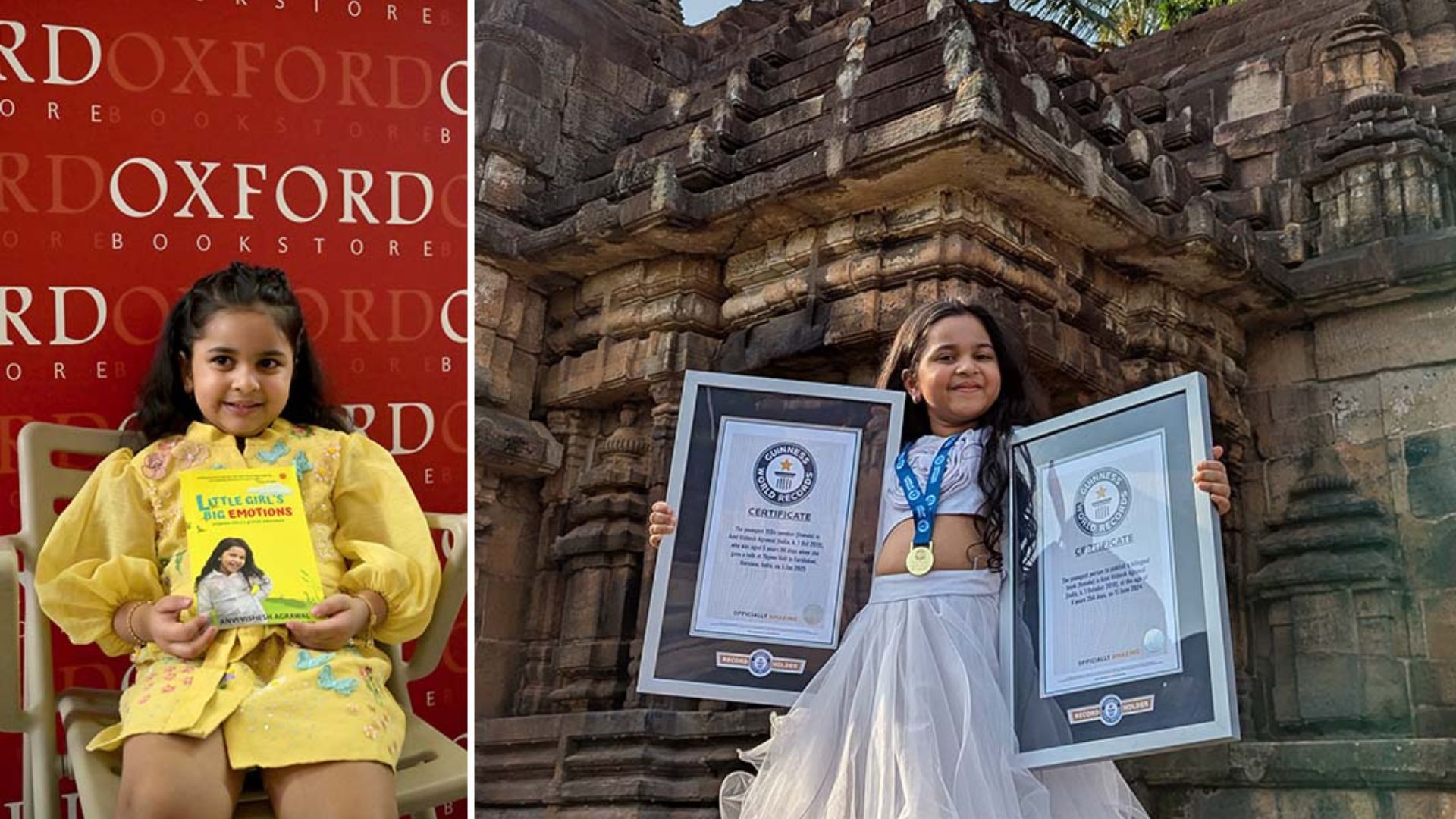


Guinness Record, Impressive Sales at Debut, and Discussions on Giftedness, Bilingualism, and Digital Privacy Put Indian Four-Year-Old Author at the Center of an International Debate That Goes Beyond Children’s Literature and Touches Education, Development, and Children’s Rights.
An Indian girl has become a topic of conversation in different countries after entering the Guinness World Records by publishing, at the age of 4, a bilingual book in English and Spanish written and illustrated by herself, with a report of 1,167 copies sold in the first week and a wave of debates about childhood, learning, and privacy.
The Guinness states that the record, in the category “youngest person to publish a bilingual book (female),” belongs to Anvi Vishesh Agrawal, born on October 1, 2019, who reached the mark at 4 years and 254 days old, with the book Little Girl’s Big Emotions, validated on June 11, 2024.
In presenting the achievement, the organization states that Anvi wrote and produced her own illustrations for the work, highlighting an unusual combination of language and visual expression for her age, a point that tends to attract attention when the story spreads on social media and becomes a reference outside the family circle.
-
U.S. City Spent Millions Building Subway Tunnels and Stations, But No Trains Have Run There

-
Sweden Introduces New Rules Requiring Frequent Supervision and Daily Interaction for Cat Owners

-
Coastal City in Rio de Janeiro Faces Slow Destruction as Sea Claims 500 Homes and Businesses

-
48-Year-Old Woman Wins Million-Dollar Prize, Gifts Neighbor First International Trip as Thanks for Years of Support



Guinness World Records and the Validation of the Achievement
In the official record, Guinness describes the achievement as a record obtained by a child from India, emphasizing bilingualism and full authorship, without detailing a city as the exclusive location of the milestone, although versions of the website reference “Delhi” in identifying the country.

On the other hand, a report from the Times of India situates the family in Bhubaneswar, in the state of Odisha, and presents the book as aimed at children, with a proposal to help kids recognize and name feelings positively, in addition to reinforcing that the illustrations were also made by Anvi.
While the main page of Guinness focuses on the record, the Guinness World Records Kids platform expanded the case’s reach by treating Anvi as a record-holding author and “public speaker,” and reported that, in the first week of publication, the book sold over 1,167 copies and had book signing sessions in bookstores.
These elements help explain why the story escaped the realm of curiosities and began to fuel broader conversations, as, besides a certificate, there are sales figures, public appearances, and a narrative ready to circulate, with images and accounts shared at a rapid pace.
Bilingual Book About Emotions and International Repercussions
The choice of theme contributed to the repercussion because emotional vocabulary frequently appears in discussions of early childhood education, coexistence, and mental health, and the work was introduced as a way to address frustration, fear, joy, and anger in language accessible to young children.
At the same time, the combination of very low age and complex tasks, such as writing, illustrating, and publishing, tends to generate a sense of rarity when receiving an “institutional stamp,” which increases the curiosity of the public, educators, and families interested in understanding above-average performance.
Nevertheless, the record itself does not function as a diagnosis, and experts often differentiate public recognition from educational or psychological assessment, as giftedness can appear in various ways and depends on context, opportunities, and careful observation over time.
The way the child is viewed once the achievement becomes a headline also weighs heavily, as attention tends to shift from the book to the young author as a character, which can alter routines, expectations, and even the way peers and adults interact with her both inside and outside of school.

Giftedness, Child Development, and Socioemotional Balance
When such a case reaches public debate, there is a tendency to prioritize the cognitive dimension, while the child still needs space to play, socialize, and develop socioemotional skills that are not limited to performance or measurable results.
OECD reports on education and childcare in early childhood emphasize that the quality of daily interactions in educational environments influences learning, development, and well-being, and point to the importance of a broader view that includes social and emotional aspects in everyday life.
In this context, play emerges as a central piece because it organizes experiences, relationships, and language, and UNICEF reinforces that play is a right enshrined in the UN Convention on the Rights of the Child, in addition to being frequently underestimated in educational and family practices.
The most common reading among educators indicates that the challenge is not to deny early talents, but to avoid letting them become a rigid script, with continuous goals, constant exposure, and little room for the child to experience age-appropriate experiences, including mistakes and frustration.
Early Bilingualism and Early Childhood Education
The fact that the book was produced in English and Spanish amplifies the case’s reach because it connects audiences from different countries and dialogues with families living in migration, having multicultural routines, or seeking bilingual schools for their children.
In the Guinness record, bilingualism is described as a central part of the achievement, reinforcing the international reading of the story, as the work is not limited to a single language market and can circulate more easily in digital environments.
At the same time, the attention generated by the label of “bilingualism” can simplify a complex process, as learning and using languages involves consistent exposure, contexts of use, and support, and does not always translate into a single public milestone.

Child Exposure on Social Media and Digital Footprint
As the story goes viral, the discussion about privacy gained traction because photos, videos, interviews, and event records can remain available indefinitely, creating a digital footprint that the child did not choose, but will likely follow her throughout life.
UNICEF refers to “sharenting” as the practice of guardians sharing content about children online and recommends conscious decisions, with attention to privacy, consent, and the type of information published.
The American Academy of Pediatrics suggests that parents and caregivers reflect before posting, discuss within the family when the child reaches an age to understand, and establish household rules that can be adjusted as the child grows.
When there is great public interest, such guidance becomes significant because the cycle of demand for novelties can intensify, and what starts as a celebration of a book can evolve into a permanent expectation for new appearances, titles, and records.
If the Guinness recognition opened doors and expanded the audience for the work, the same process also demands clear limits on exposure and the preservation of moments without cameras, so that childhood does not become a continuous showcase.
In this scenario of achievement and global visibility, how can we balance the encouragement of real talents with the protection of a child’s right to grow without constant public pressure?


Ctz que é o anticristo
Duvido nãoKKKK
Sobre a preocupação até parece… Se ela é superdotada e aparece é exposição… Se estive aparecendo seminua fazendo dancinha, seria cultura e teria milhões de visualizações…
Devemos valorizar aquilo que é útil para a sociedade.
Parabéns a essa criança, que ela possa ser útil para a próxima geração…
Sobre a menina? Obvio que e reencarnacao de algum ou alguma.escritora.Reencarnacao é lei natural.talentos em criaturas precoces só se explica racionalmente por ser ja um espirito muito antigo ja cheio de conhecimentos e com know how em alguma área do conhecimento.
Fumou uma mano?