






 Portuguese
  Spanish


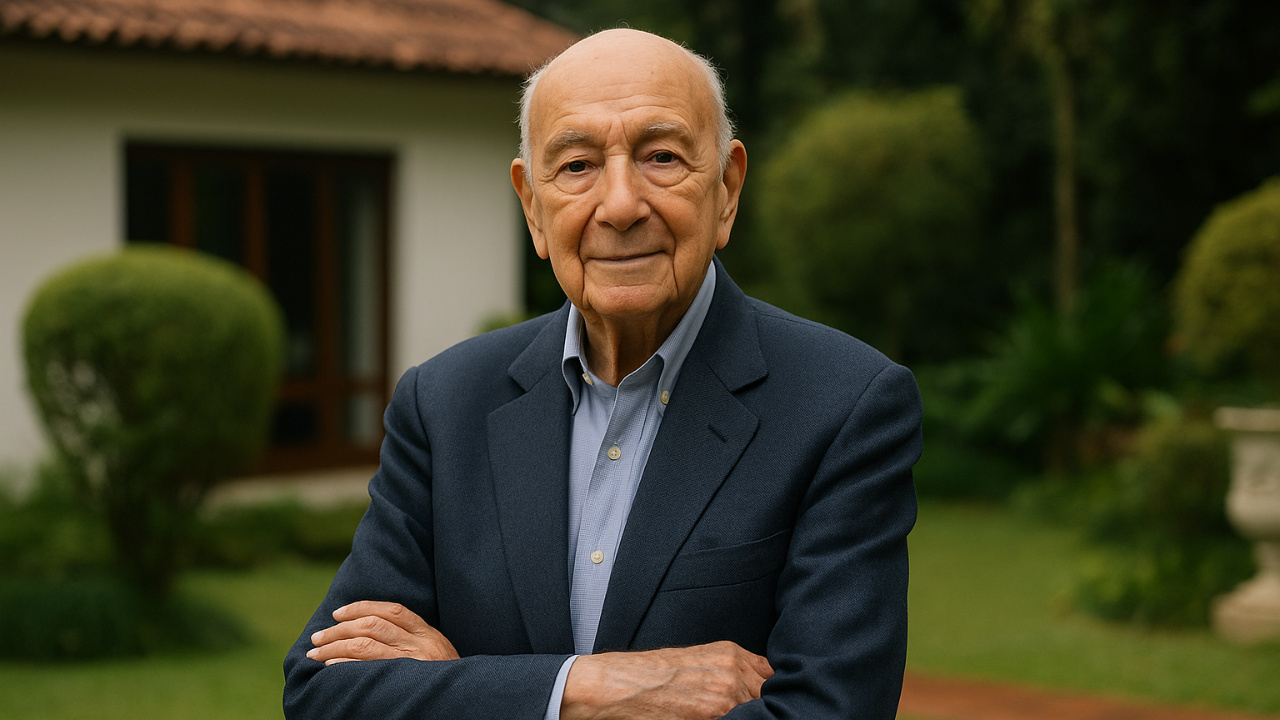


The Story of The Engineer Who Created Alphaville and Redefined Urbanism Reveals Innovation, Sustainability, and the Impact of His Projects.
What led The Engineer Who Created Alphaville and Redefined Urbanism to become one of the most influential figures in the Brazilian construction industry?
Who is the man who, at 97, continues to participate in strategic decisions of his company, when many would be retired?
The answer begins in Alphaville, in Greater São Paulo, where Renato de Albuquerque received the report in October of this year to explain how his work redefined the relationship between housing.
-
U.S. City Builds Tiny Home Village on Water Company Land to House 136 Homeless People: Inside the Social Housing Units

-
Woman Turns Shipping Container into Home, Embraces Rural Life to Cut Monthly Expenses to Just Over $330
-
France Revamps 530 Social Housing Units with Large Balconies and Glass Facades Without Demolishing Existing Buildings

-
Facing high rent, couple transforms parents’ garage into a fully functional apartment, creating a complete home at a fraction of the market cost.




The interview was granted at his home, surrounded by gardens and works of art, in Alphaville 1.
There, Albuquerque detailed how, in the 1970s, he created a pioneering urban model, where Brazil was still advancing without clear environmental laws and why he decided to break away from the logic of unregulated expansion of São Paulo.
This is how Alphaville was born, along with a new chapter in national urbanism.
The Engineer Who Created Alphaville and Redefined Urbanism Cleared the Way for Planned Neighborhoods
Before Alphaville, the real estate market faced saturation and scarce credit. Albuquerque reports that he and his partner, engineer Yojiro Takaoka, were “coming out of a difficult phase.”
Even so, they decided to innovate. According to him, “São Paulo was growing in a disordered way. There were no environmental laws, and zoning was flawed.”
The proposal was simple and revolutionary: to create a planned neighborhood, with strict rules, integrated coexistence between the environment, work, and housing, and strong land use control.
This concept, which transformed Albuquerque into The Engineer Who Created Alphaville and Redefined Urbanism, initially attracted companies like Hewlett Packard, which were looking for an environment free from industrial noise.
Thus, companies brought in residents, and Alphaville ceased to be a risky bet to become an urban phenomenon, supported by the municipality of Barueri, which saw in the project an opportunity to increase its revenue and bring infrastructure to the entire city.
From Success to National and International Expansion
In the 1990s, Alphaville became a national company, reaching the Northeast and various Brazilian capitals. Later, in 2013, Albuquerque and his partners sold the company to Gafisa for around R$ 600 million.
“We sold because our own and bank capital ran out,” he explains.
Even recognized as The Engineer Who Created Alphaville and Redefined Urbanism, he never showed interest in going public.
“The real estate market is very seasonal,” he asserts, highlighting the risks of leverage and market expectations.
Return to the Market: The Creation of Artesano Urbanismo
After fulfilling the non-compete period, Albuquerque returned to the sector with Artesano Urbanismo, founded in 2018. This time, the focus shifted to quality, sustainability, and smaller scale.
The company has already launched developments in Campinas, Londrina, and Ribeirão Preto.
Then in 2024, he launched Cantalupe, in one of the last green areas of Alphaville, a project that took seven years to obtain all the licenses.
Despite decades of institutional relationships, he acknowledges: “Preserving the environment is essential, but seven years is too long.”
The Wisdom of a Counselor Who Still Guides Modern Urbanism
Today on the company’s board, The Engineer Who Created Alphaville and Redefined Urbanism acts as a guardian of accumulated experience.
“Fear the devil not because he is the devil, but because he is old,” he quotes, laughing.
His role is to avoid past mistakes and encourage new ideas from sales strategies to ethical practices in client relationships.
The word of mouth, according to him, remains decisive.
Thus, recalling the launch of Residencial 12, Albuquerque shares that he refunded 15% of the amount paid to buyers after realizing a pricing error.
The gesture boosted sales and solidified his reputation.
The Artistic and Cultural Legacy That Accompanies His Life
Thus, in addition to urbanism, another pillar of his trajectory is art. The collection of Chinese and Japanese porcelain, started in his youth, gained worldwide notoriety.
With over 2,500 pieces, the collection is now displayed in a museum in Sintra, Portugal, which receives about 2,000 visitors per month.
A Legacy That Remains Alive
With nearly a century of life, The Engineer Who Created Alphaville and Redefined Urbanism shows that his work goes beyond cities.
Thus, it influences generations of urban planners, investors, and residents seeking quality of life in planned spaces.







