Portuguese
  Spanish


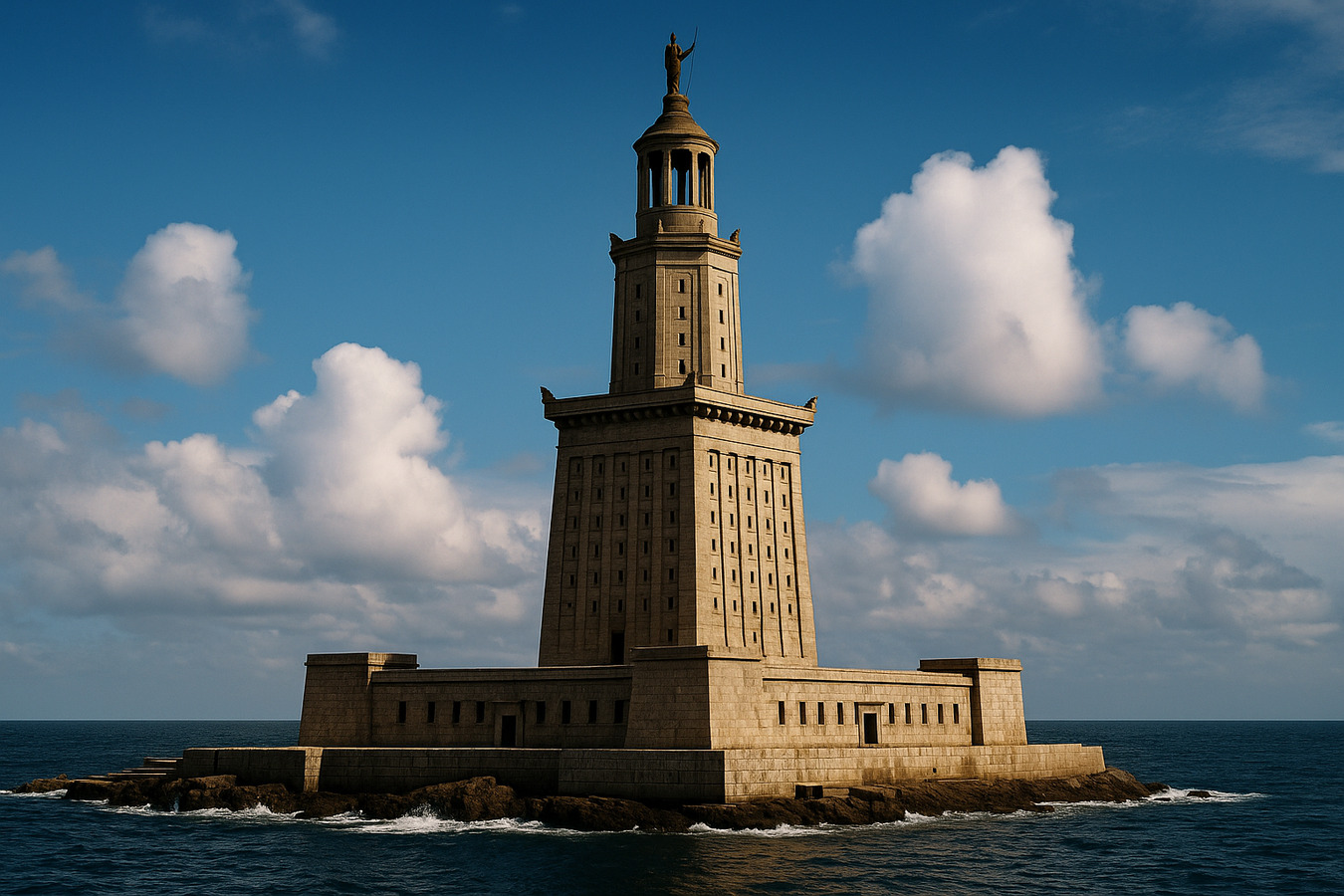


Operation in the Mediterranean Rescues Blocks Weighing Up to 80 Tons from the Lighthouse of Alexandria, Paving the Way for Detailed and Unique Virtual Recreation
An archaeological operation revealed 22 giant blocks from the legendary Lighthouse of Alexandria in the Mediterranean Sea, near the homonymous Egyptian city. Dating back over 2,000 years, they are a crucial part of the efforts to digitally reconstruct the monument, considered one of the 7 Wonders of the Ancient World.
The operation involved French and Egyptian archaeologists. To remove the granite blocks, which weigh up to 80 tons, floating platforms and high-precision cranes were used.
Lighthouse of Alexandria: The Icon of Engineering
The Lighthouse of Alexandria was erected in the 3rd century B.C. on the island of Pharos. Standing over 130 meters tall, it served as a guide for Mediterranean sailors for about 1,600 years. Earthquakes in the 14th century destroyed the structure.
-
Farewell to Toilet Paper? New Technology Sparks Debate on Bathroom Habits

-
Young Entrepreneur Who Started Recycling Bottles at Age 3 Becomes Environmental Icon in the U.S.

-
Nivea Blue Tin Cream: Popular Post-Beach and Pool, But Pharmacist Warns About Missing Ingredients and Common Summer Mistakes Regarding UVA and UVB Protection.
-
Archaeologists Recover Colossal Structure Lost for Over 1,600 Years Under the Sea, Including 22 Monumental Blocks Weighing Up to 80 Tons, Intriguing Experts.




Parts of the lighthouse were repurposed in the construction of the Qaitbay Citadel, a fortress that still stands and can be visited today.
Renaissance Through Photogrammetry
The PHAROS project, a partnership between France and Egypt, uses advanced photogrammetry techniques to scan and digitize each recovered block.
The most important aspect is that this technology will enable the creation of an accurate three-dimensional model of the lighthouse.
This work has already documented over 3,300 architectural fragments using sophisticated underwater analysis resources.
The goal is to offer the public and researchers a new perspective on this historical construction through a virtual exploration.
Advances in Archaeological Knowledge
The identification of these blocks expands the understanding of Hellenistic engineering. Among the recovered elements are lintels, thresholds, and pillars, revealing details about the construction techniques and materials used by Egyptian and Greek engineers.
Furthermore, the study of these components may lead to new interpretations of the history and cultural impact of the Lighthouse of Alexandria, reinforcing its significance as a landmark of ancient architecture and navigation.
Expectations for the Future
The excavation and digitization operations continue. The team hopes to complete an interactive model that not only celebrates the grandeur of the lighthouse but also inspires research on other submerged artifacts.
With advancements in image analysis, there is hope that the virtual recreation will provide greater access to this historical wonder, connecting the past and present through technology.
With information from Crusoe.