Portuguese
  Spanish


Unauthorized Deductions Revealed National Scheme That Affected Over 4 Million Retirees and Pensioners With Losses Exceeding R$ 6 Billion.
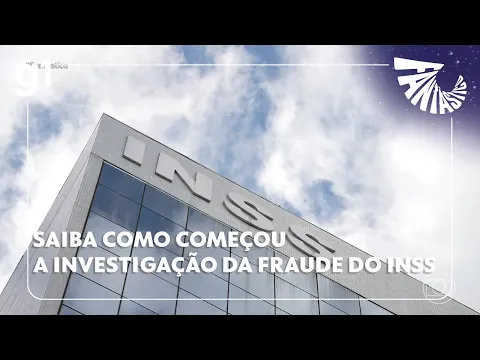
A retiree from Feira de Santana, Bahia, was the starting point of an investigation that uncovered one of the largest frauds in the history of the National Social Security Institute (INSS). After identifying a R$ 40 deduction in her payslip related to an association she had never participated in, she sought clarifications and ended up triggering the beginning of inquiries that expanded across several states of the country.
The persistence of the beneficiary, who preferred not to identify herself, brought the case to the Federal Public Ministry. Following her complaint, Federal Police experts located forged documents and initiated an inquiry in Sergipe, the state where the headquarters of the association responsible for the irregular deduction operated.
Fake Signature and Origin of the Investigation
The experts analyzed the signature presented on the membership term of the retiree and found that it was a forgery. The graphotechnical analysis identified divergences in the strokes and pressure of the writing compared to the original documents provided by her. The fraud, according to the investigation, began at the moment these associations were created, which were registered with false documents and signatures.
-
Controversial 6-day Workweek Elimination in Brazil Faces Economic Criticism Over Productivity Claims

-
Itaú to Refund Customers After 14 Years of Unauthorized Credit Card Charges; Agreement Includes No Interest or Adjustments, Deadline by 2028, with Potential Impact of Up to $6.5 Billion

-
Brazilian Company Grows from Bartering Soap for Food to Producing 30 Million Units Monthly, Challenges Global Giants with $100 Million Revenue and Expands into Premium Cosmetics
-
Petrobras and Engeko’s New Investment Plan Promises Billions and Thousands of Jobs, Capturing Market Attention



The association involved, headquartered in Aracaju (SE), was just one among several identified by the Federal Police as being part of the scheme. In total, the losses resulting from unauthorized deductions from retirements and pensions of the INSS exceed R$ 6 billion between the years of 2019 and 2024.
Structure of the INSS Fraud: Associations and Shell Companies
The structure of the scheme involved three main cores: non-profit associations, financial operators, and public agents. The associations, which were supposed to act in defense of the rights of retirees and pensioners, were used as fronts to collect monthly fees, usually between R$ 30 and R$ 50, directly from the beneficiaries’ payrolls.
These amounts were identified as voluntary contributions, which, according to the legislation in force since 2019, only required the presentation of a signed term by the beneficiary. However, the investigation points out that, in many cases, such signatures were never made by the victims.
The funds raised were transferred to companies linked to those responsible for the associations. According to the Office of the Comptroller General (CGU), the goal was to hinder the tracing of the money through transfers between companies registered in the name of third parties. This movement characterizes an attempt at money laundering.
INSS Fraud: Arrests and Search Warrants
The operation by the Federal Police, carried out on April 23, executed over 200 search and seizure warrants in 13 states and the Federal District. Six people were arrested, including businessmen Alexandro Prado Santos, known as “Lequinho,” and Sandro Temer de Oliveira, identified as the main financial orchestrators of the scheme.
According to investigators, one of the associations under investigation had managed to gather over 629,000 beneficiaries and raise R$ 300 million in just 21 months. The entities are accused of forging documents and obtaining authorization to carry out deductions without the knowledge or consent of the beneficiaries.
Administrative Consequences
The seriousness of the allegations led to the dismissal of the then-president of the INSS, Alessandro Stefanutto, and the resignation of the Minister of Social Security, Carlos Lupi. The CGU had warned the INSS in 2023 about signs of irregularities and recommended the suspension of agreements with suspected associations.
Despite the warning, the deductions continued to be made. The Ministry of Social Security informed that it was aware of the allegations and that measures were being evaluated, but the investigation showed that there was a delay in investigating the facts.
New Management at INSS and Social Security
With Carlos Lupi’s departure, the government appointed Volney Queiroz to the Ministry of Social Security and Gilberto Waller Jr. to head the INSS. Both took office with the commitment to review the processes for authorizing deductions and strengthen internal control mechanisms.
The CGU and the Federal Police suggest that the INSS adopt more secure authentication technologies, such as the use of facial biometrics, similar to the systems used by banks, to validate any deduction authorization in payslips.
How to Identify Unauthorized Deductions
Retirees and pensioners should carefully check their monthly payslips. Unauthorized deductions often appear with the description “contribution” followed by the name of an association and, in some cases, a phone number. The amounts typically range between R$ 30 and R$ 50.
If the beneficiary identifies an amount deducted without authorization, the recommendation is to report it on the Federal Police website, at comunica.pf.gov.br, providing all data and attaching proof of the payslip.
Recovery of Misappropriated Funds in the INSS Fraud
In a recent statement, President Luiz Inácio Lula da Silva stated that the Attorney General’s Office was activated to take legal action against all entities involved and seek full reimbursement of the improperly deducted amounts. The government’s expectation is that the misappropriated resources can be recovered and returned to retirees and pensioners.
The defense of the businessmen involved declared that they will await the conclusion of the investigations before making any public statements. The former president of the INSS, Alessandro Stefanutto, issued a statement affirming that he trusts in clarifying the facts and proving his innocence.
Supervision and Future Changes
The episode raises questions about the effectiveness of the control mechanisms of the INSS, especially regarding the authorizations for deductions on payroll. The new management promises to review all agreements in force and implement more rigorous verification tools to prevent similar situations from occurring again.
In the meantime, millions of beneficiaries continue to monitor their payslips with heightened attention. The retiree from Bahia, who initiated the inquiry, remains a symbol of the importance of individual vigilance in the face of fragile systems. Her attitude revealed a fraud of large proportions and contributed to the implementation of corrective measures and transparency.
The information in this article was based on the report displayed by Fantástico, on May 4, 2025.