Portuguese
  Spanish


Retirement with Up to 15 Years of Contributions: Know Which Workers Are Entitled to Retirement Due to Hazard and How the Benefit Works.
If a worker engages in activities that involve risk to their life or physical integrity, it is essential to know that they have the right to a differentiated counting of the time of contribution for retirement purposes. This right can be granted in the special modality or by time of contribution, as provided in Law No. 8,213/1991, which regulates Social Security benefits. Below, we detail which workers have the right to retirement due to hazard, how to prove exposure to the inherent risks of the activity, and what the requirements are for granting the benefit with differentiated counting.
Know What Retirement Due to Hazard Is
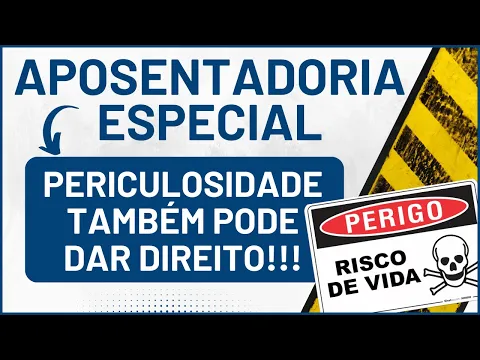
Retirement with recognition of hazard is a benefit granted to workers who perform activities in conditions that endanger their physical integrity or life.
This retirement has special conditions for its granting, with a reduction in the contribution time requirement, precisely with the aim of preventing the worker from suffering from the harmful effects caused by prolonged exposure to dangerous working conditions.
-
Dismissing a retired worker or one eligible for retirement constitutes ageism and creates a duty to compensate: a unanimous decision by the TRT mandates reinstatement to employment, payment of back wages, and upholds compensation of R$ 15,000 for discrimination.

-
Work less and produce more? Nobel Prize in Economics explains why shorter workdays can increase productivity

-
Unions are growing again in Brazil after more than a decade, but they face an urgent challenge to win back digital workers and maintain relevance.
-
From the typewriter to the home office: how work has changed and why new generations think differently




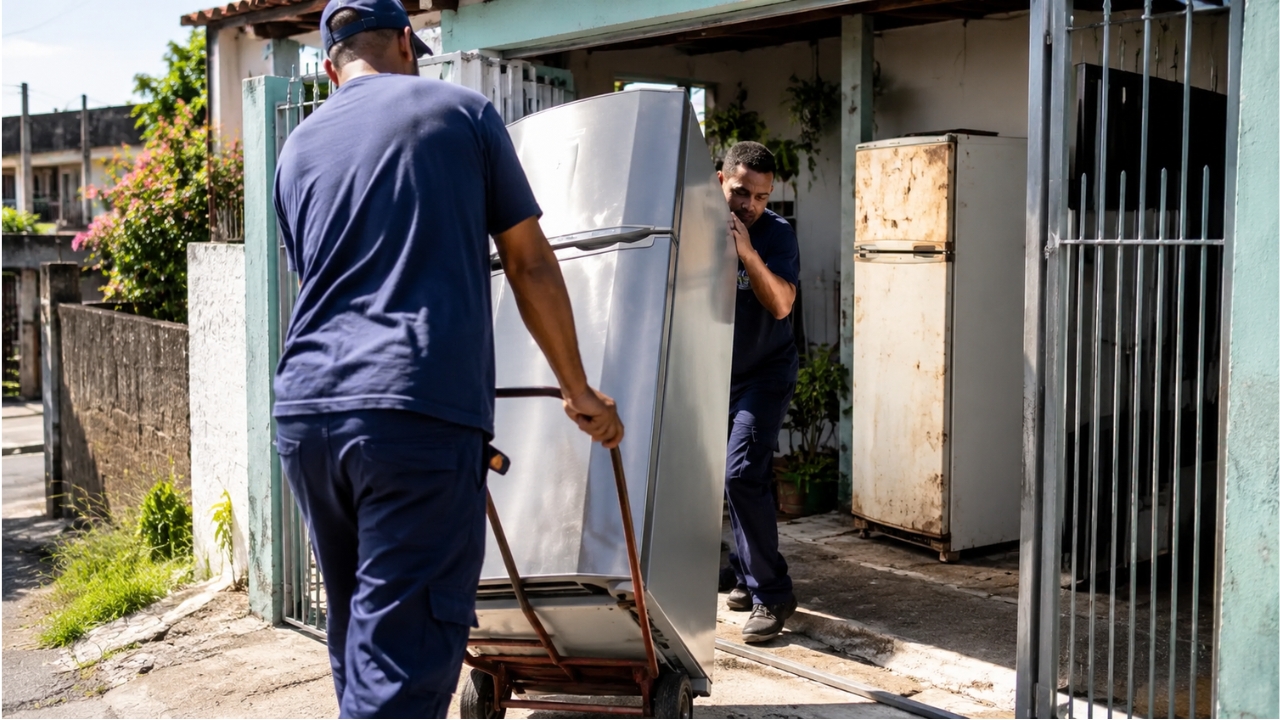
Among the workers entitled to retirement due to hazard are those in underground mining, working with explosives or flammable substances such as gasoline, diesel, and other petroleum derivatives, direct contact with high voltage energy, security guarding, with or without firearms, and the transport of valuables, among others.
Thus, if there is proof of hazardous activity, the insured may receive Special Retirement, or even convert special activity periods into regular ones for the granting of retirement by contribution time, provided that the minimum requirements for each regulation are met.
Main Options for Workers Entitled to Retirement Due to Hazard
As mentioned, hazardous activity can be used for differentiated counting in two different retirement modalities: Special Retirement and Retirement by Contribution Time with Conversion of Special Time.
According to the law, workers who are self-employed, employed insured, or individual cooperative contributors who can prove working in harmful labor for periods of 15, 20, or 25 years are entitled to Special Retirement.
On the other hand, if the insured does not have enough time of special activities to qualify for Special Retirement, or if they wish to continue in hazardous activity after receiving retirement, they can convert special activity periods into regular ones to increase their contribution time, thereby achieving the right to retirement by contribution time at the INSS.
For workers entitled to retirement due to hazard who wish to convert special time into regular time, based on the general rule of special activities, which requires 25 years of labor for retirement, the conversion calculation will be through a multiplier of 1.4 for men and 1.2 for women.
Know Which Workers Are Entitled to Retirement Due to Hazard
In summary, only miners who work permanently underground in production front lines are entitled to retirement with 15 years of special activity. Equally limited, retirement with 20 years of activity applies only to miners whose activities are distanced from production fronts and exposure to asbestos in activities such as extraction, processing, and handling of asbestos rocks, and manufacturing of fiber cement products, among others.
Thus, all special activities that do not fit into the 15 to 20 years retirement category fall under the 25 years of special activity retirement rule.
It is worth mentioning that not every activity qualifies for special retirement. It is crucial that there is proof of exposure to harmful agents. It should also be noted that it is not necessary for the time of special activity to be worked entirely in just one work activity or employment relationship.