





 Portuguese
  English
  Spanish
  6 min of reading
  0 comments


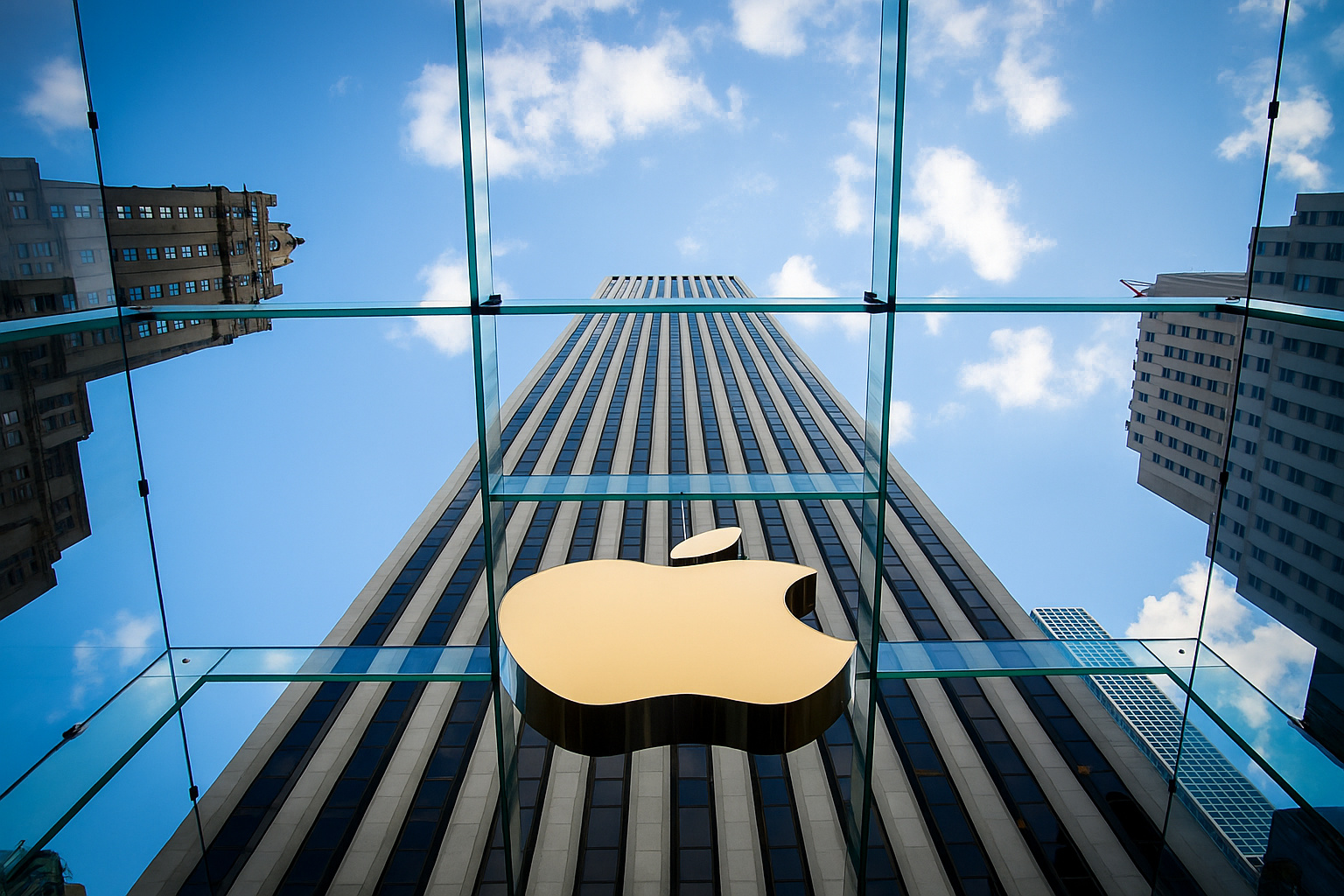
Apple Strengthens Environmental Commitment by Investing in Solar Park in Poland, Expanding Clean Energy Generation and Boosting the European Energy Transition.
In recent years, the world has witnessed a deep transformation in how energy is produced and consumed. For this reason, Apple announced the purchase of 75% of the energy generated by a new solar park in Poland, reinforcing its commitment to carbon neutrality by 2030.
The project, which represents a milestone for the European renewable energy sector, shows how large technology companies have become protagonists in the global energy transition.
Moreover, Apple’s decision is part of a comprehensive strategy focused on sustainability and reducing greenhouse gas emissions.
-
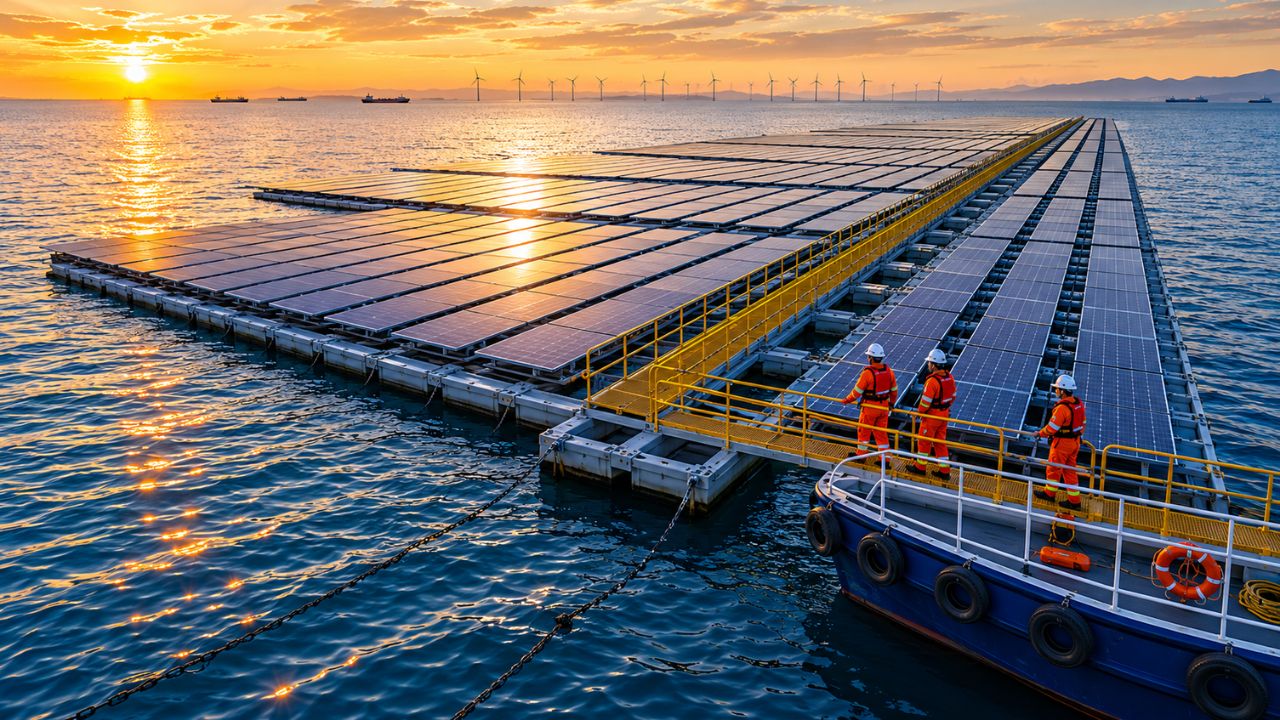
Solar panels at sea can generate up to 12% more energy than land-based plants, study finds: Researchers from Taiwan discovered that offshore solar panels take advantage of the natural cooling of water to increase electrical efficiency, reduce heat losses, and expand renewable energy production in regions with limited available land space.

-
The era of solar panels attached to roofs is beginning to change with transparent glass that generates energy while keeping the view unobstructed, and perovskite photovoltaic windows already tested in offices in Japan promise to transform entire facades into invisible power plants without blocking light or altering the appearance of buildings.

-
The era of silicon alone in solar energy comes to an end with the arrival of perovskite, a material that captures a broader light spectrum, is applied as a thin film, and, together with silicon, reaches a theoretical limit of 45% efficiency in tandem modules.

-
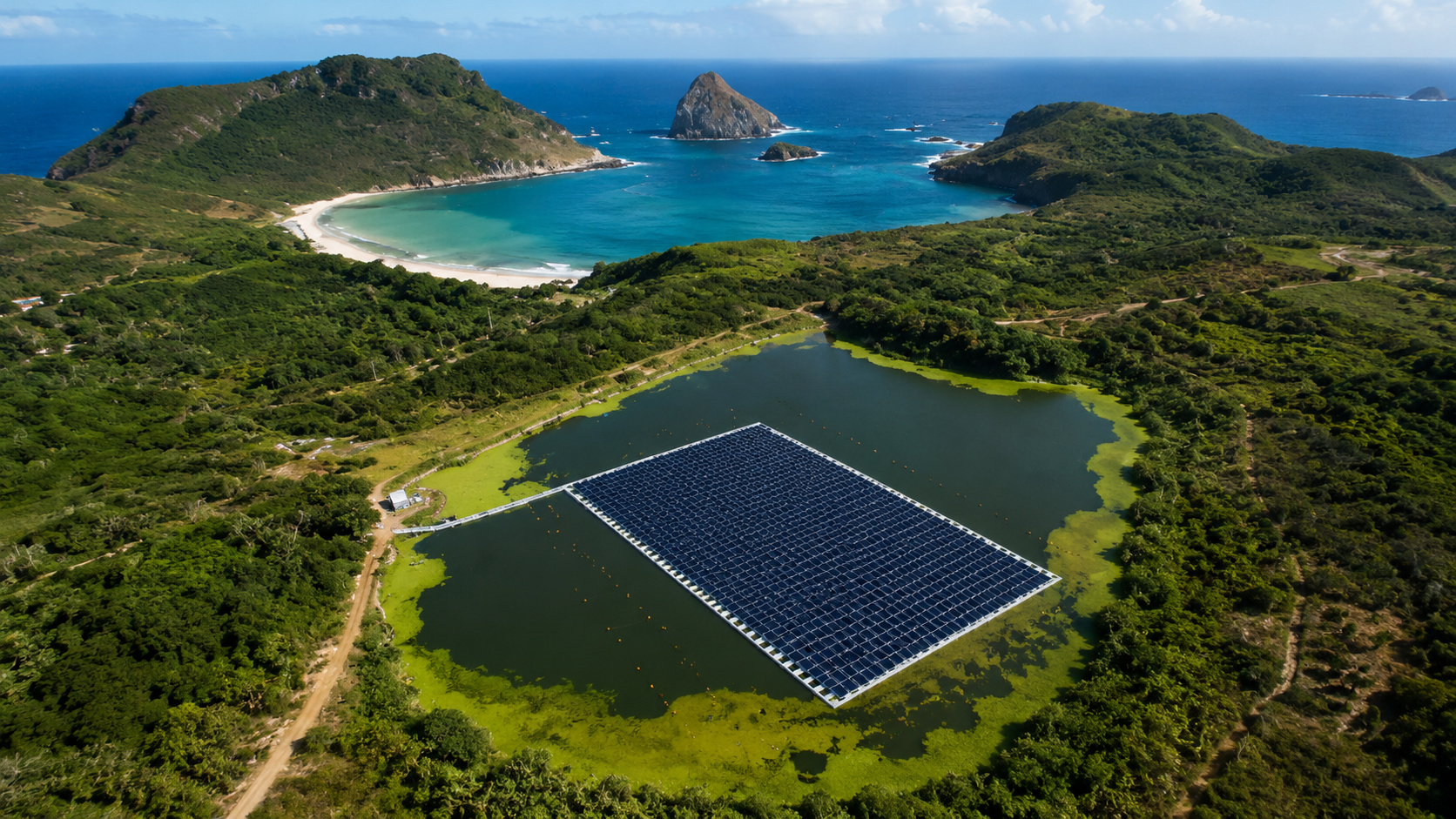
Fernando de Noronha begins unprecedented energy transformation with a R$ 350 million solar plant that promises to replace diesel generation and change the island’s sustainable future by 2027.

Since the beginning of the 2010s, the company has been investing in clean energy projects in various parts of the world, especially in Europe and North America. Thus, by betting on renewable sources, the company seeks to align its operations with the global decarbonization movement, which has intensified in light of climate change.
The solar park in Poland, located in the city of Resko, is being developed by the Israeli company Econergy.
With a capacity of 40 megawatts, the project will be one of the largest solar plants in the country when it becomes operational, expected in 2025. Furthermore, the agreement between Apple and Econergy follows a Virtual Power Purchase Agreement (VPPA) lasting 19 years, ensuring financial predictability and energy security for the parties involved.
A Historic Step for the European Energy Transition
This contract model, increasingly common in the sector, allows companies to acquire renewable energy without receiving physical supply directly.
Instead, they offset their carbon footprint through clean energy certificates. In Apple’s case, the agreement has proven essential to enable the financing of the project and ensure its execution within planned timelines.
Historically, Poland has heavily relied on coal to generate electricity.
For decades, the country was among the largest consumers of this fuel in Europe, with more than 70% of its energy coming from coal until the early 2000s.
However, environmental pressures from the European Union and international commitments to reduce emissions have stimulated the advancement of renewable energies, especially solar and wind.
In this context, the solar park in Poland symbolizes not just a technological advancement but also a profound cultural and economic shift.
The country, known for its strong heavy industry, is beginning to build a more sustainable future. Additionally, the entry of global companies like Apple into this market brings investment, innovation, and credibility to the local energy sector.
Solar Energy and Apple’s Role in the Sustainable Revolution
Solar energy is growing impressively in Europe. This is due to the decrease in installation costs of photovoltaic panels, combined with government incentives and a growing environmental awareness, which has propelled the emergence of large-scale projects.
In countries like Germany, Spain, and Italy, solar production already represents a significant share of the electricity matrix. Now, this trend is extending to Eastern Europe, with Poland in the spotlight.
With the advancement of this project, the energy generated by the Polish solar park will be sufficient to charge all Apple devices sold in Europe, according to the company’s own estimates.
Thus, the impact of the initiative becomes tangible and relevant, connecting corporate effort to the daily lives of millions of users.
Since 2018, Apple has operated all of its facilities and stores with 100% renewable energy.
However, the goal of completely neutralizing its carbon footprint by 2030 requires the company to go beyond its own borders. Thus, it seeks to engage suppliers and partners in sustainable practices.
The investment in the solar park in Poland is, therefore, an essential piece of this global strategy.
Sustainability, Economy, and Technological Innovation
The project is part of a continental strategy totaling more than US$ 600 million in Apple investments in renewable energy in Europe.
In addition to Poland, there are similar initiatives in countries like Romania, Italy, Greece, and Latvia. Together, these ventures are expected to generate over 1 million megawatt-hours per year, enough to supply hundreds of thousands of households.
From this perspective, Apple’s move reflects a new phase of technological capitalism.
If the race was once for product innovation, today it focuses on environmental and social responsibility.
Leading companies understand that the future of business is directly linked to the preservation of the planet.
For this reason, the investment in solar energy in Poland is both an economic decision and an ethical and strategic choice.
Moreover, the partnership with Econergy highlights the growing role of Israeli companies in the global clean energy market.
Israel, despite being small in territory, has excelled in the development of advanced solar technologies, especially in regions with high solar radiation.
By expanding its operations to Europe, Econergy brings this technological expertise to regions seeking to accelerate decarbonization, like Central and Eastern Europe.
Regional Development and Positive Social Impact
Another relevant aspect of this agreement is the incentive for local innovation.
The installation of the solar park in Poland creates new job opportunities and technical training in the Resko region.
This type of investment stimulates local economies, promotes technology transfer, and builds a more sustainable value chain.
Thus, the impact of the project goes beyond energy generation — it contributes to the economic and social development of the community.
Furthermore, Apple’s presence in the country strengthens Poland’s image as an attractive destination for green investments.
The creation of renewable infrastructure boosts other sectors, such as electric transportation and the construction of smart energy grids.
These initiatives help reduce energy costs and increase the country’s competitiveness within the European Union.
On the other hand, the expansion of solar energy in Polish territory also reduces dependence on imported fossil fuels, which is crucial in a volatile geopolitical context.
Since the energy crisis caused by the war in Ukraine, Europe has accelerated its energy independence plans.
In this scenario, the bet on renewable sources has become vital to ensure stability and security.
A Model of Corporate Sustainability
The solar park in Poland shows how sustainability and energy security can go hand in hand.
While reducing emissions, the project strengthens European energy autonomy.
For Apple, this initiative reinforces the commitment to align technology and the environment, demonstrating that progress can be achieved responsibly.
The company proves that innovation is not limited to product design, but also to how it relates to the planet.
This sustainable business model inspires other corporations to follow the same path, promoting a virtuous cycle of positive impact.
In the long run, the success of the project in Poland might encourage new similar partnerships in emerging countries and reinforce the importance of corporate investments in clean energy.
Thus, the world advances towards a new energy era, and Apple, once again, shows that it is ahead of its time.
In summary, the agreement to acquire 75% of the energy produced at the Polish solar park represents much more than a commercial transaction.
It symbolizes a transition of values: from an economic model based on finite resources to one focused on renewal and environmental balance.
By investing in Poland, Apple reaffirms that solar energy is an essential part of the future and that the commitment to the planet is as important as any technological innovation.
With initiatives like this, the company not only meets its climate goals, but also inspires governments, organizations, and consumers to take action.
After all, the sustainable future depends on the union between technology, responsibility, and long-term vision — and the solar park in Poland represents a decisive step in that direction.








Be the first to react!