Portuguese
  Spanish


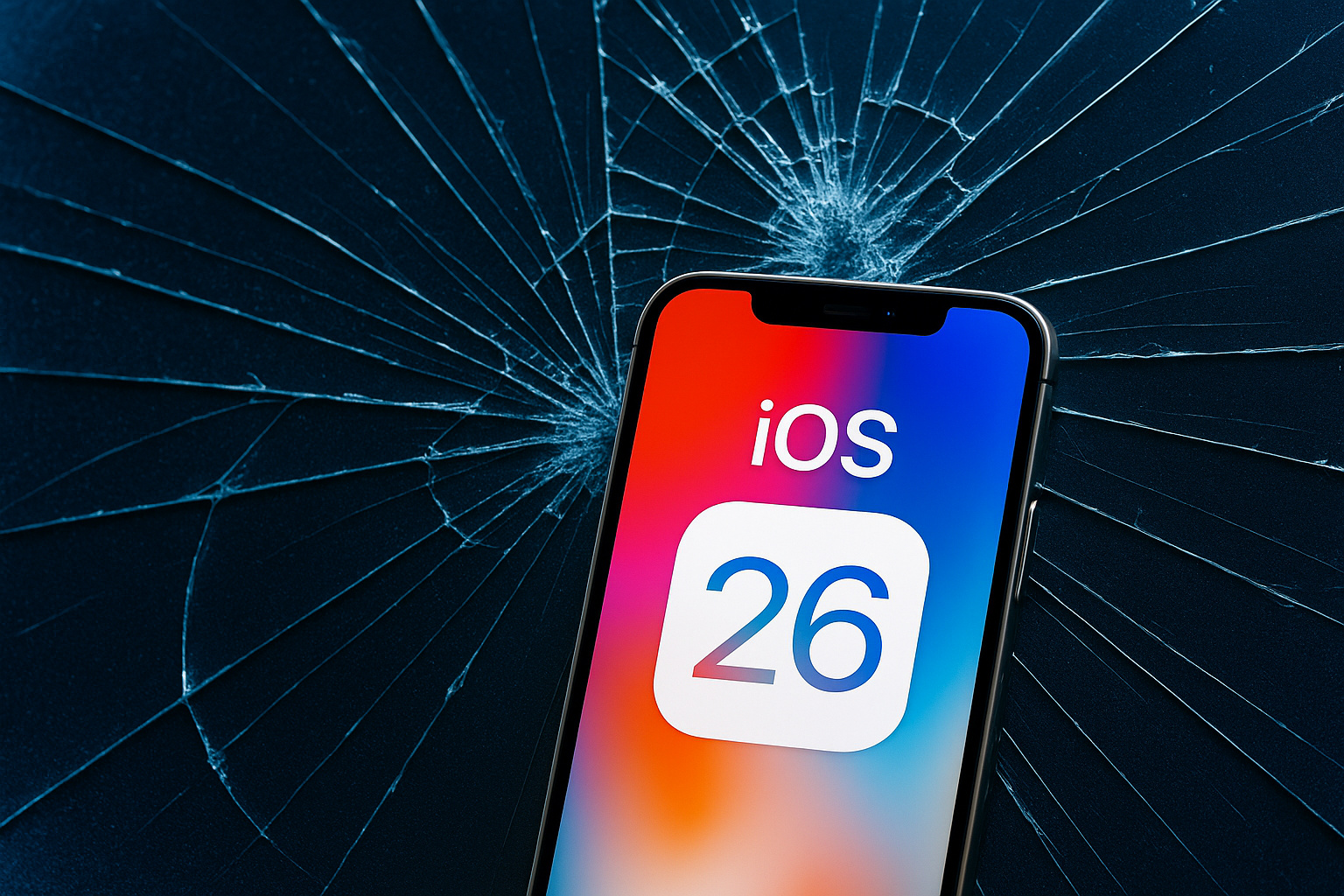

Drastic Change Signals New Phase for Apple System
Since 2022, Liquid Glass has gained prominence as a protective layer for sensitive functions.
Many users have complained about the rigidity imposed by this layer.
In July 2025, Apple decided to further reduce this protection in iOS 26.
This choice meets requests from developers and enthusiasts who want greater control over the system’s internal features.
Liquid Glass will not be completely removed.
It will be restricted to specific layers.
Thus, it maintains an essential security barrier, but one that is less intrusive.
Apple’s Strategy Prioritizes Customizable Experience
The decision shows that the company listens to its user base.
It reinforces a trend of greater flexibility in the iOS ecosystem.
The system is coming closer to Android in this regard.
Apple confirmed the change through an official statement.
Liquid Glass will now only act in critical modules.
The team will release APIs and advanced functions for manual adjustments.
The change carries risks but promises a balance between customization and security.


Reduced Protection Encourages Caution from Experts
The reduction in protection is celebrated by advanced users.
Cybersecurity professionals warn of the risk of greater exposure.
In May 2023, the first leak of exploits involving Liquid Glass occurred.
This incident prompted reinforcements in the layer.
Now, by loosening protection again, Apple invests in new native barriers.
These barriers contain intrusions.
According to consultancy Kaspersky, users should keep their devices updated.
This helps mitigate vulnerabilities.
-
The Lithium Triangle in the Americas Will Determine the Future of Electric Batteries — and Brazil Is Late to the Game

-
China Reclaims Supercomputer Crown with LineShine, Surpassing US’s El Capitan by 20% Without GPUs, Despite High Energy Consumption
-
Injured Amazon River Dolphin Rescued by Local Community and Real-Life “Aquaman” in Brazil’s Tocantins River

-
Spanish Startup Develops Europe’s Densest Solid-State Battery at 402 Wh/kg


Technical Community Reacts with Moderate Enthusiasm
Many users support the decision.
Independent developers request clear instructions about the new limitations of Liquid Glass.
In 2022, the feature emerged with total access blocking to certain frameworks.
iOS 26 will be distributed by September 2025.
It will include a management panel.
Each user will be able to enable or disable features according to their level of technical skill.
The experience becomes more fluid.
It requires public responsibility.
Future of Liquid Glass and Market Expectations
Market analysts, therefore, predict that the change will increase the adoption of independent developers.
Moreover, even with the relaxation, Apple will continue to impose restrictions in sensitive areas. These areas, for example, include data encryption and authentication keys. In this sense, iOS 26 will serve as a test for future versions.
The balance between security and autonomy will thus be gradually adjusted. The community, therefore, closely monitors each official update.
Everyone, in this way, hopes that Liquid Glass will become a more balanced solution.