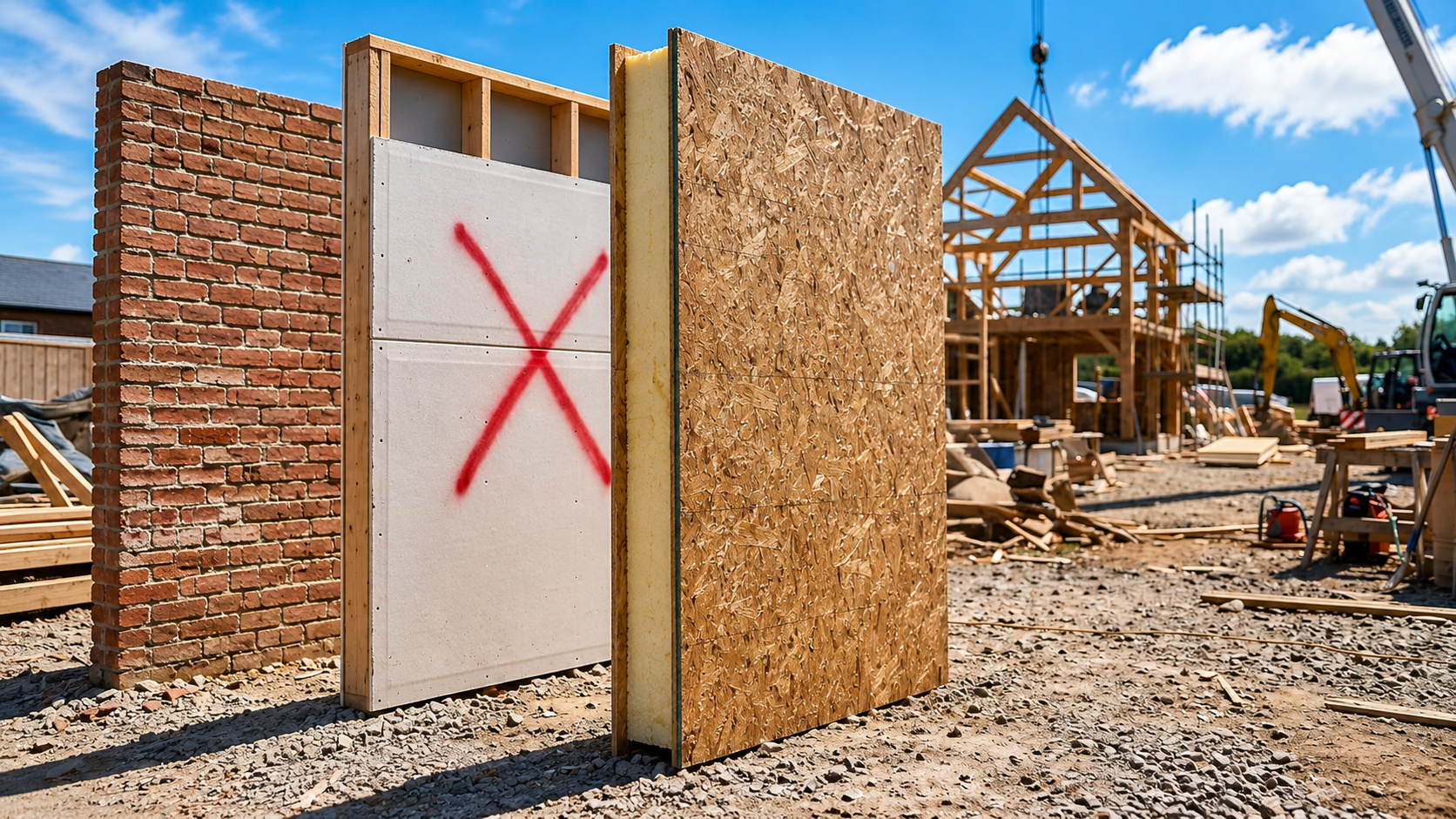

SIP Panel advances in civil construction 2026 with efficient thermal insulation and quick assembly that enhances comfort in works.
The search for faster and more efficient methods is driving changes in civil construction 2026. Among the solutions gaining prominence is the SIP panel (Structural Insulated Panel), a prefabricated system that combines structure, sealing, and thermal insulation in a single piece. In some configurations, the system can reduce heat transfer by up to 70%, as well as speed up the execution of the work and reduce waste generation.
According to Super Rádio Tupi on June 28, 2026, despite the growing popularity, experts highlight that the SIP panel does not automatically replace masonry or drywall in all projects. Furthermore, versions produced with magnesium oxide boards offer greater moisture resistance but still depend on proper waterproofing, correct sealing, and a well-executed project to ensure the expected performance.
Civil construction 2026: why is the SIP panel generating so much interest?
The industrialization of constructions is transforming the way houses and buildings are designed. Within this scenario, the SIP panel emerges as a solution that combines speed, efficiency, and thermal comfort.
-
186-Meter Bridge in Brazil Undergoes $9.5 Million Repairs After Structural Damage to a Pillar

-
Northeast Brazil Railway Project Receives New Deadline and Billions in Funding — Will the Transnordestina Finally Be Completed?
-
Saudi Arabia’s $500 Billion Desert Ski Resort Project Canceled — What’s Left Tells a Bigger Story
-
Street Vendor Builds Her Own 15m² House in Kenya Using Mushroom Root Panels, Spending Only $208 on Walls Compared to $1,000 for Traditional Bricks


According to the U.S. Department of Energy, structural insulated panels can be used in walls, floors, coverings, and roofs, offering continuous insulation when correctly installed.
The system is composed of three main layers:
- two rigid faces of OSB, cement board, or magnesium oxide (MgO);
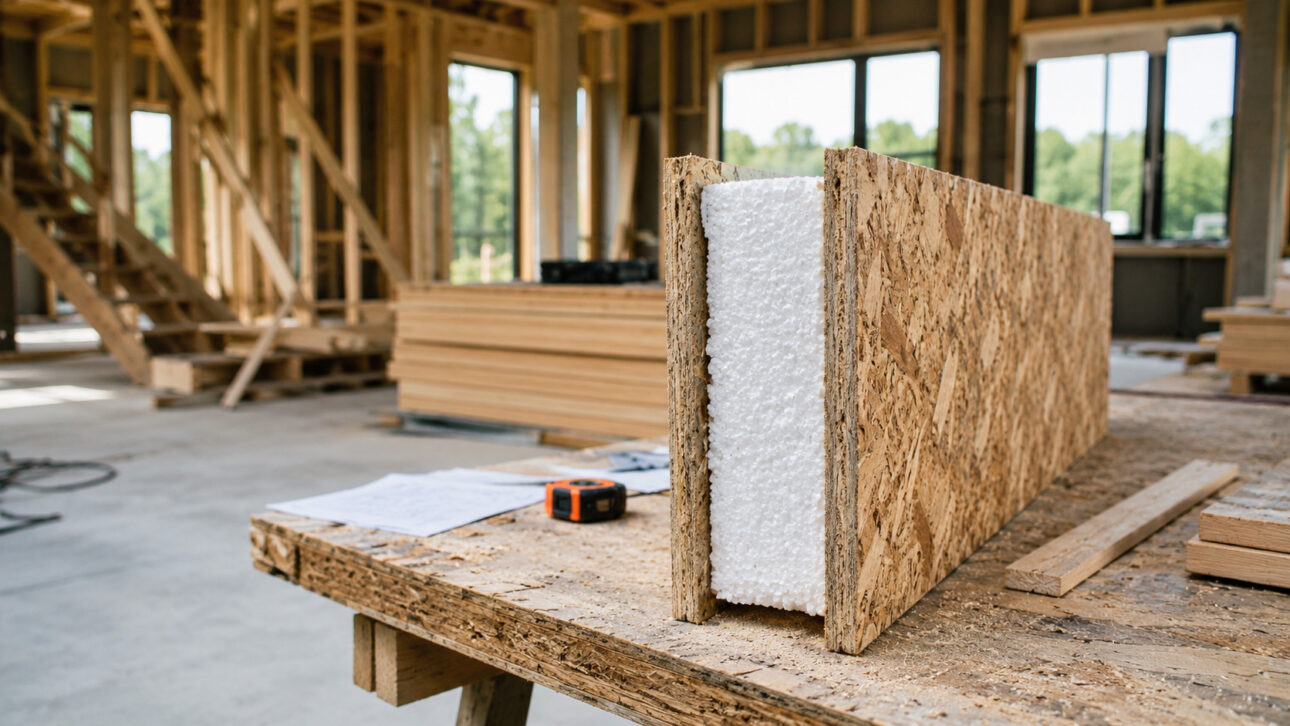
- insulating core of EPS, XPS, or rigid polyurethane foam;
- sealed joints to reduce air and moisture passage.
This configuration allows for the elimination of several common steps in conventional construction.


How the structure that combines resistance and thermal comfort works
Unlike traditional masonry, the SIP panel arrives ready at the construction site. Each piece is custom-made according to the project, reducing cuts, waste, and rework.
While the external boards ensure structural stability and receive the finish, the insulating core is responsible for reducing heat exchange between the internal and external environment. This combination makes the system an interesting alternative for those seeking greater energy efficiency.
Material requires correct installation to deliver expected performance
It is common to find the SIP panel being advertised as a waterproof material, especially when using magnesium oxide or cement boards. In practice, however, the assembly cannot be considered completely waterproof.
The guidelines of the Building America program, linked to the United States Department of Energy, warn that walls with high thermal performance can accumulate moisture if leaks occur and there is no adequate drying route.
Therefore, the system depends on various precautions during installation, such as:
- correct sealing of joints;
- adequate waterproofing;
- installation of flashings and drip edges;
- compatible finish;
- correct detailing between roofing, foundation, and frames.
Even using a waterproof material on the external faces, these details remain fundamental to increase the durability of the construction.
Thermal insulation reduces heat entry and improves energy efficiency
The main differential of the system is the thermal insulation provided by the foam core.
Materials like EPS, XPS, and polyurethane have thousands of cells filled with air, hindering heat transfer between the two sides of the wall.
According to the United States Department of Energy, performance varies according to factors such as foam density, panel thickness, quality of sealing, and installation.
In certain configurations, the panels can reduce heat transfer by up to 70%, a figure often cited in comparisons with conventional systems without insulation. However, the percentage varies according to the project and should not be treated as guaranteed performance for all constructions.
Among the main benefits are:
- more stable internal temperature;
- less use of air conditioning;
- electricity savings;
- greater comfort in different seasons of the year.

More than an alternative to drywall, a complete construction system
Although it is often presented as an alternative to drywall, the SIP panel has quite different characteristics.
Drywall is mainly used for internal partitions and ceilings, while SIP can perform a structural function in walls, floors, and roofs, depending on the project.
This means that the two systems are not direct competitors in all situations. In many projects, they can even be used complementarily.
The choice depends on factors such as budget, purpose of the building, regional climate, and availability of specialized labor.

Innovation in construction reduces deadlines and waste on sites
The speed of execution is one of the factors that most attract attention in this innovation in construction.
According to the Structural Insulated Panel Association (SIPA), the panels are manufactured in a controlled industrial environment and arrive identified according to the executive project.
In practice, the team only needs to position, fix, and seal each piece, eliminating several stages present in conventional masonry.
Even before manufacturing, some precautions are essential:
- define all structural modulation;
- plan doors and windows;
- coordinate electrical and plumbing installations;
- prepare a leveled base to receive the panels.
This planning reduces unforeseen events and improves productivity during assembly.
Is the SIP panel really dominating the construction industry in 2026?
Despite the growing visibility, there are no national surveys proving that the SIP panel is dominating the construction industry in 2026 in Brazil.
The system has been gaining ground by offering speed, lightness, less waste generation, and excellent thermal performance. Even so, masonry and drywall continue to be widely used in different types of construction.
Experts emphasize that there is no one-size-fits-all solution for all projects. The decision should consider climate, budget, technical support, labor availability, and building characteristics.
A technology that expands the possibilities of modern construction
The SIP panel represents an important evolution within industrialized construction. Its high performance in thermal insulation, combined with execution speed and waste reduction, explains why the system is attracting increasing market attention.
At the same time, it is important to separate facts from advertising. Even using a waterproof material in some versions, the system still requires proper waterproofing and specialized installation. Similarly, although it is an excellent alternative to drywall in certain applications, it does not eliminate the need for masonry or other construction methods.
The advancement of this innovation in construction shows that the trend for the coming years is not the complete replacement of traditional systems, but the coexistence of different technologies, allowing architects, engineers, and builders to choose the most suitable solution for each project.