Portuguese
  Spanish


Apple Prepares Sensor That Promises to Capture Images With Light Range Close to That of the Human Eye, and Technology May Debut in the iPhone 20 in 2027, According to Leaks and Patent Filings.
Apple has filed a patent describing a LOFIC image sensor — which stands for Lateral Overflow Integration Capacitor — and according to the leaker yeux1122, this technology is expected to debut in 2027, the year anticipated for the launch of the “iPhone 20” line, in celebration of the 20th anniversary of the first model.
The system promises to expand the dynamic range of images and bring the results closer to what the human eye can perceive in environments with varying light levels.
What Is LOFIC
According to the patent and technical analyses published in specialized outlets, LOFIC is an arrangement of lateral capacitors incorporated into each pixel of the sensor.
-
NASA spotted a giant “surfboard” crossing the Moon’s orbit at 11,500 km/h, and the truth behind the mysterious object required a 0.338 millisecond photo to be revealed.

-
Brazilian project based on nanotechnology transforms the recovery of degraded areas in the Amazon, receives international recognition, and uses research in 9 states to accelerate the growth of native species and increase carbon capture.

-
The battery that promises to change cell phones and electric cars still has a microscopic enemy: researchers discover how lithium dendrites pierce the solid electrolyte and are already testing ways to prevent cracks and short circuits.
-
An old ferry rusted for more than 10 years in New York, almost sank after the engine room was flooded, and now volunteers are rushing to clean the hull, remove wires, life jackets, and loose paint before sinking it in the Atlantic to become an artificial reef full of marine life.




When there is excess light, the system redirects part of the electrical charge to these capacitors, preventing image saturation.
This technology is used to increase the dynamic range (DR), allowing for the capture of more details in both very bright areas and dark regions of the photo.

Researchers in the field of photographic sensors claim that the principle of LOFIC is already known in industrial and academic projects and that its application in smartphones represents a significant technical advancement, if successfully implemented.
Patent Indicates Significant Increase in Dynamic Range
Documents registered by Apple indicate that the new stacked sensor would include the LOFIC circuit and mechanisms to reduce electronic noise.
The projection described suggests that the system may achieve about 20 stops of dynamic range — a number higher than currently observed in iPhone sensors, which ranges between 10 and 13 stops, according to analyses by digital imaging experts.
This estimate, however, is based on patent data and not on a final product.
So far, Apple has not publicly confirmed the development or adoption of LOFIC in future devices.
Comparison With the Human Eye
Researchers in the field of vision and imaging explain that the dynamic range of the human eye varies with pupil adaptation.
In instant measurements, the range is between 10 and 14 stops; considering continuous adaptation to light, the number can reach 20 or 30 stops.
The predicted performance for LOFIC would place the iPhone sensor at a level close to this perceptual range, according to projections from industry analysts.
Launch and Possible Models
The leak published on Naver indicates that the debut of LOFIC would occur in 2027, with the “iPhone 20” line.
Sources close to the components sector say that Apple usually introduces camera technologies first in the Pro models before expanding them to other devices.
So far, the company has not provided official information about the timeline or models that will receive the new sensor.
Potential Impact on Images
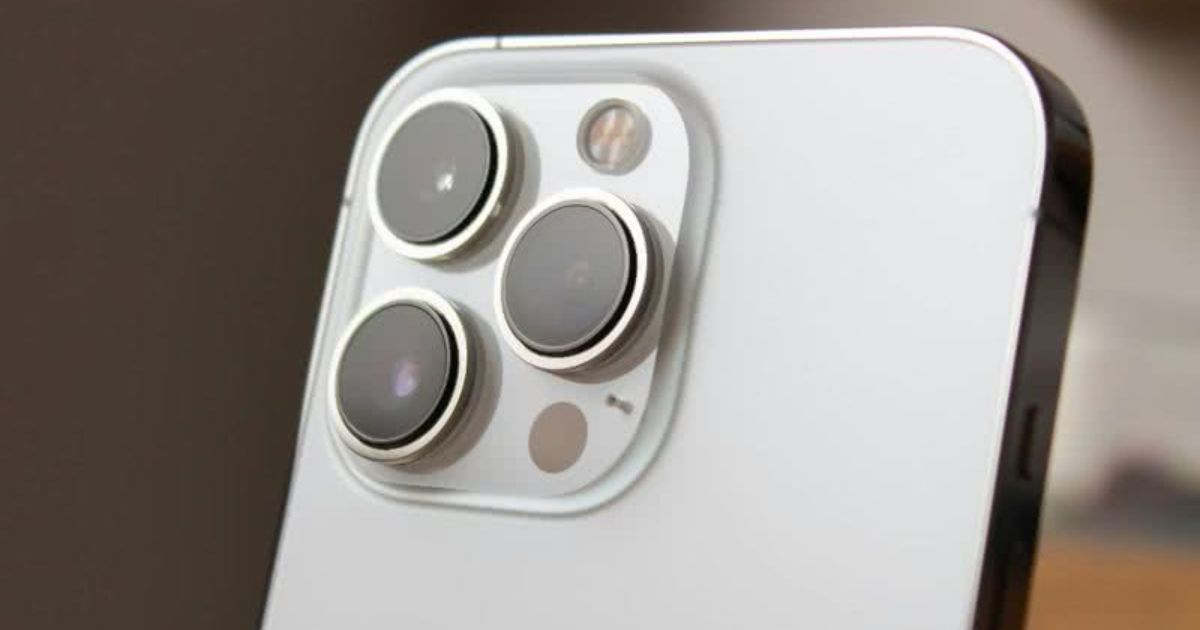
Engineers and experts in mobile photography evaluate that sensors equipped with LOFIC could improve exposure latitude in photographs and videos.
This means that scenes with high contrast — such as portraits against the sun or interiors with illuminated windows — could maintain visible details in different areas of the image, with less incidence of noise.
These effects, however, depend on the integration between hardware and computational processing.
Analysts remind us that the final result is also related to the use of HDR algorithms, the type of lens, and the imaging software adopted by Apple.
Competition and Adoption in the Android Market
While Apple’s system is still under development, Chinese manufacturers like Xiaomi, Honor, and Huawei are reportedly evaluating the use of sensors with similar technology in high-performance models.
Sources in the components sector indicate that these companies may employ sensors supplied by Sony, which already manufactures devices with a dynamic range exceeding 100 decibels — approximately equivalent to 17 stops.
Market analysts interpret this move as part of the competition to improve dynamic range in smartphone cameras, one of the main technical differentiators among brands.
Outstanding Questions
There is no confirmation regarding whether the new sensor will be exclusive to Pro models or whether it will be included in the entire iPhone line starting in 2027.
There are also no official specifications about the sensor size, resolution, or exact number of stops that the component may achieve in real use.
Apple maintains its policy of not commenting on rumors or information about products that have not yet been announced.
Relevance to the Industry
Digital photography experts assert that if the technical forecasts are confirmed, sensors with a dynamic range close to that of professional cameras could reduce the need for multiple exposures and improve the fidelity of complex scenes, especially in videos.
Nonetheless, commercial adoption will depend on factors such as production cost, integration with the image processor, and optimization of the capture software.
With the potential arrival of LOFIC and the advancement of similar technologies in other manufacturers, the smartphone market may be nearing a new stage in the evolution of mobile cameras.
The lingering question is: will consumers start to place more value on the dynamic range of photos over the number of megapixels when choosing a cellphone?