Portuguese
  Spanish


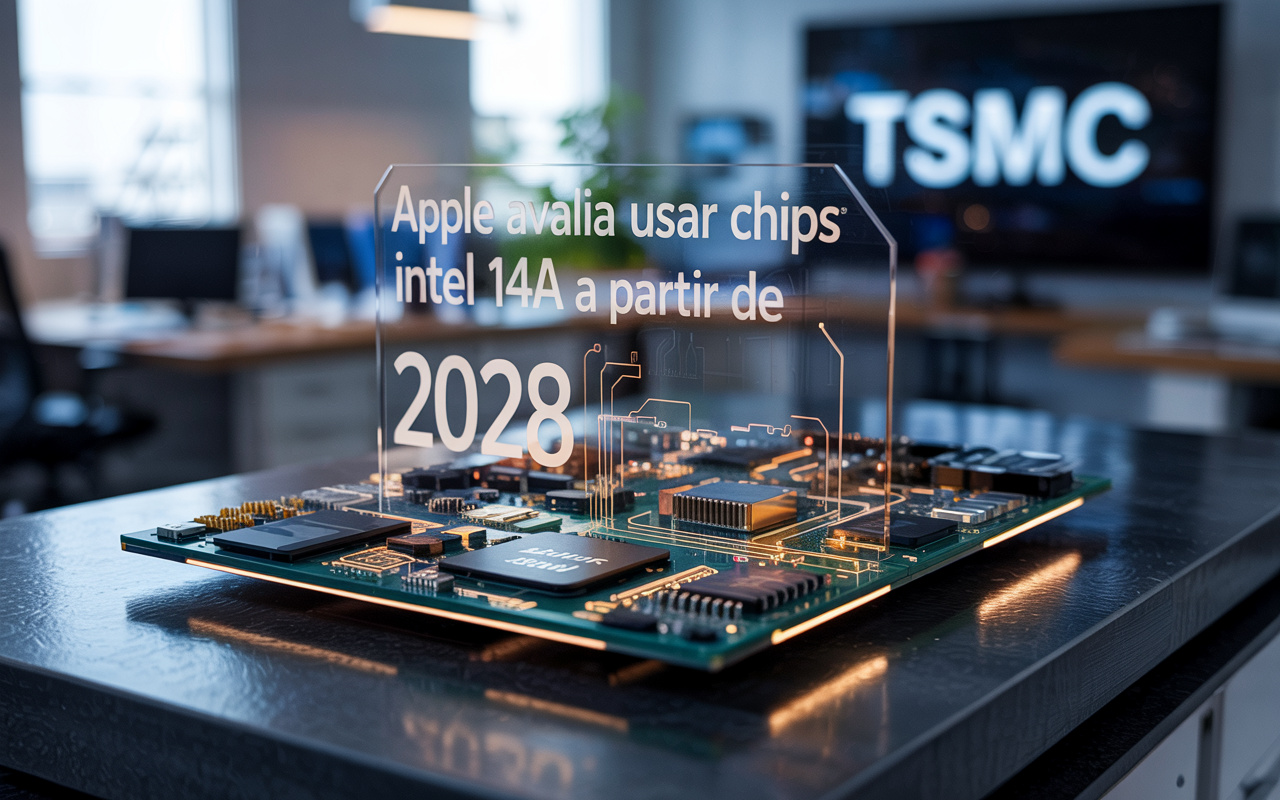

Apple Evaluating Using Intel 14A Chips Starting In 2028, Sharing Production With TSMC. Partnership Could Yield Billion-Dollar Contract For Intel And Reduce Dependence On Apple.
The relationship between Apple and Intel, which seemed to have come to an end after years of partnership, may gain a new chapter. According to analyst Jeff Pu from GFKH, Apple is evaluating the possibility of using the Intel 14A process to manufacture M series chips starting in 2028, making Intel a secondary supplier and reducing exclusive dependence on TSMC, which is currently responsible for all chips used in Macs and other devices from the company.
If confirmed, this move represents a significant strategic step for Apple and a breath of hope for Intel, which is facing a delicate phase, with declining revenues, loss of market share to competitors, and even the departure of Pat Gelsinger, the CEO who had been with the company for more than 30 years.
Apple Intel 14A: An Unexpected Return Of A Historic Partnership
Apple and Intel have a long history of collaboration. For many years, Macs used Intel processors until Apple decided to invest in its own chips, launching the Apple Silicon line and leaving Intel behind.
-
NASA Plans to Repurpose Mars Rover for Lunar Mission, Sending a 1-Ton Nuclear-Powered Vehicle to Explore the Moon’s South Pole Without Solar Dependence

-
Early Humans Made Beds Nearly 200,000 Years Ago in African Caves, Study Reveals

-
Japanese Smart Bike Detects Cyclist’s Intent to Turn and Potential Falls
-
METTL3 Protein Found to Play Crucial Role in Breast Cancer Metastasis, Surprising Scientists


Since then, TSMC has taken over the manufacturing of these chips, solidifying itself as the main production partner of the Cupertino giant.
However, Apple’s quest for greater control over its supply chain and the reduction of dependence on a single supplier reignites interest in a dual sourcing model — that is, splitting chip production between more than one partner. Intel’s entry with the 14A process would fit into this strategy.
Chip Manufacturing 14A: What Changes In Practice?
The Intel 14A process promises significant technical leaps. The expectation is that it will deliver 15% to 20% more performance per watt compared to the 18A currently in use, in addition to enabling higher frequencies and up to 35% lower energy consumption.
These improvements could help Apple continue evolving its M series chips, which power Macs and iPads, and maintain leadership in energy efficiency, one of the strongest points of Apple Silicon processors.
For Intel, having Apple as a customer for such an advanced process would represent a billion-dollar contract and, more than that, recognition of its efforts to regain relevance in the foundry sector, where it faces TSMC and Samsung.
Apple Dual Sourcing: Risk Reduction And Dependence
Currently, Apple relies exclusively on TSMC to manufacture its 3 nm chips and, in the future, those of 1.4 nm. This close relationship is strategic, but it also creates a point of vulnerability: any production issues, bottleneck, or geopolitical crisis involving Taiwan could affect Apple’s supply chain.
By adopting a dual sourcing model, Apple would diversify risks, ensure greater supply security, and potentially negotiate more advantageous conditions, fostering competition among suppliers.
Intel Foundry Apple: Possible Billion-Dollar Contract And Recovery Of Intel
The potential partnership with Apple comes at a crucial time for Intel. The company faces strong financial pressure, loss of market share, and a leadership transition after Pat Gelsinger’s departure.
Having Apple as a customer for the 14A process would be a game changer. In addition to the direct financial impact, it would help Intel consolidate the image that it is able to compete again in cutting-edge processes, something essential for its long-term strategy.
TSMC Competitor: How Does The Existing Agreement Stand?
Apple already has a contract with TSMC for the manufacturing of 1.4 nm lithography chips starting in 2028. This does not mean that the partnership will be broken, but rather that production could be shared with Intel.
This division would bring benefits to Apple, such as greater flexibility and the ability to increase production without relying on a single partner. For TSMC, however, it would represent a red flag: exclusivity in producing Apple chips may be numbered.
In recent years, Apple has been investing heavily to reduce dependence on third parties. The creation of the C1 chip, a 5G modem used in the iPhone 16e, was an example of this pursuit for autonomy.
With the movement towards the 14A process, Apple shows that, while it seeks independence in chip design, it still needs partners to manufacture them at scale — and wants those partners to be more than one.