






 Portuguese
  Spanish


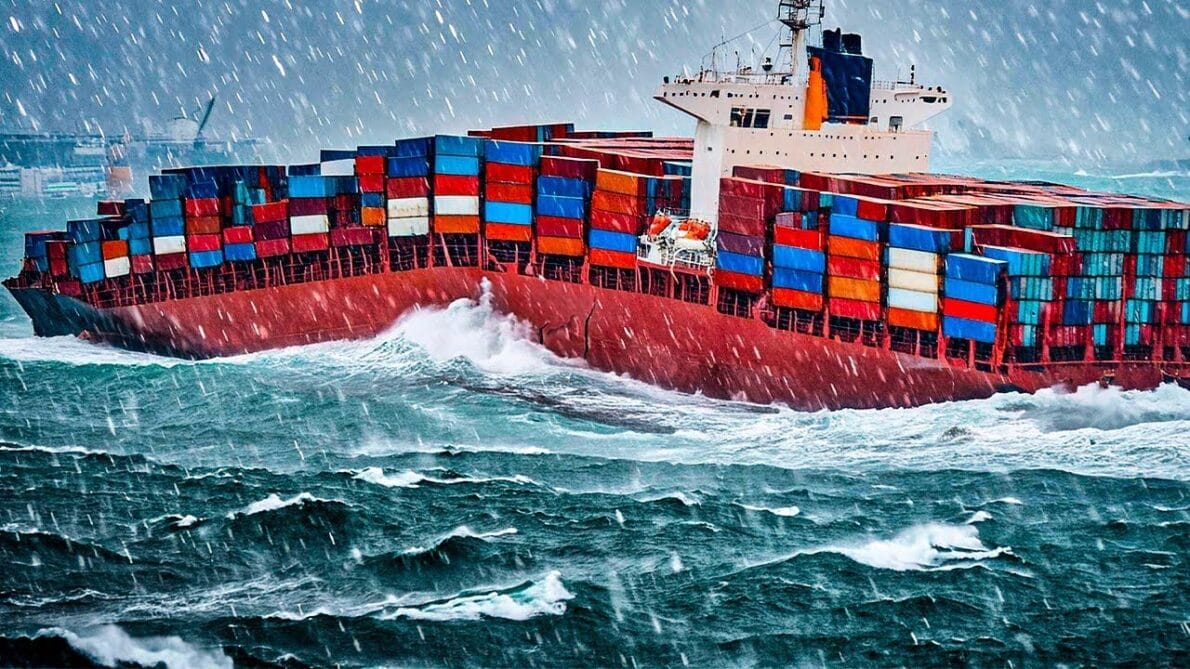

Discover How Small Errors on Container Ships Can Cause Million-Dollar Disasters. Container Ships Face Various Challenges During Their Voyages That Can Result in Cargo Loss. Interestingly, It Is Not Always Climate Factors That Cause These Losses; Often, Small Errors or Human Oversights Are the Real Culprits.
Container ships face a series of challenges that can lead to costly disasters. A notable example is the case of the Ever Given, which ran aground in the Suez Canal in March 2021. This incident not only blocked one of the world’s most important trade routes but also caused a massive economic impact.
The salvage operation involved dredging the sand around the ship, using tugboats, and removing part of the cargo. The blockage lasted six days, disrupting global maritime traffic and resulting in weeks of delays and a backlog of ships.
Another Tragic Example Is the MOL Comfort Container Ship

Which split in two in June 2013 due to structural issues. The hull breach led to the ship sinking, resulting in the loss of 1,700 containers and 1,500 tons of fuel, with an estimated loss of $400 million. This incident highlighted the importance of a robust design and proper maintenance to avoid catastrophic failures.
-
10-Year-Old Max Makes History with Paris Fashion Show, Launches Own Brand, Hires Staff, and Sets World Record as Youngest Runway Designer

-
Bolivian Female Construction Workers Form Association to Combat Discrimination and 38% Pay Gap in the Industry

-
Near Amsterdam, residents buy land and discover they must also build streets, manage drainage, handle waste, and grow food on half their plot.
-
Without a mansion, without high investment, and without a traditional classroom, a teacher living in a 22 m² house taught students to build a 9 m² studio apartment with the equivalent of R$10,000.



The MSC Napoli, which suffered a catastrophic hull failure during a storm in the English Channel in January 2007, is another example of how container ships can face major disasters. The salvage and removal of oil and containers took two and a half years, costing the British government £120 million.
In November 2020, the One Apus Lost 1,816 Containers at Sea During a Storm
With estimated losses of $200 million. Experts warn that the pressure to meet tight schedules can lead to risky decisions, such as not diverting around storms, which exacerbates risks in maritime transport.
These examples show that container ships, despite their importance in global trade, are vulnerable to small errors that can result in large disasters. The pressure for efficiency and speed, combined with adverse weather conditions and human errors, contributes to the occurrence of costly and dangerous incidents. Therefore, safety and proper maintenance are crucial to preventing such disasters and ensuring the integrity of maritime operations.







Importantíssimo a abordagem sobre esse assunto. Por que eu fui de Marinha Mercante dd 75 e de uns tempos para cá, tenho visto muitos acidentes Marítimos: abalroamentos , encalhes, navios moderníssimos se partindo em 2…e isso representa prejuízo astronômicos,.põe em dúvida competências etc