






 Portuguese
  Spanish


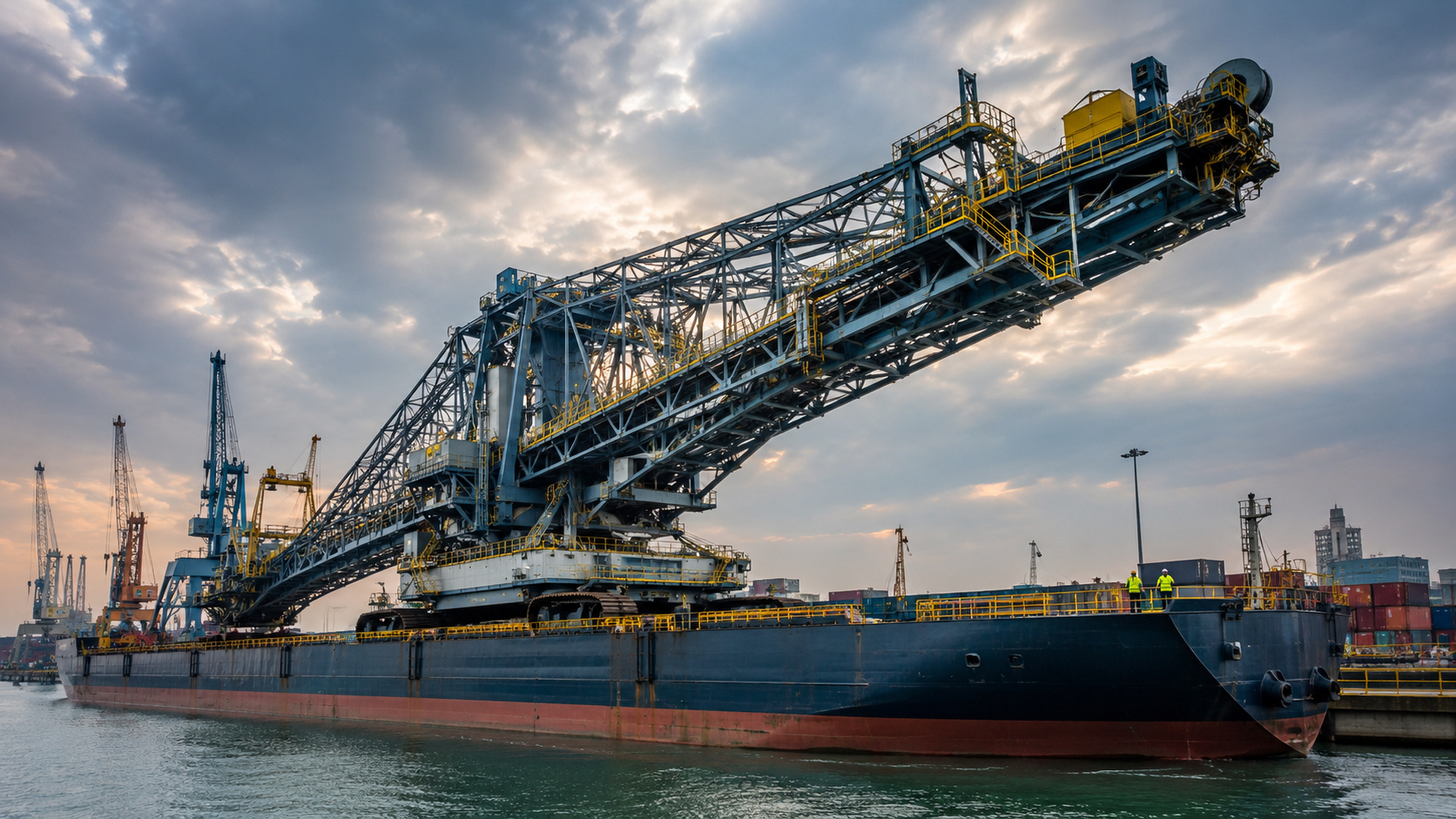
The heavy cargo maritime transport operation carried a giant port machine on the Happy Star ship, with rare size, extreme weight, and planned delivery to reduce assembly time at the destination
A port loader larger than many buildings was shipped whole on a ship. The structure weighed 1,060 tons, measured 84.65 m in length, was 52.29 m wide, and reached 53.96 m in height.
The information was released by BigLift Shipping, a heavy cargo maritime transport company. The equipment traveled on the Happy Star ship and was considered the largest item by volume ever transported whole on a company vessel.
The case draws attention because it involves not just a heavy load. The machine was taken almost ready to operate, which reduced steps at the destination and showed how port logistics can involve gigantic pieces, precise planning, and ships prepared for extraordinary missions.
-
While many ports want to grow, Barcelona has decided to do the opposite and will cut cruise terminals from 7 to 5 after pressure from residents, protests, and crowds.

-
The United States wants to tighten control over submarine cables that carry 99% of international internet, silently cross oceans, total more than 400 routes worldwide, and have become a strategic piece in the competition for data, technology, and suppliers.
-
European Union looks again at Brazilian seafood after a nearly 8-year ban and may unlock a coveted market for lobster, tuna, tilapia, and shrimp.
-
Voltalia secures 322 MW of electrical connection in Pecém and targets data centers with renewable energy, robust network, and dedicated wind projects in Ceará.



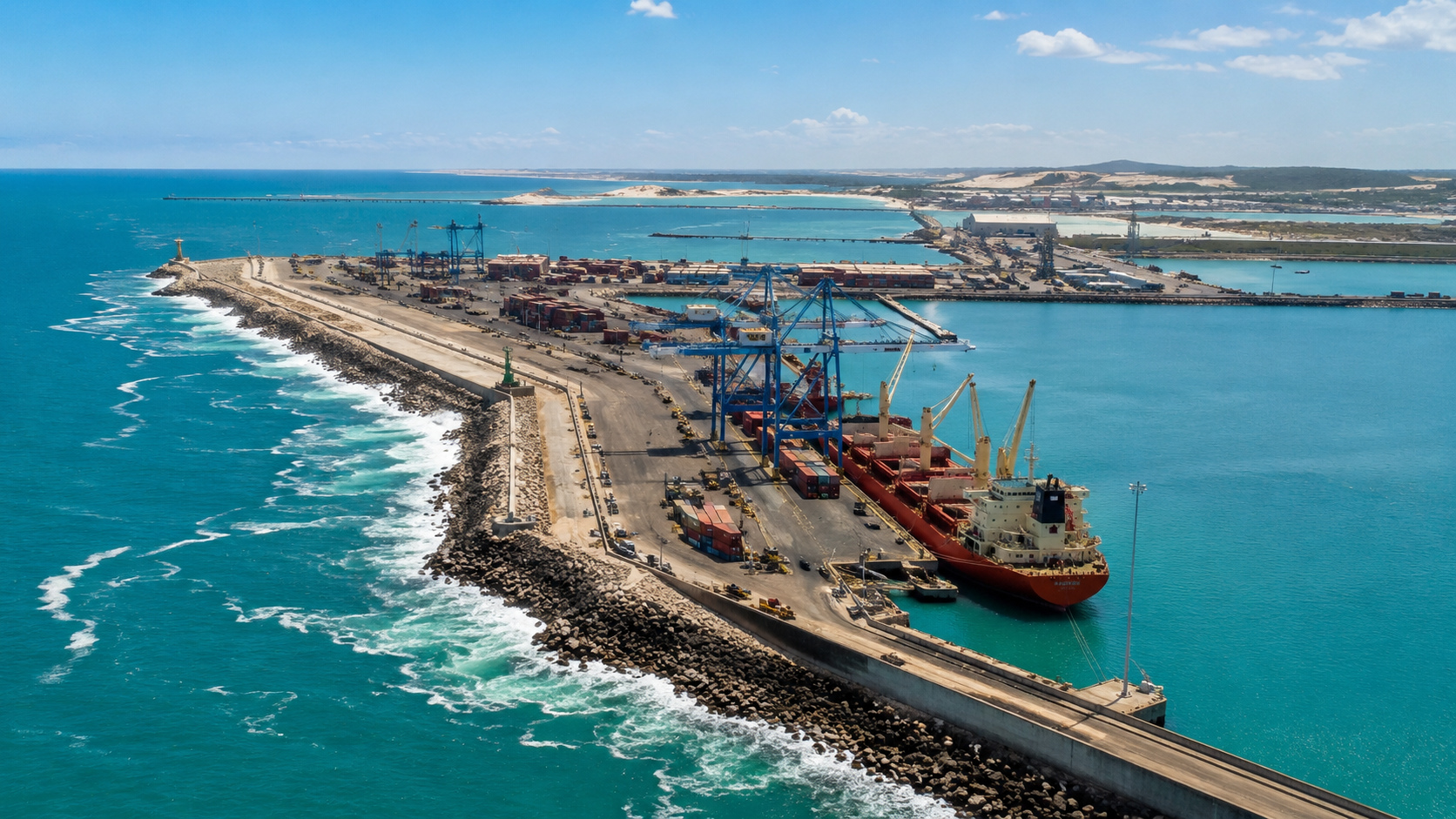
Giant machine was placed whole on the Happy Star ship
The port loader was shipped after the completion of its construction. Instead of being divided into several parts, it entered the ship as a single piece, something unusual for a structure weighing 1,060 tons.


This choice made the operation more complex during loading, but helped at the destination. When a machine of this size arrives assembled, there is less time lost with fittings, heavy assembly, and long checks at the terminal.
The Happy Star ship had to accommodate the structure between its own cranes. With 84.65 m in length and almost 54 m in height, any movement required care to avoid damage to the equipment and the ship.
What is a port loader and why it impresses with its size
A port loader is a machine used to load material into ships. It operates in terminals that handle large volumes of loose cargo, such as ore, coal, grains, and other bulk products.
In simple terms, it functions like a large supply arm. The equipment carries the material via belts and dumps the cargo into the ship’s hold, without relying solely on trucks or smaller machines on the dock.
The size exists out of necessity. To reach large ships, sustain its own structure, and operate safely, the loader needs to be tall, wide, and sturdy. Therefore, this machine reached 1,060 tons.
Transporting the assembled port loader helped save time at the destination
The decision to transport the entire port loader was directly related to the deadline. The structure needed to be fully operational within two weeks of its arrival.

Therefore, the cargo followed on a dedicated journey. The ship was not simply filled with as many parts as possible. The priority was to allow the loader to arrive ready for quicker installation.
In practice, this changes the pace of work at the terminal. Instead of starting a large assembly from scratch, the team receives an almost ready machine and focuses the work on unloading, positioning, and final adjustments.
Cargo exceeded common deck limits and required careful calculation
BigLift Shipping, a heavy cargo maritime transport company, detailed the key points of the operation. The port loader had significant lateral overhang during the journey.
The structure extended 43.7 m to one side and 11.8 m to the other. The top of the equipment was 63 m above the waterline, a height that reinforces the extraordinary scale of this maritime cargo.
These numbers show why the transport cannot be treated as a regular journey. The weight needs to be balanced, the deck space needs to be calculated, and navigation requires attention to the cargo’s behavior throughout the journey.
Project in Canada involved replacing old machines with modern equipment
The port loader was part of an infrastructure reinvestment program by Westshore Terminals in Vancouver, Canada. The project involved replacing four old machines with modern and more efficient equipment.
Among the old equipment were three original stacker reclaimers and the port loader that served a berthing area of the terminal. The new machine departed from Qidong, China, destined for Canada.

The operation also involved a 60-ton transfer car. This equipment accompanied the port loader and was part of the same transport phase on the ship Happy Star.
Transport of giant cargo depends on special ships and planning before the trip
Transporting a giant load doesn’t just mean lifting the piece and placing it on the ship. Before that, it’s necessary to study weight, height, width, center of balance, and maneuvering space.
In the case of this port loader, the volume was the big challenge. BigLift had already dealt with heavier loads, but this structure stood out for the total size shipped in a single piece.
After unloading the new port loader and the transfer car at the dock, the ship also took away the old loader and its transfer car. The old pieces were removed from the area to make way for the new equipment.
The transport of the 1,060-ton port loader shows that port engineering begins even before the machine enters operation. To load larger ships, it was first necessary to move a structure almost the size of a building across the sea.
Do you think it’s smarter to transport a giant machine whole to save time or to dismantle everything to reduce risks along the way? Leave your opinion in the comments and share with those who love engineering on an extreme scale.








Be the first to react!