






 Portuguese
  Spanish


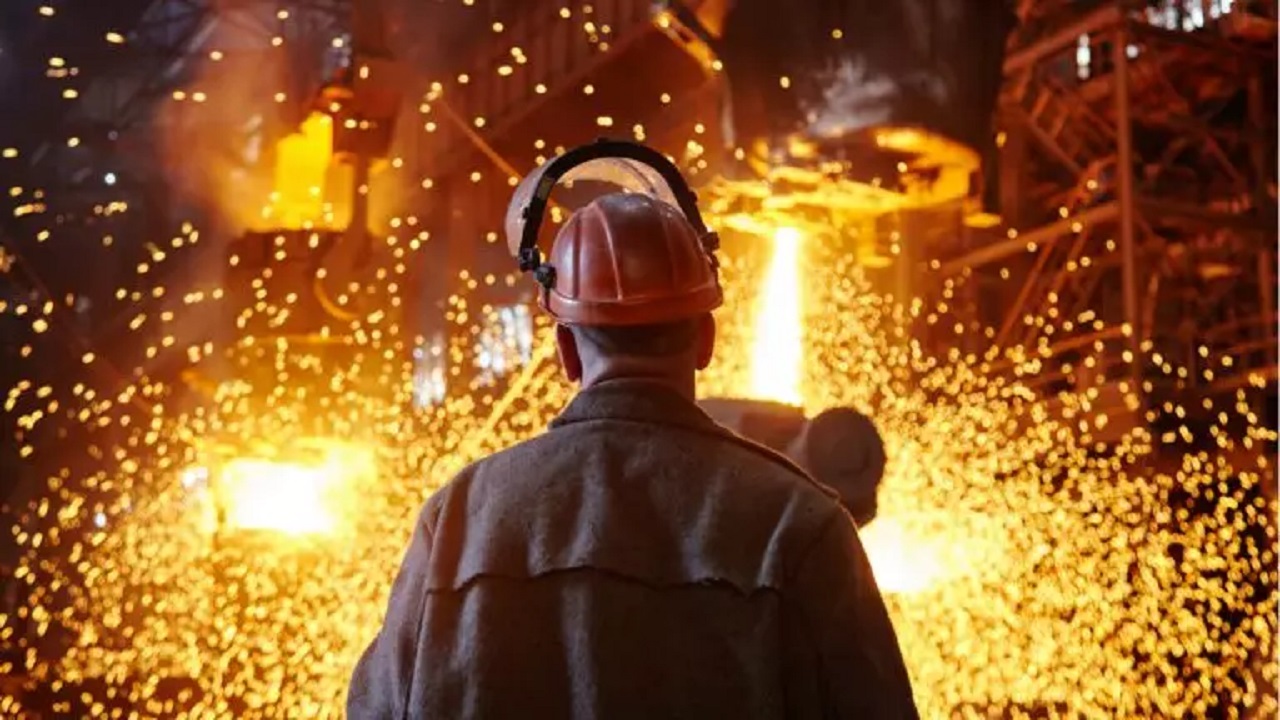

ArcelorMittal Replaced Natural Gas with Green Hydrogen at Its Plant in Canada, Achieving a Major Step Toward Decarbonization in the Steel Industry.
The steel giant ArcelorMittal announced that it has succeeded in a test that indicates a crucial path toward decarbonization of one of the most polluting sectors of the global economy. The Contrecoeur plant in Canada managed to replace 6.8% of natural gas with green hydrogen, which was used for 24 continuous hours during a critical stage of its production process. If the fuel is obtained through water electrolysis using renewable energy sources, as in ArcelorMittal’s experiment, green hydrogen has virtually zero carbon dioxide emissions.
Details on ArcelorMittal’s Natural Gas Replacement Test with Green Hydrogen
That is why green hydrogen is seen as an essential part of the solution in sectors where electrification is unfeasible, such as heavy industry and long-distance freight and passenger transport.
According to ArcelorMittal, this is the first time that an industrial-scale and operational plant has achieved such a feat. Other plants also use hydrogen, but that which is obtained from polluting energy sources does not represent environmental gains.
-
Giant Batteries Take Center Stage in Chile Auction as Company Offers 960 GWh of Solar Energy for Nighttime Use, Aiming to Stabilize Solar Power Supply

-
After a Year of Success in Switzerland, Solar Railway Attracts Italy’s Interest for Clean Energy Transformation
-
Robots Clean Solar Panels in Desert Power Plants Without Water, Preventing Energy Losses
-
Brazil’s Offshore Wind Energy Potential Worth $1 Trillion Stalled by Long-Delayed Agreement



Although the percentage of natural gas replacement in the test in Canada was small, any reduction in CO2 emissions in the steel sector has a significant impact on pollution emission accounting. It is estimated that about 7% to 9% of all carbon dioxide emissions come from the sector. Green hydrogen was used by ArcelorMittal in a stage that generates 75% of the carbon emitted by the Canadian plant, known as iron reduction.
ArcelorMittal Plans to Scale Its Test by Reducing Natural Gas Use Across Its Operations
The company’s experience was carried out at a direct reduction plant and does not apply to any plant. In Brazil and the rest of the world, a large part of steel mills use blast furnaces and coal for iron reduction. It is worth noting that green hydrogen can also be used in these plants, albeit in smaller proportions.
The experiment carried out in the Canada is part of the company’s goal to reduce CO2 intensity in its products by 25% by the next decade and achieve carbon neutrality by 2050. The next phase of the tests will be to expand the injection of green hydrogen and reduce that of natural gas.
According to the head of ArcelorMittal’s Canadian operation, François Perras, demonstrating this technology and scaling it to larger levels can be an important part of the decarbonization puzzle in the sector. The company has already invested approximately US$ 5.5 billion in projects involving the switch from fossil fuels to green hydrogen.
SSAB is Seeking Fully Renewable Steel
The Swedish SSAB is pursuing plans similar to those of ArcelorMittal. The company’s goal is to produce the first steel completely free of fossil fuels in less than four years. The change begins with the extraction and processing of iron, but the innovation is more important in the manufacturing process, with direct reduction entirely based on green hydrogen.
One part of the challenge is technical and involves demonstrating the economic viability of these plants at scale, while another part is geographical. Since the process uses very large amounts of gas, the plants ideally need to be close to renewable energy sources, as green hydrogen is the essential ingredient.
The availability of clean energy is one of the factors that may limit the expansion of the tests conducted by ArcelorMittal in Canada, as the company itself states in its release.







