Portuguese
  Spanish


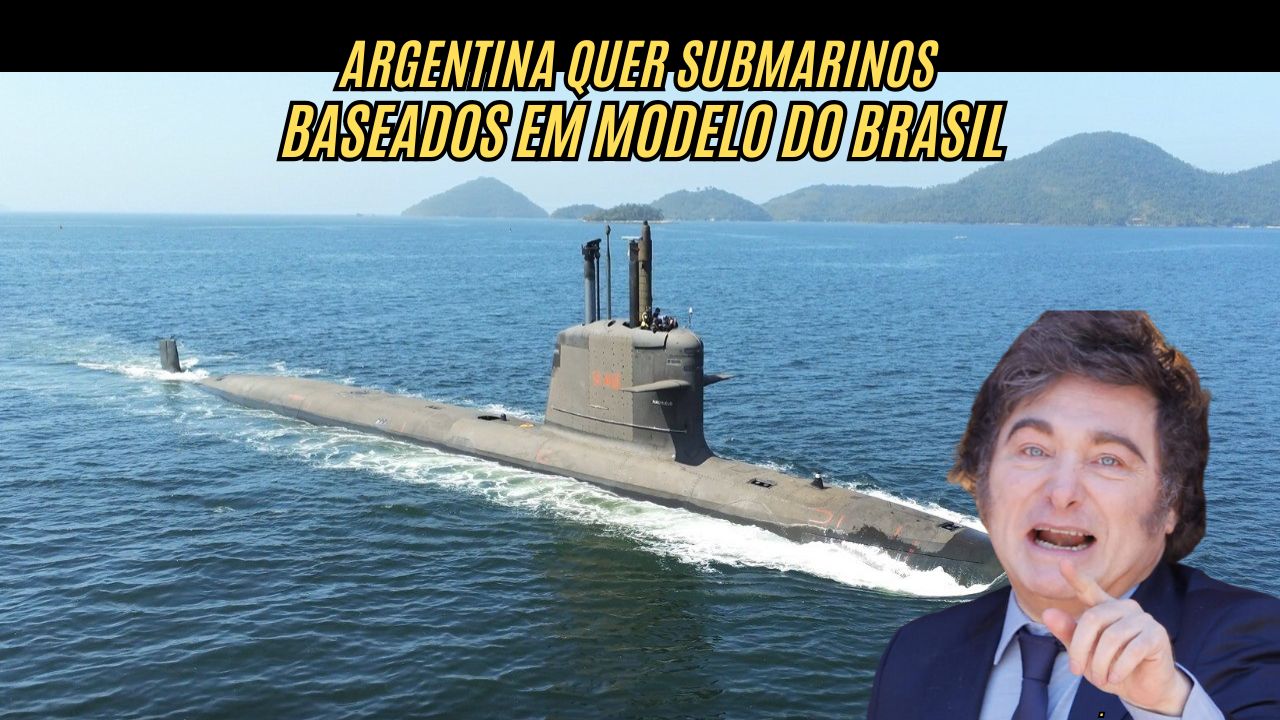

Argentinian Government Begins Negotiations With Naval Group To Acquire Submarines Based On The Riachuelo Class, Aiming To Modernize Its Navy.
Argentina has taken an important step to modernize its submarine fleet. During an official visit to France, led by Defense Minister Luis Petri and the Chief of the Navy, VL Carlos Allievi, a Letter of Intent (LOI) was signed with Naval Group for the possible construction of three Riachuelo Class submarines. The document, while non-binding, signals Argentina’s desire to advance negotiations and seek a definitive agreement.
Why Riachuelo Class Submarines?
The Riachuelo Class submarines, a derivation of the Scorpène model adapted to Brazil, were chosen by Argentina due to the similar operational environment conditions between the two countries. The impressive range of 18,500 km and ideal features for long-range missions make this model the perfect option for the needs of the Argentine Navy.

Additionally, the model stands out for its hydrodynamic design, which increases speed, and for the ability to operate submerged for up to 70 days. With larger dimensions than the original Scorpène, Riachuelo Class submarines will measure 71.6 meters in length, have a submerged displacement of 1,870 tons, and a diesel-electric propulsion system that balances range and stealth.
-
Volvo’s New Loaders Feature Obstacle Detection, Automatic Braking, and 360-Degree Operator View

-
Chinese Manager Accused of Whipping Worker Sparks Protest by 1,200 Employees at Major Brazilian Factory

-
France Revamps 530 Social Housing Units with Large Balconies and Glass Facades Without Demolishing Existing Buildings

-
10-Year-Old Max Makes History with Paris Fashion Show, Launches Own Brand, Hires Staff, and Sets World Record as Youngest Runway Designer





Costs And Production
Each unit of the Riachuelo Class submarines is estimated to cost 700 million dollars, and the estimated construction time ranges from six to seven years. Production can occur entirely in France or have parts manufactured in Argentina, but Brazil will not participate in the process, despite the model being a Brazilian adaptation.
The project still faces an obstacle: the country’s limited budget. To address this issue, President Javier Milei presented the 2025 Budget Project, which foresees a multi-year credit of 2.31 billion dollars. If approved, this amount will finance the construction of the three submarines and recover the submarine capability lost after the sinking of the ARA San Juan in 2017.
Cutting-Edge Technology
The Riachuelo Class submarines promise to be a technological revolution for Argentina. Equipped with advanced weapon systems, each unit will have four 533 mm torpedo launch tubes, capable of firing up to 18 F-21 torpedoes or missiles such as the SM-39 Exocet and the Harpoon. These armaments, combined with the latest innovations from the Evolved Scorpène standard, ensure a modern and strategic fleet for the operations of the Argentine Navy.
The France Factor
The French State’s majority stake in Naval Group (62.25%) facilitated the negotiation of contract terms favorable to Argentina, overcoming competition from ThyssenKrupp’s Type 209, another alternative assessed by the Navy.
If realized, the Riachuelo Class submarines project will mark a milestone in rebuilding Argentina’s submarine capability and strengthen its presence in the South Atlantic.