Portuguese
  Spanish


Argentina’s Economy once again put pressure on the population’s pockets in March, with inflation of 3.4% for the month, a rise of over 32% in 12 months, and signs that Javier Milei’s stabilization plan still depends on the slowdown of the money supply to deliver more consistent relief
Argentina’s economy reached March 2026 still pressured by inflation, which advanced 3.4% in the month alone and accumulated a rise of over 32% in 12 months. The data reinforces the main challenge of Javier Milei’s government: containing the cost of living after advances in fiscal control and exchange rate stabilization, but with prices still far from a sustained downward trajectory.
Price behavior in March also occurred in an international environment of greater inflationary pressure, marked by an oil shock, more expensive fuels, and effects associated with the war in the Middle East.
Even in this scenario, Argentina was among the countries with the highest monthly inflation, above economies such as Peru, Chile, Brazil, Turkey, the Eurozone, Spain, Germany, France, and the United States.
-
Brazil’s BNDES Funded Metro and Steel Plant Projects in Venezuela with Brazilian Support

-
Abandoned Building in Brazil to Become Biotechnology Unit with $10 Million Investment, Bridging Science, Industry, and Public Health
-
Company Offering “Stones to Diamonds” Scheme Sells Ruined Italian Homes to Brazilians for 1 Euro, Disappears with Promised Renovations, Leaving Buyers in Debt to Italian Tax Authorities Until 2028 Without Property

-
Plastic Packaging Drives Santa Catarina Industry to 230% Growth, Aiming for R$ 500 Million by 2030 Amid Sector Crisis, with New Gearless Line Expanding in Southern Brazil to Compete in South America



Argentina’s Economy Still Faces High Monthly Inflation
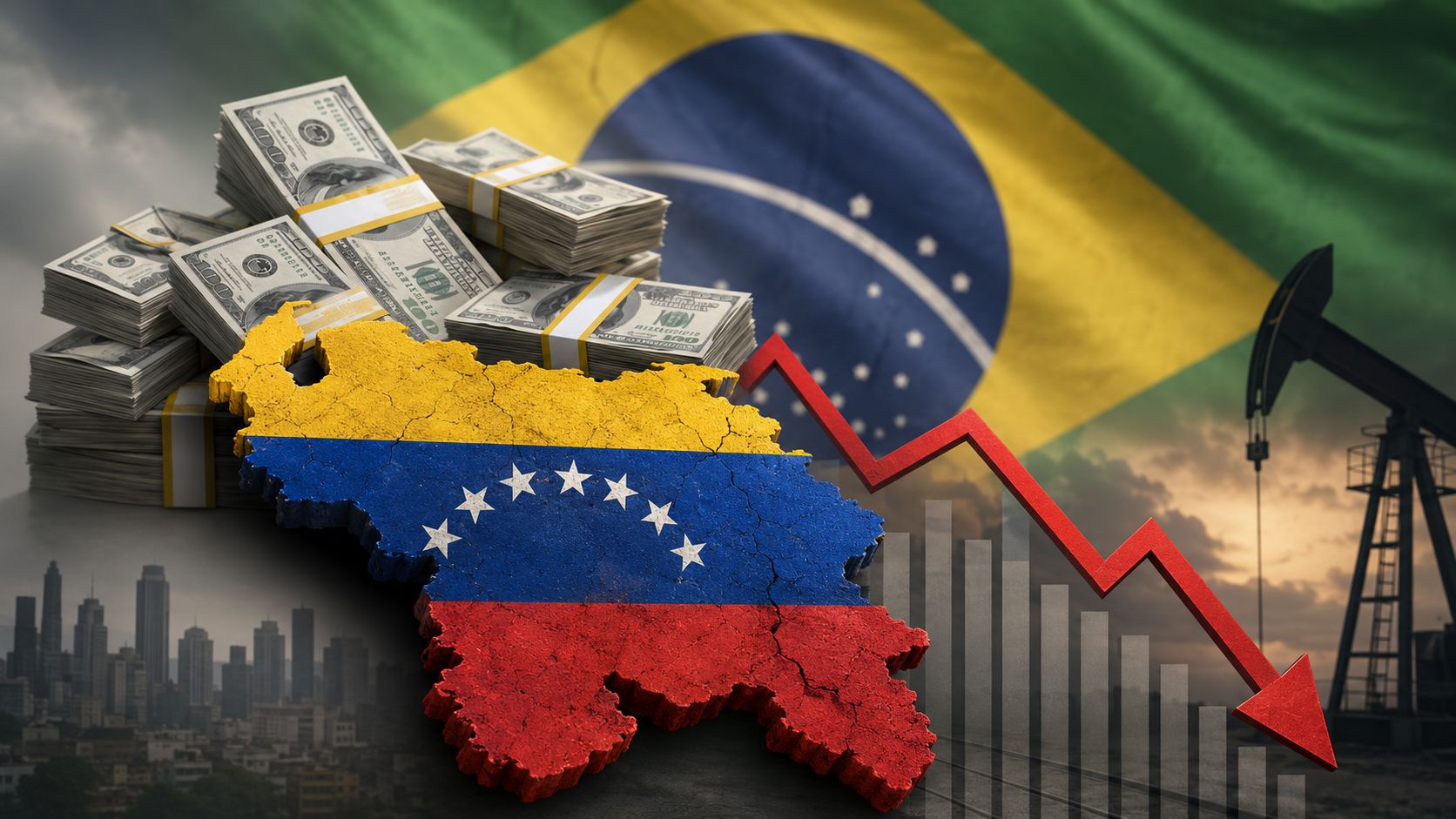
Argentine inflation had touched 1.5% in May 2025 but accelerated again in subsequent months. The index rose to 1.9% in July, 2.1% in September, 2.9% in January and February 2026, reaching 3.4% in March.
This movement shows that the deceleration of prices lost strength in recent months. Although the government has managed to stabilize important variables, such as fiscal policy and the exchange rate, inflation remains at a high level for the population.
Milei himself has acknowledged that the process is taking longer than expected. Argentine stabilization is progressing at a slower pace than desired by the government and society, with a plea for patience in the face of the still persistent effects of price increases.
Comparison with other countries helps to gauge the specific pressure of the month. In Latin America, Venezuela registered inflation above 13% in March, while Argentina was at 3.4%, Peru almost 2.4%, Chile at 1%, and Brazil close to 0.9%.
Among G20 countries, Argentina held the first position in March. Turkey was close to 2%, the Eurozone marked 1.3%, Spain 1.2%, Germany 1.1%, France 1%, and the United States registered an index slightly higher than Brazil’s.
Money Supply Remains a Central Point of the Plan
The analysis of Argentina’s Economy directly involves monetary aggregates, especially the monetary base and M2. The monetary base comprises money issued by the Central Bank, banknotes, and bank reserves, while M2 also includes demand deposits, time deposits, and savings.
During the Milei government, the monetary base still increased for a significant period. It only began to show clearer stabilization in recent months, both in currency in circulation and in the overall monetary base.
M2, however, appears as an even more important variable for understanding inflation. It represents a broader measure of money used in the economy for payments, goods, and services, influencing the purchasing power of the Argentine peso.
The annual variation of the monetary base exceeded 200% in October 2024 and then lost momentum. In April 2026, it still registered annual growth of close to 32%.
M2 had also approached rates of 200% in 2024 but reduced its expansion pace. In April 2026, it reached its lowest point under the Milei government, with an annual increase of 23.1%, below the levels exceeding 50% observed during the period of Alberto Fernández and Sergio Massa.
The slowdown in M2 growth is presented as the main positive news in the current economic scenario. Even so, the level remains high, as Brazil records M2 growth slightly below 10% per year and the United States is slightly above 5%.
Inflation May Take Longer to Yield
The continued high rate of money creation helps explain why inflation remains resistant. The impact of monetary expansion does not immediately appear in prices, as it gradually spreads across sectors, goods, and services.
This delay between an increase in the money supply and price hikes indicates that previous issuances may still pressure inflation in the coming months. Therefore, a rapid drop to very low levels does not appear to be an immediate scenario.
Sustained inflation below 2% or 1% per month would depend on the continued decline of monetary aggregates. If M2 continues to grow above 20% per year, reducing it to lower levels would become more difficult.
Argentina’s Economy, therefore, shows mixed signals. There is an improvement in the pace of monetary expansion, but inflation remains high and still reflects the excess money created in previous periods.
Comparison with the Plano Real shows relevant differences
The comparison between the Argentine stabilization plan and the Plano Real considers Brazil from July 1994 and Argentina from January 2024. In 27 months, prices rose 57% in Brazil and 213% in Argentina.
In the same period, M2 advanced 76% in Brazil and 157% in Argentina until February. The exchange rate, on the other hand, rose 9.4% in Brazil and 19.7% in Argentina, a variable where the two plans appear closer.
In the first month of the Plano Real, Brazilian inflation was 6.84%. In Argentina, January 2024 registered 20.6%, amid the removal of price controls and adjustments that had been repressed.
After 12 months, Argentine monthly inflation was 2.70%, while Brazil registered 2.26%. In the following month, Argentina marked 2.20% and Brazil 2.36%, maintaining relatively comparable levels at that time.
The divergence became clearer from the 14th month. In Brazil, inflation fell to 0.99%, while Argentina registered 2.40%; then, the Argentine index rose to 3.70%, while Brazil managed to maintain monthly inflation around 1% to 1.5%.
In the 27th month, Brazil registered 0.15% in September 1996. Argentina, in turn, reached 3.40% in March 2026, confirming a longer trajectory for price stabilization.
Stable exchange rate creates new tension for Argentina’s Economy
The exchange rate appears as one of the most stable variables in the Argentine plan. Even with high inflation and significant monetary expansion, the peso remained around an approximate level of 1,100 to 1,400 pesos per dollar.
This exchange rate stability coexists with rising domestic prices. The result is a more expensive Argentina for foreigners, tourists, and exporting sectors, which lose competitiveness when prices rise and the exchange rate does not follow suit proportionally.
This scenario also makes it difficult to accumulate reserves, considered necessary for the payment of external debt accumulated in recent months. Part of these obligations involves the IMF, as part of the effort to sustain the exchange rate and proceed with the macroeconomic plan.
A central difference between the two processes lies in the monetary choice. The Plano Real hyperinflated and ended the Cruzeiro Real to launch a new currency, without a previous history of inflation.
Milei took the opposite path by trying to avoid hyperinflation of the peso, preserve the currency, and stabilize it. This decision made the Argentine process more complex and time-consuming.
Argentina’s Economy thus reaches a transition point. Inflation remains high, but the reduction in the pace of M2 growth indicates a possible improvement if the current policy is maintained.
The challenge remains concentrated on decelerating the money supply and the ability to transform this drop into lower inflation. Price stabilization may still require more time, with at least another 12 months of inflation above developed economies and also above Brazil.