Portuguese
  Spanish


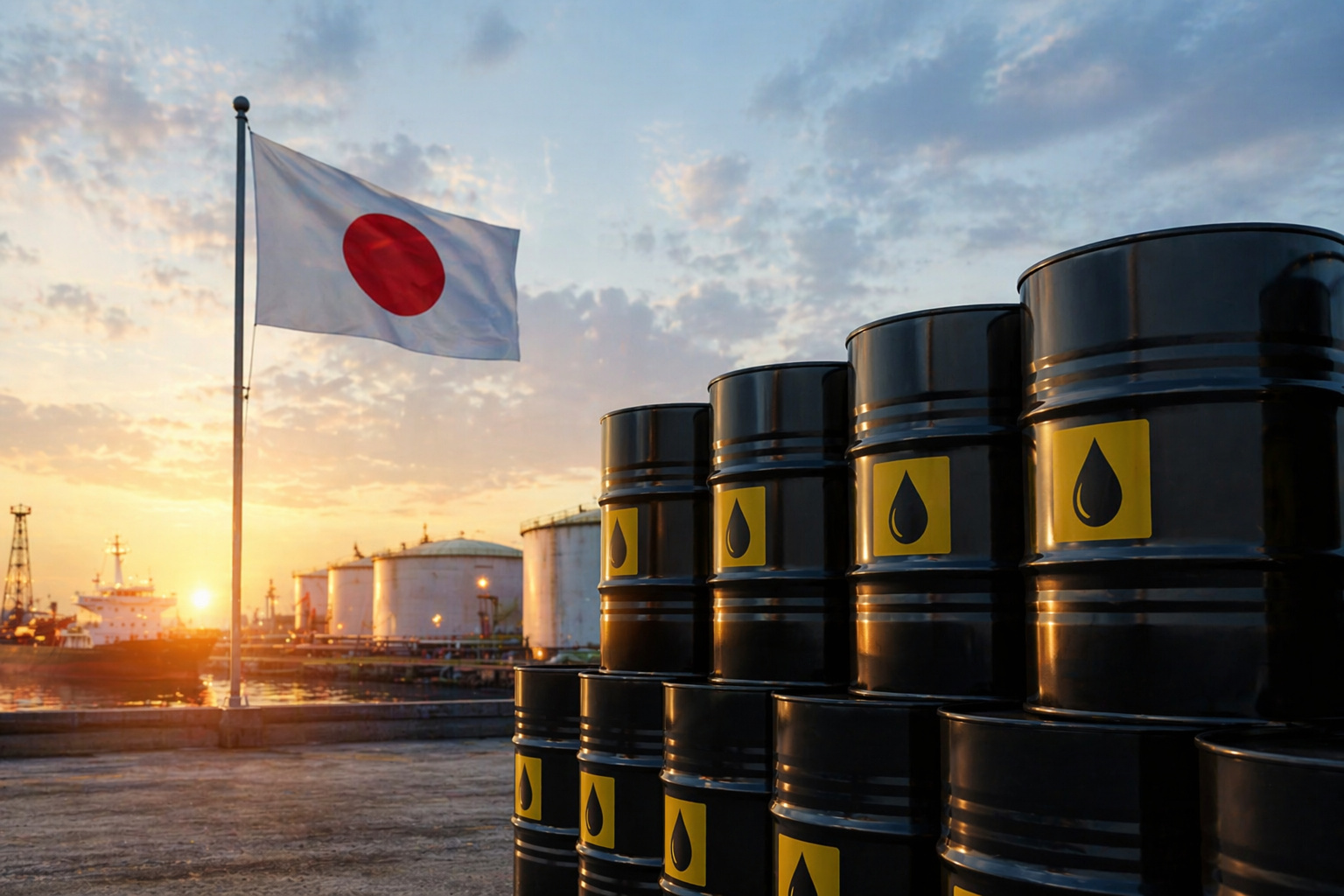

Oil returns to the global spotlight with a new strategic decision from Japan. The Asian country announced that it will release more than 36 million barrels of crude oil from its national reserves throughout May 2026.
The measure represents the second batch of releases and reinforces a strategy that has been adopted by major economies to deal with fluctuations in the energy market.
According to the InfoMoney website, in a report published in April 2026, Japan decided to expand the release of its strategic reserves as a way to contribute to the balance between global supply and demand. This type of action usually has a direct impact on oil prices.
-
Qantas and Airbus Invest in Company Aiming to Convert Unsorted Household Trash into Jet Fuel

-
Brazil’s ANP Opens 86 New Oil Blocks in the Equatorial Margin, Expanding the Amazon River Mouth Frontier

-
OPEC+ Boosts Oil Supply by 188,000 Barrels per Day in July 2026, Leading to Price Drop from $112 to $89 per Barrel in Under Two Months

-
TotalEnergies Signs 20-Year Deal to Purchase 2 Million Tons of LNG from Alaska, Boosting Project Viability


The role of strategic oil reserves
Strategic oil reserves are stocks maintained by governments for emergency situations. They are used in times of crisis, such as wars, natural disasters, or supply shocks.
In Japan’s case, these reserves are even more important. The country relies heavily on oil imports, as it has few natural resources of its own.
Historically, Japan began to invest heavily in reserves after the oil crisis of the 1970s. During that period, the embargo promoted by producing countries directly affected import-dependent economies.
Since then, the country has adopted policies to ensure greater energy security.
According to the Japanese government, these reserves function as protection against supply disruptions. They can also be used to smooth out price fluctuations in the international market.
Impact of the release on the global market
The decision to release more than 36 million barrels of oil can directly influence the global market. This happens because it temporarily increases the available supply of the commodity.
When there is more supply, prices tend to face downward pressure, depending on the demand scenario.
According to energy sector analysts, this type of movement is closely watched by investors. The oil market reacts quickly to any signal of increased or reduced supply.
Furthermore, the release occurs at a time of geopolitical uncertainties. International tensions and negotiations between major producers continue to influence oil behavior.
This context makes Japan’s action even more relevant.
Global strategies and coordination among countries
In recent years, several countries have adopted similar strategies. The United States, members of the International Energy Agency (IEA), and other economies have already resorted to their strategic reserves at different times.
These actions often happen in a coordinated manner to maximize market impact.
According to the International Energy Agency, the use of reserves can help prevent sudden price shocks. This is especially important during periods of global instability.
Coordination among countries also reinforces collective energy security.
In Japan’s case, the phased release indicates a planned strategy. By releasing oil in batches, the country can monitor market effects and adjust its actions as needed.

The importance of oil in the Japanese economy
Oil continues to be an essential resource for Japan. It is fundamental for sectors such as transportation, industry, and energy generation.
Even with advances in renewable energies, the country still relies heavily on fossil fuels.
After the Fukushima nuclear disaster in 2011, Japan further increased its dependence on traditional energy sources. Many nuclear power plants were shut down, which raised the need for oil and gas imports.
According to official Japanese government bodies, ensuring stable access to oil is a strategic priority. This includes both the diversification of suppliers and the maintenance of robust reserves.
Oil and energy security in the current scenario
Japan’s release of reserves reinforces a global trend. Countries are increasingly attentive to energy security in a scenario of uncertainties.
Oil, even with discussions about energy transition, still plays a central role in this context.
According to experts, decisions like this show that the oil market remains strongly linked to national politics and strategy. Governments use their reserves as instruments to influence prices and ensure internal stability.
Furthermore, the measure may have indirect effects on other economies. Importing countries may benefit from lower prices. Exporters, on the other hand, may face challenges with reduced revenues.
Oil remains a global key player
Given this scenario, it is evident that oil remains one of the main pillars of the global economy. Its influence goes beyond energy, affecting commercial, political, and strategic relations between countries.
Japan’s decision to release millions of barrels reinforces this dynamic.
The market will remain attentive to the developments of this measure. How prices react will depend on various factors, including global demand, producer decisions, and geopolitical events.
Thus, oil continues to be an important indicator of the world economy. Moves like Japan’s show how governments strategically use this resource to face challenges and seek stability.