Portuguese
  Spanish


Created by Illinois Firefighters, the Poseidon Nozzle Fights Fires in Electric Cars Directly in the Batteries, Reducing Risks and Already Adopted in Several Countries.
Firefighters from the U.S. state of Illinois have developed a tool that promises to change the way fires are fought in electric vehicles.
This is the Poseidon Nozzle, an aerospace aluminum lance that weighs 7.7 kg and can be easily inserted under cars without the need to lift them.
The device is designed to act directly on lithium-ion batteries, which pose one of the greatest challenges today for emergency services.
-
Brazil Faces Surge in Copper Wire Thefts at Electric Car Charging Stations, Leaving Drivers Stranded

-
Jetour S06 Launches in Brazil as a More Affordable Plug-In Hybrid SUV Than BYD Song Plus and Haval H6, But Tests Highlight Its Shortcomings

-
Electric and Hybrid Cars Set to Transform Brazilian Streets: A New Era Begins
-
Chinese Giant Invests $1.3 Billion in Brazil to Produce 50,000 Cars Annually, Create Jobs, Develop Local Suppliers, and Manufacture Electric, Hybrid, and Combustion Models by 2027

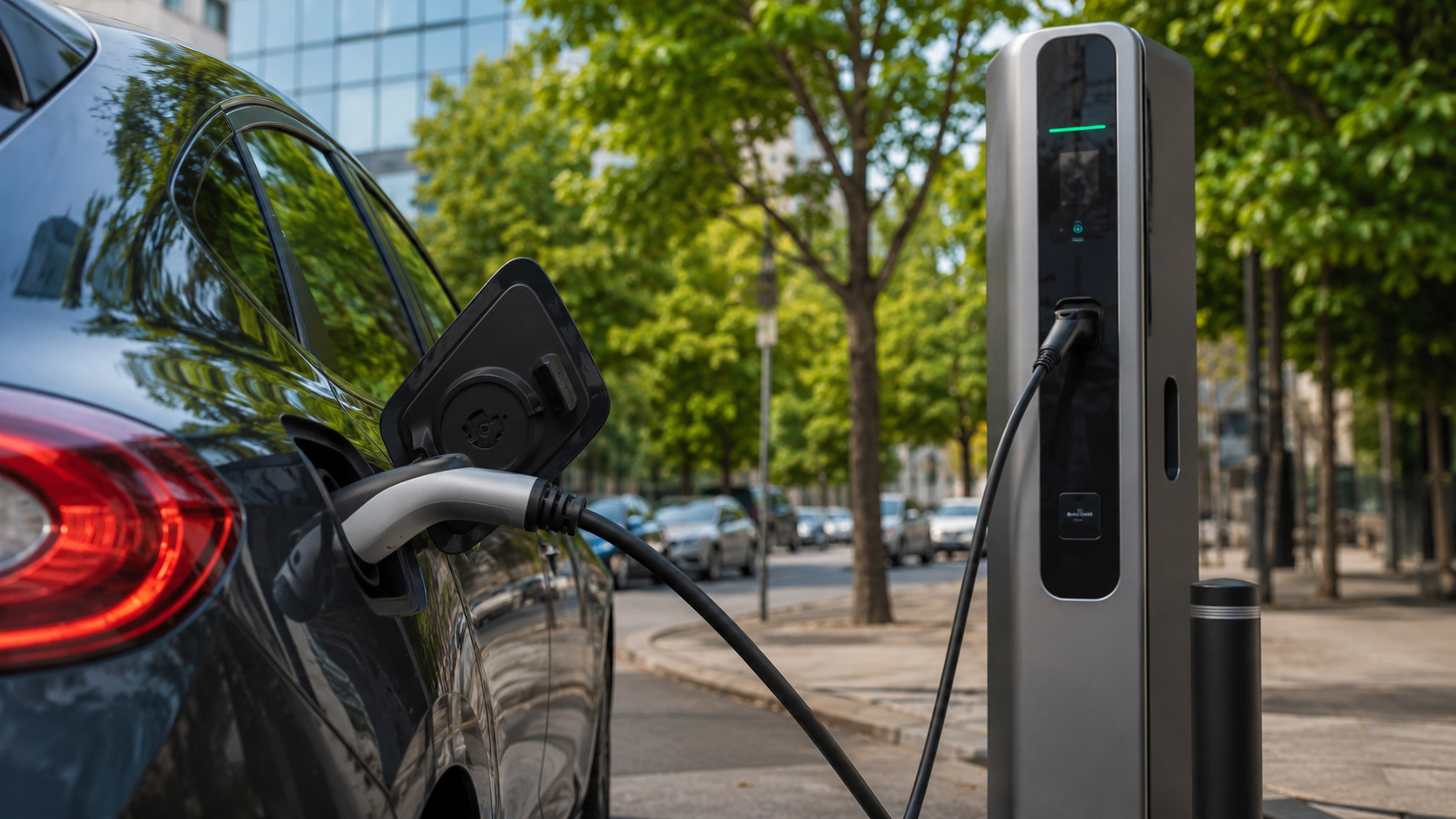

Unlike conventional fires, which can be controlled by spraying water on the engine, batteries can reach temperatures of 1,000 to 3,000 °C and release toxic gases.
The Poseidon addresses this risk by reducing temperature uniformly and in a controlled manner. Furthermore, it protects firefighters, who are less exposed to heat and the gases released during combustion.
Versatility in Different Scenarios
Although it was created for electric cars, the equipment also works on combustion vehicles. It can cool fuel tanks and also clean the underside of the chassis after an intervention.
Another important use is the decontamination of equipment and gear. After urban fires, just connect the nozzle to a hose for a quick wash. This process reduces the exposure of professionals to toxic residues such as benzo[a]pyrene and heavy metals.
Therefore, it is a multi-functional tool that adapts to different scenarios, especially in confined environments, such as tunnels or underground garages.
An Invention Born from Practice
The Poseidon Nozzle did not emerge from a lab, but from real emergencies. Firefighters Danny Puknaitis and Michael Jost identified the need for new solutions in the face of rising fires in electric vehicles.
From this direct experience, they developed a practical tool, built on trials, errors, and successes. The goal has always been clear: to save lives without compromising the safety of the firefighting teams.
The choice of aerospace aluminum reflects this concern.
The material ensures lightness and heat resistance, facilitating transport in risky situations and allowing for quick use even in hard-to-reach places.
International Expansion
Since its launch, the technology has not been confined to the United States. The Poseidon has already been incorporated into emergency protocols in countries such as Canada, the United Kingdom, Israel, and Mexico.
In dense cities like London and Mexico City, the lance has proven decisive. In these locations, fires in underground parking lots or residential areas present additional challenges due to lack of access.
The flat design of the nozzle allows it to reach the center of the fire without direct contact, which accelerates the response and increases safety.
Moreover, unlike equipment that remains stored until extreme cases arise, the Poseidon offers constant utility.
It can be used for routine tasks, such as cleaning vehicles or maintaining contaminated equipment.
A Response to Meet the Challenge
Fires in electric vehicles have brought a new challenge for emergency services worldwide. The most important thing is that the response has also evolved.
With the Poseidon Nozzle, firefighters can act quickly, safely, and sustainably against a type of fire that until recently seemed impossible to control.
This combination of practical innovation, versatility, and international expansion positions the invention as one of the most promising tools in modern firefighting.