Portuguese
  Spanish


Brazil has just placed two bets that seem like something out of the future, but are already underway, at the center of its new industrial race: a 100% national electric bus and a Brazilian enzymatic cocktail capable of expanding second-generation ethanol production using agricultural waste.
Behind these technologies is a powerful message: the country doesn’t just want to consume green innovation; it wants to manufacture, master, and export clean technology. The initiative appears within the strategy of the New Brazil Industry, highlighted by the government itself as a path to accelerate the country’s sustainable reindustrialization through science, national engineering, and high value-added production.
The Brazilian electric bus that could change urban transport
The so-called 100% national electric bus has gained traction as a symbol of the new phase of Brazilian industry. The proposal is straightforward: to produce less polluting, quieter, and cheaper-to-operate vehicles in the country, reducing dependence on imported technology and modernizing public transport in large cities.
-
BYD’s Dolphin Mini Becomes Electric Vehicle Sensation in Brazil, Surpassing 300,000 Sales with Major Factory and Retail Leadership

-
Brazil Faces Surge in Copper Wire Thefts at Electric Car Charging Stations, Leaving Drivers Stranded

-
Jetour S06 Launches in Brazil as a More Affordable Plug-In Hybrid SUV Than BYD Song Plus and Haval H6, But Tests Highlight Its Shortcomings
-
Electric and Hybrid Cars Set to Transform Brazilian Streets: A New Era Begins
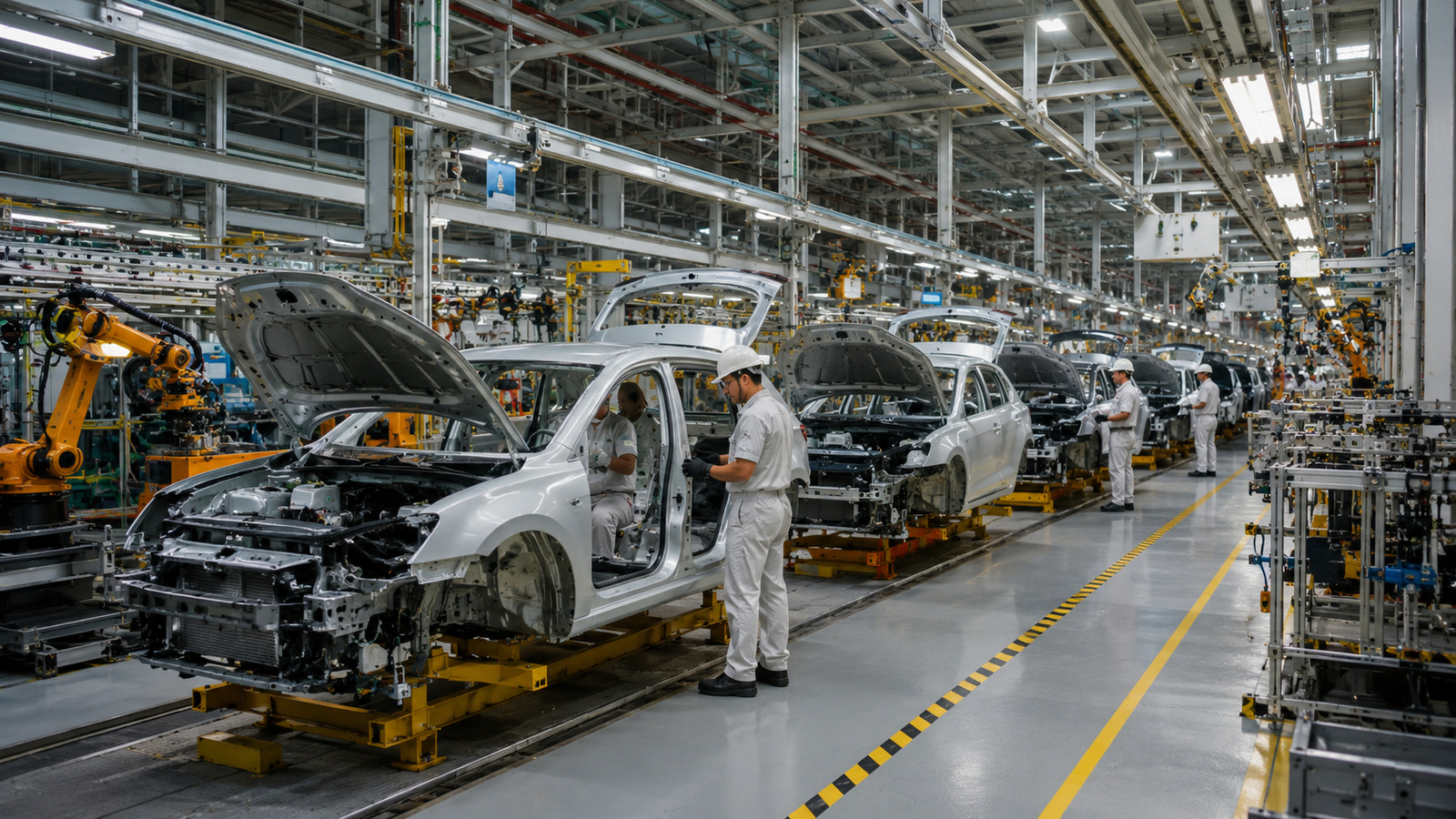
National manufacturing involves a strategic production chain, with chassis, bodywork, motor, inverter, and batteries linked to the industry installed in Brazil. The expansion of Eletra, in São Bernardo do Campo, was presented by the government as a concrete example of green neo-industrialization, with the capacity to produce thousands of units per year and generate qualified jobs in the ABC Paulista region.
According to information released by the MDIC about the national electric bus factory, the project involves millionaire investment, increased production capacity, and a clear bet on the gradual replacement of diesel vehicles. The impact could be enormous: less smoke on the streets, less noise, and lower operational costs for transport systems.

Clean technology with the face of an industrial revolution
The great appeal of the national electric bus is not just that it is powered by electricity. The most striking point is the advancement of a Brazilian industrial chain for clean mobility, something fundamental for a country that needs to renew urban fleets, reduce emissions, and create jobs in technological sectors.
In large urban centers, diesel buses are still major contributors to air pollution. The introduction of electric vehicles can transform transport corridors into quieter, more efficient, and sustainable environments. For passengers, the change may seem simple: less noise, less vibration, and more comfortable journeys. For the industry, however, it signifies a billion-dollar turnaround.
The government also launched a fund to accelerate the arrival of these vehicles in cities. The initiative, presented by Secom as a new fund for electric buses, seeks to attract private investments and unlock credit to expand the clean fleet. In practice, this can make the electric bus move from discourse to the streets faster.
The “enzymatic cocktail” that transforms waste into fuel
While electric mobility advances in cities, another Brazilian innovation promises to shake up the countryside and mills: OpEn, a national enzymatic cocktail developed by CNPEM to increase the efficiency of 2G ethanol production. The idea is to better utilize materials such as sugarcane bagasse, straw, and other agro-industrial waste.
This is the kind of technology that seems discreet but can have an explosive effect. Instead of relying solely on planted area, Brazil can produce more clean fuel from existing biomass. In other words: more ethanol without necessarily expanding crops, using waste that previously had limited utilization.
According to CNPEM on the OpEn enzyme, Brazil generates hundreds of millions of tons of agro-industrial waste, and part of this volume can be converted into high-value products. The potential cited for sugarcane waste is impressive: billions of additional liters of second-generation ethanol, reinforcing the country’s role as a global power in biofuels.
Less import, more technological sovereignty
The most strategic detail of this advance is that the enzymatic cocktail is Brazilian. This means reducing dependence on imported enzymes, lowering process costs, and strengthening national technological sovereignty in an area crucial for the energy transition.
Minister Luciana Santos highlighted that the technology can reduce costs by up to 30% in 2G ethanol production, a figure capable of changing the competitiveness of Brazilian biorefineries. This information was released in an interview published by Secom on science, technology, and climate change, directly connecting innovation, climate, and industry.
Besides OpEn, another discovery stands out: the enzyme CelOCE, also associated with the advancement of second-generation ethanol. According to the Agência Gov on the new enzyme for 2G ethanol, it improves the release of sugars from biomass and can make the process more efficient, economical, and sustainable.
Why this can put Brazil on another level
The combination of national electric buses and enzymes for ethanol from agricultural waste shows a powerful strategy: Brazil wants to compete for the future on two fronts simultaneously. On one side, clean urban mobility. On the other, high-tech bioeconomy.
This agenda appears within the New Brazil Industry highlighted by Secom, which seeks to bring together universities, research centers, and companies to transform scientific knowledge into industrial production. It’s not just about manufacturing “green” products, but about creating a new economic base with national innovation.
If these initiatives scale up, the impact can be profound: less polluted cities, more sustainable fuels, less external dependence, more skilled jobs, and a stronger Brazilian industry. In a world racing against time to reduce emissions, Brazil can transform its biodiversity, engineering, and agribusiness into a competitive advantage.
The green turn that can surprise the world
The most impressive thing is that these technologies do not depend on distant promises. They are already being tested, produced, financed, and promoted as part of a new industrial policy. The national electric bus represents the future of cities; the enzymatic cocktail represents the future of clean fuels.
Together, they form a powerful narrative for Brazil: a country that can stop being merely a commodity exporter to become a protagonist in clean technology, energy transition, and sustainable industry.
Ultimately, the question remains inevitable: if Brazil manages to scale these solutions, the world could witness the birth of one of the greatest green powers of the 21st century — driven by electricity, advanced ethanol, and homegrown innovation.