






 Portuguese
  Spanish
  3 min of reading
  0 comments


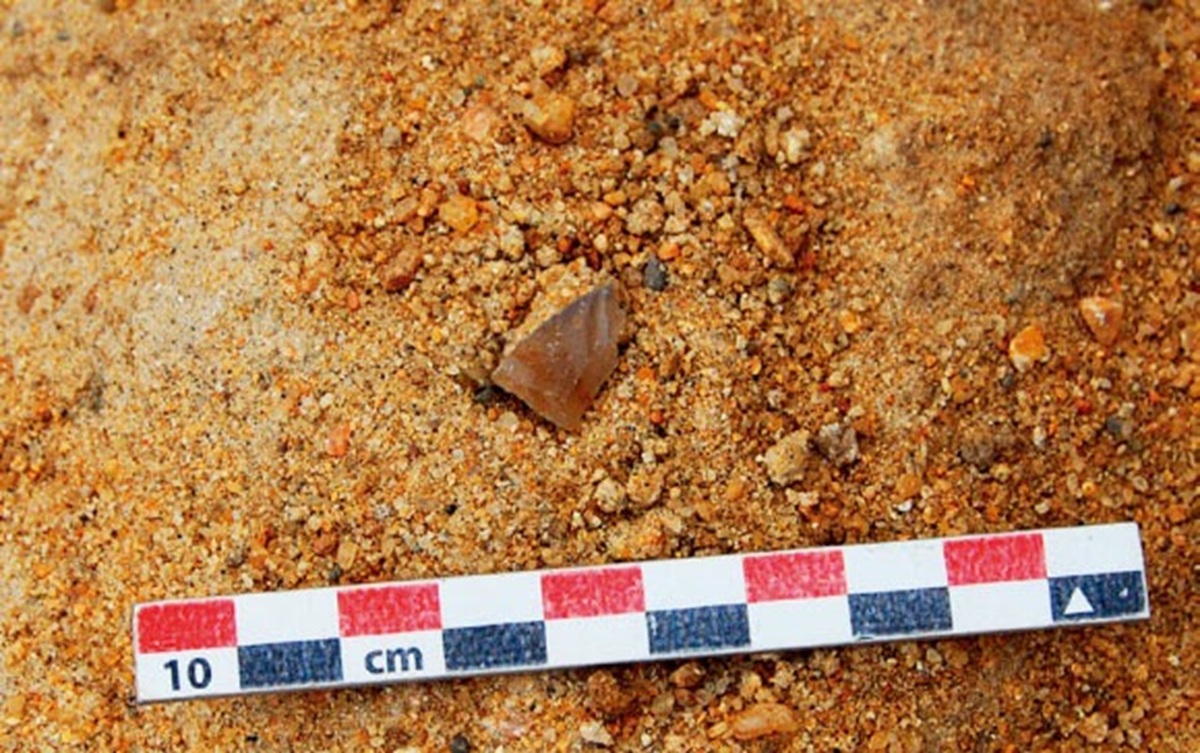
Stone Tools Found in Three Archaeological Layers in Kenya Reveal a Technological Tradition That Survived 300,000 Years of Deep Environmental Changes
Archaeologists have revealed new evidence about ancient tool-making technology after finding stone artifacts from the Oldowan culture at the Namorotukunan site, located in the Koobi Fora Formation, in northeastern Turkana Basin, in Marsabit District, Kenya.
The team identified sets of tools distributed across three archaeological horizons spanning approximately 300,000 years, dated between 2.75 and 2.44 million years ago.
These findings reinforce the continuity of stone tool production practices and demonstrate systematic choices regarding the types of rock used.
-
Helicopter Drops 180 Tons of Sand and Gravel on Swedish River to Revive Ecosystem Damaged by Decades of Exploitation

-
Brazilian Company Launches Retro Smartphone with 48 MP Camera, T9 Keyboard, and Privacy Features for Social Media-Free Use

-
Self-Taught Chinese Farmer Builds 5-Ton Submarine from Scrap, Launches It in Anhui River
-
Invisible Induction Technology Enables Wireless Power for Blenders, Coffee Makers, and Air Fryers, Reducing Countertop Cables





Context of Early Technologies
The earliest phases of tool-making technologies date back over 3 million years and highlight the importance of percussion. This technique is widely seen in hominid records as well as in some present-day primates that use tools to extract food.
The systematic production of sharp-edged stone artifacts, characteristic of the Oldowan period, appears at sites in East Africa such as Ledi Geraru and Gona, in the Afar Basin, Ethiopia, which are estimated to be 2.6 million years old, as well as Nyayanga, in western Kenya, which features records from 2.6 to 2.9 million years ago.
In the new study, Professor David R. Braun, an anthropologist from George Washington University and the Max Planck Institute for Evolutionary Anthropology, led the discovery of multiple tool sets in three horizons dated at 2.75, 2.58, and 2.44 million years.
“This archaeological site reveals an extraordinary story of cultural continuity,” Braun stated. He emphasized that the technological tradition observed does not represent an isolated innovation but rather a lasting craft passed down through long generations.
A Portrait of Adaptation
For researcher Susana Carvalho, director of science at Gorongosa National Park in Mozambique, the discoveries indicate that tool use may have been a more common adaptation among primate ancestors than previously thought.
According to her, Namorotukunan offers a unique insight into a constantly changing environment, marked by shifting rivers, frequent fires, and increasing aridity, while the tools found remain stable testimonies of that distant past.
Researcher Dan V. Palcu Rolier, from GeoEcoMar, Utrecht University, and the University of São Paulo, noted that the technical tradition persisted over 300,000 years.
He highlighted that hominids consistently produced tools with sharp edges, demonstrating refined skill and knowledge preserved over generations.
Environmental Changes and Survival
The team used different dating methods and environmental analysis, such as volcanic ash, chemical signatures of rocks, magnetic signals preserved in sediments, and microscopic plant remains.
These elements helped reconstruct profound changes in the landscape, providing an overview of the transformations that impacted the tool makers.
The evidence shows that these hominids faced significant changes.
The technology they developed allowed them to explore new diets, including meat, which favored their survival amid environmental changes.
According to researcher Niguss Baraki, the instruments found indicate that by around 2.75 million years ago, hominids had already mastered the production of sharp blades, suggesting that the origin of the Oldowan technology may be even older.
Researcher Frances Forrest from Fairfield University added that cut marks associate the tools with meat consumption, revealing that a diverse diet persisted as the environment changed.
The landscape, according to researcher Rahab N. Kinyanjui, transformed profoundly, shifting from dense swamps to dry grasslands and fire-affected semi-deserts.
Even with these changes, tool production remained unchanged, evidencing strong resilience.
The complete results of the research were published in the journal Nature Communications.





-

-

-

-

-

12 people reacted to this.