





 Portuguese
  English
  Spanish
  4 min of reading
  0 comments


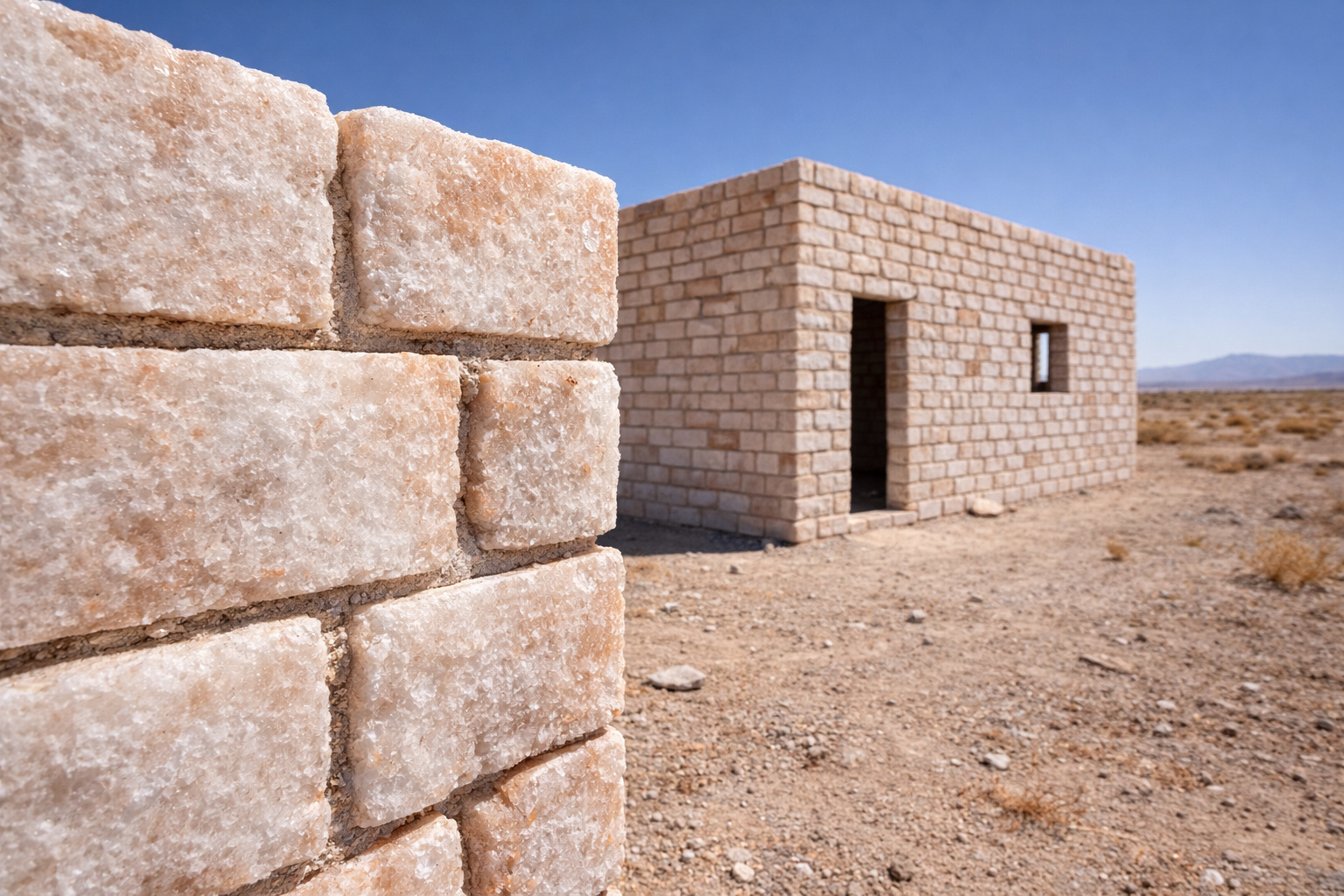
Using Compressed Salt Blocks as Structural Material, This Construction Technique Only Works in Arid Climates and Challenges the Limits of Traditional Architecture.
In some of the driest regions on the planet, where humidity is almost nonexistent and rain is a rare event, a construction technique as extreme as the environment in which it is applied has emerged: construction with compressed salt bricks. Unlike experimental or conceptual systems, this technique is real, functional, and has been used in both permanent and temporary buildings, especially in areas like the Salar de Uyuni in Bolivia, and the desert regions of Iran.
The principle is simple yet risky: to use solid blocks of salt—a structurally compressive material but chemically soluble—as walls, partitions, and even load-bearing elements.
How Salt Blocks Are Produced
The bricks used in these constructions are not common refined salt. They are obtained from naturally crystallized salt, cut or molded into large blocks, and then compacted to increase their density and mechanical strength.
-
More than 20 billion dollars and 600 km of railway were built in record time in Africa to extract the hidden iron ore from Simandou from the forest, now the first ships are arriving in China and the IMF predicts a 25% jump in Guinea’s GDP.

-
A new plastic tile that perfectly mimics traditional clay ones is gaining popularity on Brazilian roofs, being lighter, quicker to install, and capable of reducing both construction time and the weight on the house structure all at once.
-
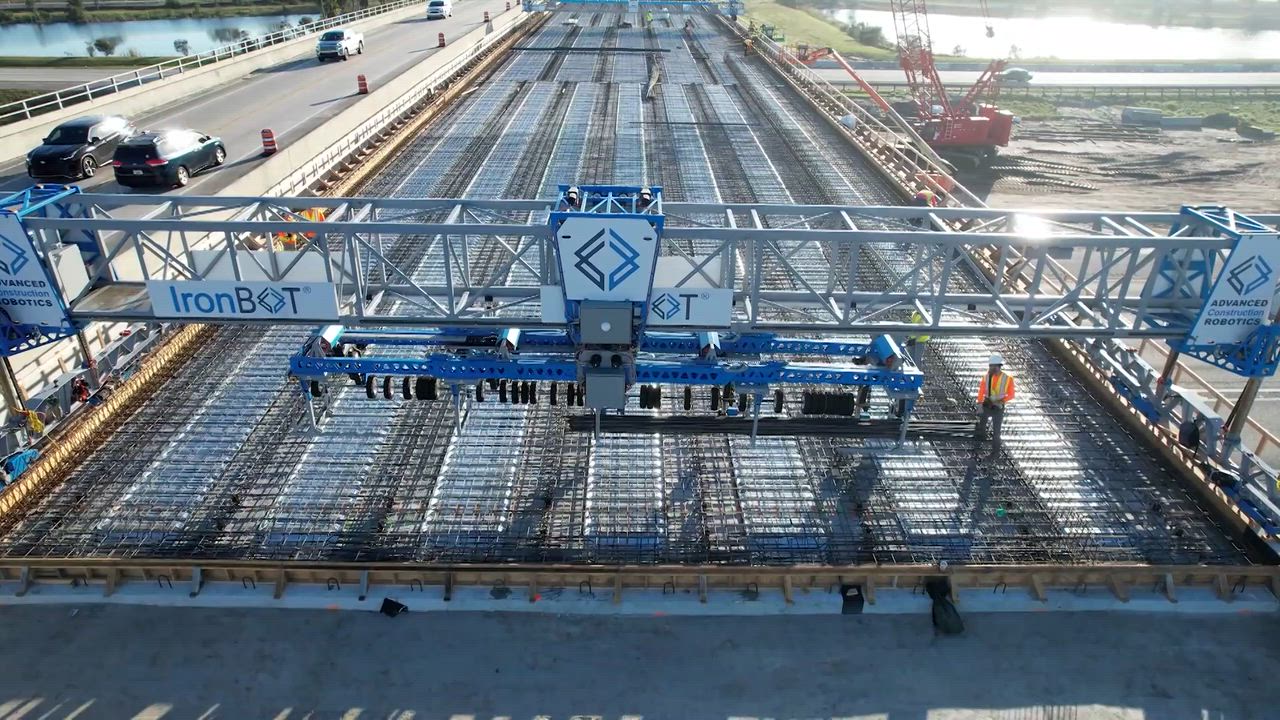
Goodbye to workers assembling rebar on construction sites: intelligent robot carries and positions more than 2.2 tons of rebar per hour, ties 1,200 intersections per hour, and promises to cut up to 50% of the schedule in bridge construction projects.

-
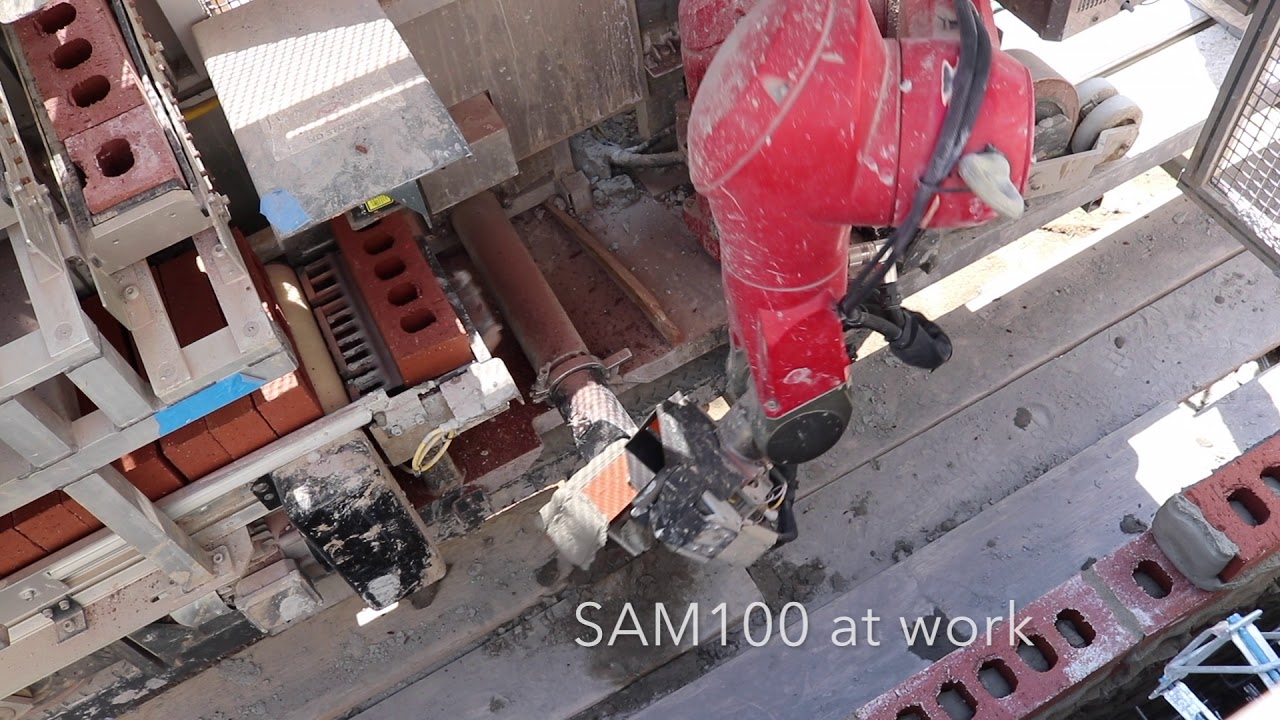
End of bricklayers laying brick by brick: robot places more than 2,000 bricks per day, automatically applies cement, works with only one human operator next to the machine, and transforms traditional masonry into a high-speed semi-automated operation.



Physical tests show that solid salt has good compressive strength, sufficient to support its own weight in low buildings, as long as the loads are distributed vertically and there are no significant bending or tensile forces.
Therefore, salt constructions follow simple geometries, with thick walls, few openings, and controlled heights, utilizing the compressive behavior of the material.
Natural Compression as Structural Principle
Like stone or adobe, salt performs best when subjected solely to compression. The walls are stacked with minimal joints, often using moistened salt as mortar, which recrystallizes as it dries, creating solid bonds between the blocks.
The weight of the structure itself contributes to stability, closing micro-voids and increasing internal cohesion. This behavior makes the system surprisingly stable in dry environments, where air humidity is low and constant.
Why This Technique Only Works in Arid Environments
The biggest enemy of these constructions is water. Salt is highly soluble, meaning that frequent rain, high humidity, or constant contact with liquid water would render the building unviable.
For this reason, this technique is only applied in extremely dry regions, such as salt flats and high-altitude deserts, where annual precipitation is minimal and the climate favors the preservation of the material.
In the Salar de Uyuni, for example, salt constructions remain stable during the dry season, but many structures are intentionally temporary, being rebuilt or repaired after periods of higher humidity.
Architecture That Depends Directly on Climate
Unlike most construction techniques, which seek to isolate the building from the environment, construction with salt bricks totally depends on climatic conditions to exist. The climate is not just an external factor, but part of the structural system.
Without dry air, low humidity, and absence of frequent rains, the material simply fails. This turns these buildings into rare examples of architecture that can only exist in an extremely specific environmental context.
Real Examples in the Salar de Uyuni
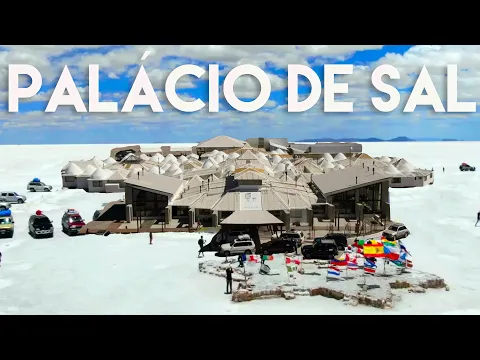
In Bolivia, hotels, shelters, and entire tourist structures have been built with salt blocks in the Salar de Uyuni. Some of these buildings utilize walls, furniture, beds, tables, and even sculptures made from the same material, creating entirely monolithic environments.
The foundations are usually also made of salt, on an elevated base to minimize contact with surface water. Roofs are often constructed with lightweight and waterproof materials, specifically to protect the salt walls from direct contact with rain.
Historical and Experimental Use in Iran
In Iran, salt has been historically used as a building material in desert regions, especially in storage structures and temporary shelters. More recently, architects and engineers have been exploring the use of salt in experimental projects, combining traditional techniques with modern studies of strength and durability.
These projects reinforce that salt, despite its chemical limitations, has sufficient mechanical properties for very specific applications, provided that the environment is carefully controlled.
Extreme Advantages and Limitations
Among the advantages are the local abundance of the material, ease of extraction, low energy cost, and good compressive strength. On the other hand, the limitations are severe: low resistance to water, durability conditioned by the climate, and formal design restrictions.
This is not a universal technique, but a hyper-local solution, adapted to environments where other materials would be more expensive or difficult to transport.
An Extreme Example of Architectural Adaptation
Construction with compressed salt bricks represents one of the clearest examples of how architecture can mold itself to the physical conditions of the environment instead of trying to dominate them. It is a technique that only makes sense where the climate allows, but in those contexts, it works surprisingly efficiently.
More than a curiosity, it demonstrates that materials considered unviable in one context can become structural in another, as long as engineering respects the physical and chemical limits involved.





-

3 people reacted to this.