






 Portuguese
  Spanish
  4 min of reading
  2 comments


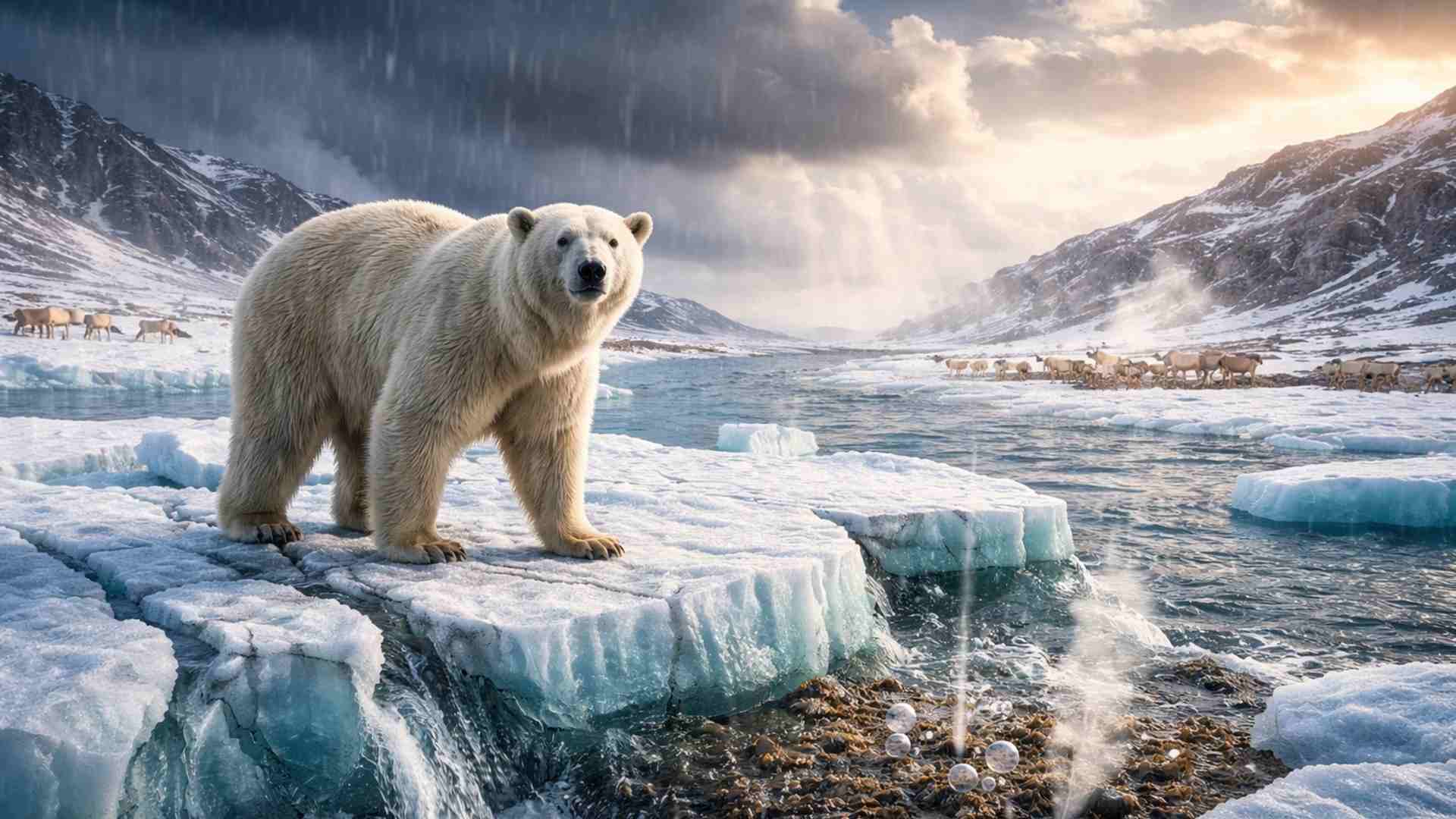


Study With More Than 70 Years of Data Identifies Drastic Increase of Extreme Climatic Events in the Arctic and Points to Beginning of New Environmental Era With Impacts on Ecosystems, Sea Ice, Carbon, and Local Populations in the Last Three Decades
The Arctic has entered a new era of extreme climatic events, according to an international study based on more than 70 years of data, which identifies a recent and accelerated increase in these episodes, with potential impacts on ecosystems, carbon balance, sea ice, and human populations in the region.
Decades Analysis Reveals Recent and Accelerated Change
The research analyzed extensive historical series to identify extreme climatic events in the Arctic, with special attention to short-term extremes that do not appear in monthly averages. The survey included data on heatwaves, droughts, and snow cover over more than seven decades.
The researchers found that the frequency of these events has significantly increased, especially in the last three decades. In approximately one-third of the Arctic domain, such occurrences have only been recorded recently, indicating unprecedented climate change.
-
Helicopter Drops 180 Tons of Sand and Gravel on Swedish River to Revive Ecosystem Damaged by Decades of Exploitation

-
Brazilian Company Launches Retro Smartphone with 48 MP Camera, T9 Keyboard, and Privacy Features for Social Media-Free Use

-
Self-Taught Chinese Farmer Builds 5-Ton Submarine from Scrap, Launches It in Anhui River
-
Invisible Induction Technology Enables Wireless Power for Blenders, Coffee Makers, and Air Fryers, Reducing Countertop Cables





According to ecologist Gareth Phoenix from the University of Sheffield, the results demonstrate that the Arctic is entering a new climatic era. He states that the recent intensification of these events suggests serious consequences for the region’s ecosystems.
Most Affected Regions and Geographic Expansion
The study indicates that extreme events have become more frequent and widely distributed, with the emergence of new affected areas over time. Although the phenomenon is widespread, some regions have been identified as critical hotspots of greater impact.
Among the most affected areas are Central Siberia, Western Scandinavia, and the coast of Greenland. In these regions, the intensification of extreme events has been more pronounced compared to other parts of the Arctic.
This pattern indicates that, in addition to the overall increase in frequency, there is also a regional concentration of impacts, which may lead to localized ecological imbalances and additional pressures on natural systems and human communities.
Rain on Snow and Indirect Effects on Fauna
Among the extreme events observed, the increase in episodes of rain on snow is noteworthy, associated with climate warming. When rain falls on snowy surfaces and subsequently freezes, it forms a layer of ice that blocks access to food sources.
This process directly affects animals such as reindeer, which depend on lichens available under the snow. The formation of ice crusts hinders feeding and may compromise the survival of these animals in certain areas.
Although the study did not directly analyze the ecological consequences, the authors indicate strong evidence of drastic indirect effects. These are climatic conditions for which the Arctic flora and fauna are neither accustomed nor prepared, which exacerbates environmental risks.
Ecological Implications, Carbon, and Data Limitations
Experts emphasize that seasonality is fundamental for the functioning of northern ecosystems. Climate scientist Juha Aalto from the Finnish Meteorological Institute highlights that the growing season and snow conditions are crucial for the success of Arctic species.
The described changes may alter the balance between carbon capture and release in the region. With the shrinkage of sea ice and thawing of the tundra, the Arctic’s role in the global carbon cycle is likely to be modified.
The study acknowledges methodological limitations, as it used estimates and approximations in areas with a scarcity of field data. Nevertheless, the researchers assert that the results provide a consistent picture of the recent intensification of extreme events.
Previous research had already indicated that the Arctic is warming faster than the rest of the planet, leading to reduced ice cover. Experts also use the term Arctic darkening to describe the loss of vegetation, a phenomenon associated with the extreme events analyzed.
For geoscientist Miska Luoto from the University of Helsinki, the discovery suggests that Arctic ecosystems will increasingly be exposed to conditions never before experienced. According to her, this may lead to significant long-term consequences for the region’s nature.
The research was published in the journal Science Advances and reinforces the warning about irreversible changes underway in the planet’s ecosystems as global warming continues to advance steadily in the far north of the Earth.





Ação do homem que não respeita a natureza, é não leva em consideração a criação de Deus.
O mais triste que tudo isso é por pura ganância.
Reportagem sensacional. Há alguns anos atrás poderíamos dizer que trata-se de um luminoso alerta para a humanidade; que se nada for feito seremos vítimas das nossas próprias incurias. Mas temo que essa situação do Ártico seja uma realidade irreversível, pois não são fenômenos isolados, apenas do Ártico. É uma marcha acelerada e geral rumo ao colapso global, sem que nada mais possamos fazer, a não ser assistirmos impotentes o fim gradativo da humanidade. É triste, até apocalíptico, mas cada vez mais real.