






 Portuguese
  Spanish
 3 min of reading


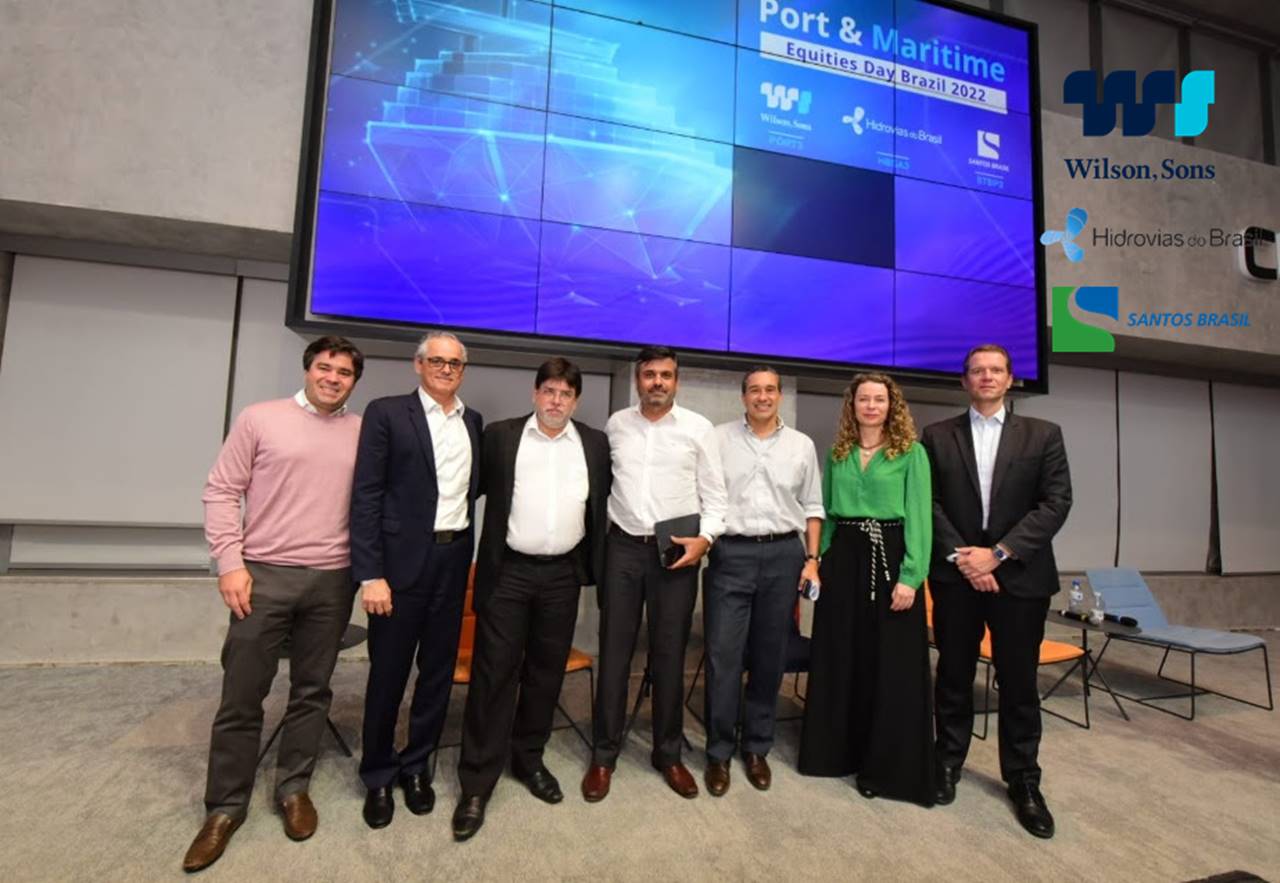
The Companies Listed on the New Financial Market of B3 Discussed Their Plans for Ports, Navigation, and Logistics.
Wilson Sons (PORT3), Hidrovias do Brasil (HBSA3), and Santos Brasil (STBP3), companies listed in the New Market segment of B3 (Brazil’s stock exchange), joined for the first time in the history of the Brazilian financial market to present their strategies and outlooks in the port, navigation, and logistics sectors to capital market analysts.
The unprecedented event, called “Port & Maritime Equities Day Brazil 2022”, attracted national and international investors, specialists from Brazilian and foreign investment banks, and independent stock research analysts. The event, aimed at the financial community, took place in person at Cubo Itaú in São Paulo and was broadcast live to an online audience. Watch a bit about the event in Portuguese and English versions below:
-
Bolivian Female Construction Workers Form Association to Combat Discrimination and 38% Pay Gap in the Industry

-
Near Amsterdam, residents buy land and discover they must also build streets, manage drainage, handle waste, and grow food on half their plot.
-
Without a mansion, without high investment, and without a traditional classroom, a teacher living in a 22 m² house taught students to build a 9 m² studio apartment with the equivalent of R$10,000.
-
Without her own home and pressured by rent, a 25-year-old bought a small 15-meter boat, gradually renovated the interior by herself, transformed the interior with paint, new flooring, a larger bathroom, and started living on the canals, paying much less per month.



What These Port Sector Executives Discussed
The financial market executives discussed four main themes: “the contribution of the logistics sector to the economic growth of the country”; “the importance of waterways as a sustainable and competitive alternative for exporting commodities from Brazil”; “the benefits of waterborne transportation and BR do Mar”; and “the reorganization of global logistics chains and opportunities for Brazil”.
According to Fernando Salek, CEO of Wilson Sons, ports and maritime transport are the foundation of the global economy, with 90% of world trade moved by water. In the case of Brazil, Salek stated that by 2021, maritime and waterway exports and imports will amount to over R$ 2 trillion, or 25% of the national GDP.
“The economic success of the country depends on the ports.” “The industry also plays a fundamental social role through job creation, national integration, and significant influence on the peripheral communities around the ports,” Salek said, adding that Brazil has great hydrographic potential that needs to be harnessed. “There are about 50,000 kilometers of navigable rivers and over 7,000 kilometers of coastline with high potential for the transit of cargo and passengers.”
Competitiveness in the Port and Maritime Transport Sector
Fabio Schettino, president of Hidrovias do Brasil, sees prospects in infrastructure development, in channel transportation, and in diversifying the country’s logistics matrix. “In countries with continental dimensions, like Brazil, multimodality is the way to logistics competitiveness.” “The country has an extensive network of channels that can be much better utilized, allowing for the transportation of heavy cargo, creating jobs, always being careful to protect the environment and promote the training of new specialists in surrounding areas,” said the executive.
According to Antonio Carlos Seplveda, CEO of Santos Brasil, global logistics has faced challenges in recent years, and numerous obstacles have arisen. “Brazil has remained robust, and the industry went out to invest and ensure that Brazilian international trade and the strength of the financial market stand out in global logistics,” he concluded.








Be the first to react!