Portuguese
  Spanish


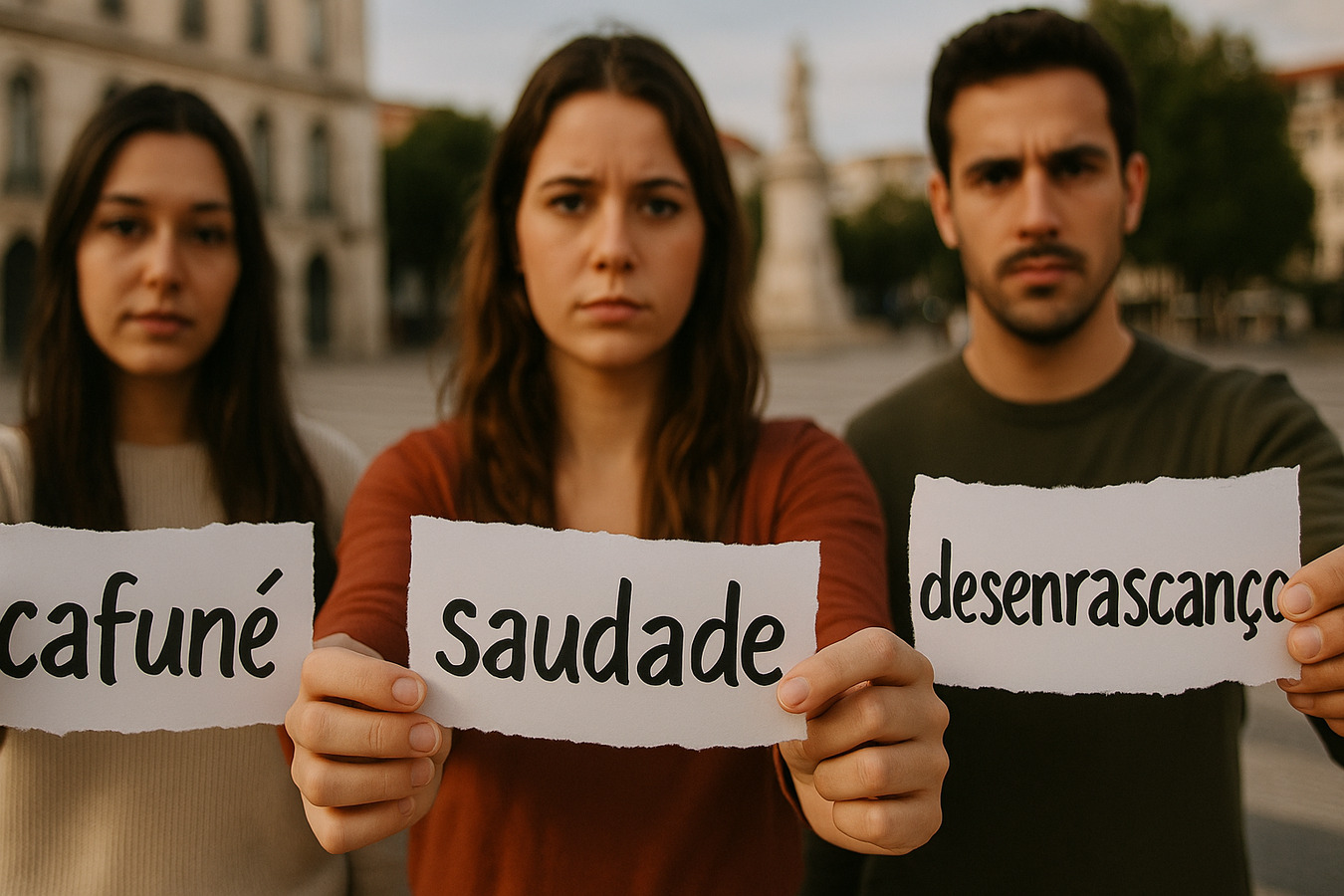

Unique Words Like Saudade, Cafuné, and Desenrascanço Reveal the Cultural Richness of Portuguese and the Challenge of Translating Them to Other Languages
The Portuguese language carries a set of words and expressions that rarely find a perfect equivalent in other languages. These words reveal cultural and emotional nuances that are part of the experience of Lusophone societies. The most important thing is that they are not just words, but symbols of traditions and behaviors.
Why There Is No Direct Translation
The uniqueness of these words is linked to specific cultural and historical contexts. They condense experiences and feelings that have no equivalent in other languages.
When trying to translate them, the original essence and intensity are often lost.
-
Neymar’s 14-year-old son, Davi Lucca, launches 3D dinosaur brand “Amigo Dino,” gaining attention on social media for his entrepreneurial spirit.

-
Improper Outlets Can Cause Fires and Damage Devices: How to Identify the Correct 10A or 20A Model for Each Appliance
-
Entrepreneur Who Started at 13 Delivering Flyers by Bike in São Paulo Now Runs a 4,000 m² Culinary Complex in Brazil

-
In China, Workers Use VR Goggles and Body Sensors to Train Humanoid Robots for Tasks Like Folding Clothes and Stocking Stores



This untranslatability happens because language reflects how a people live and feel. Therefore, certain words arise to describe unique emotions and situations that are impossible to reproduce accurately in other languages.
Examples That Mark Portuguese
Among the most well-known cases is “saudade”. It expresses a deep feeling of longing or nostalgia for someone or something loved and absent. It is a concept filled with emotion, difficult to translate without lengthy explanations.
Another emblematic word is “cafuné”, which describes the affectionate act of gently running fingers through another person’s hair. It is a simple gesture but full of affection.
“Desenrascanço” represents the ability to improvise solutions for seemingly insurmountable problems. It reflects the speaker’s creativity and adaptability.
The Cultural Reflection of Words
These terms go beyond language. “Saudade” is associated with the nostalgic temperament of the Portuguese people. “Cafuné” reveals the importance of touch and closeness in relationships. “Desenrascanço” highlights the value placed on practical solutions, even in adverse situations.
Moreover, these words reinforce cultural ties and preserve traditions. They become identity marks that connect speakers from different countries who share the Portuguese language.
The Impact on Communication and Translation
The existence of untranslatable words shows the expressive richness of Portuguese. To convey their meaning in other languages, it is necessary to resort to detailed explanations and descriptions.
This challenges translators and encourages the appreciation of linguistic diversity.
Finally, these special words function as cultural bridges. They invite non-speakers to explore more of the language and better understand the emotional and social universe of the Portuguese language, strengthening the exchange between cultures.
With information from O Antagonista.