






 Portuguese
  Spanish
  4 min of reading
  0 comments


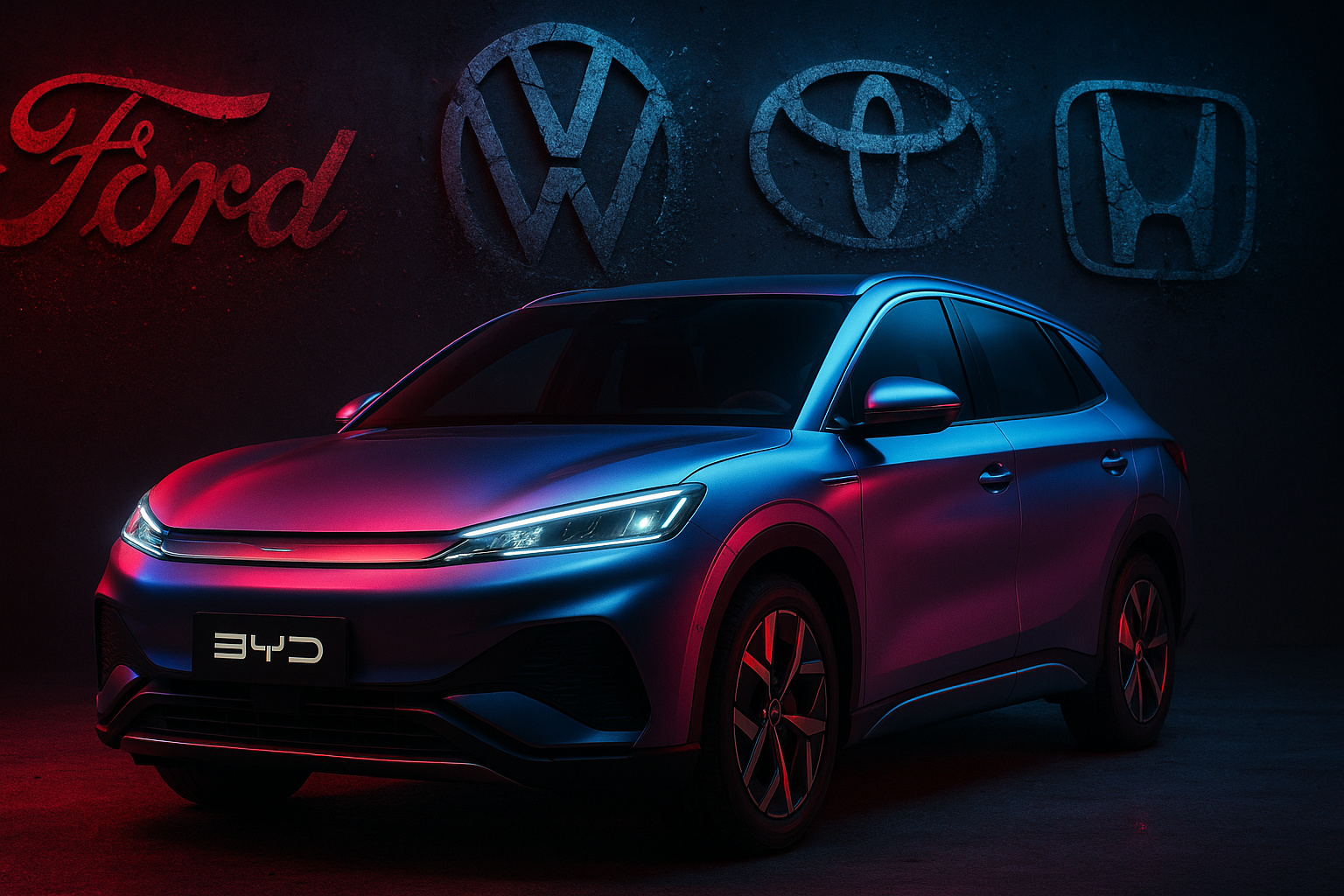
Chinese Giant Predicts Brutal Consolidation in the Electric Sector; Analysts Project That Only 15 Brands Will Survive Until 2030 Amid Price Wars and Oversupply.
The automotive sector is experiencing a historic turning point. Stella Li, vice president of BYD, the world’s largest electric vehicle manufacturer, stated that up to 100 automakers could disappear in the coming years, victims of price wars and oversupply primarily affecting the Chinese market.
This estimate was made in recent interviews and is already shared by international consultancies. For them, the frantic race for dominance in electric mobility has resulted in a scenario of excess brands, compressed margins, and regulatory pressures that will force consolidation.
An Overcrowded Market
China is now the heart of the electric revolution. More than 130 automakers are competing for space in the world’s largest car market. Among giants like BYD and Tesla, dozens of smaller manufacturers have emerged, often focused on niches, state subsidies, or local strategies.
-
Uber Faces Shareholder Scrutiny as Board Accused of Ignoring Safety, Compliance, and Harassment Warnings Amid Over 3,500 U.S. Lawsuits

-
Ferrari’s First Electric Car Divides Fans, Priced at $630,000, Amid Concerns Over Limited Editions; Brand Clarifies It’s Not Just for Future Perks
-
BYD Dolphin Mini: The Electric Car That Defies Depreciation, Losing Only 3.58% in a Year and Becoming the Best-Selling Retail Model Under $22,000

-
Electric Car JAC E-JS4 Loses $19,000 in Value in One Year, Leading Record Depreciation of Used Cars in Brazil Due to Expensive Battery and New Models




The problem is that rapid expansion has created an offer far exceeding demand. With factories producing more than they can sell, prices have plummeted. Automakers have begun to offer aggressive discounts, often below cost, to clear inventory.
The Chinese government intervened to contain this war, but the effects are already being felt: only the strongest will be able to withstand.
The Forecast: Only 15 Brands Will Survive
A study by AlixPartners, a global consulting firm specialized in the automotive industry, reinforces BYD’s forecast. According to the analysis, by 2030 only about 15 brands of electric and hybrid cars will have the financial viability to survive in the Chinese market.
This means that more than 100 manufacturers could disappear, be absorbed, or merged in just a few years. For analysts, this is a natural consolidation process, similar to what happened in other sectors throughout history—but with unprecedented speed.
The Role of BYD
While many automakers struggle to breathe, BYD is growing rapidly. The company has surpassed Tesla in electric vehicle sales, dominates the Chinese market, and is already aggressively advancing in Europe and Latin America.
Among its most ambitious plans is the complete production of electric cars on the European continent. The first factory is already under construction in Hungary, and by 2028, the company promises to manufacture 100% of the models sold in Europe on European soil.
This move ensures competitiveness against more stringent tariffs and regulations, as well as reinforcing the brand’s image as a global leader in innovation and scale.
A Natural Selection in the Sector
According to experts, what is happening today with electric automakers in China is a process of natural selection. Over the past five years, hundreds of startups have received investments, launched prototypes, and sought space in an expanding market.

Now, with cuts to state subsidies and demand saturation, only those with scale, capital, and cutting-edge technology will survive. It is in this context that BYD stands out: with verticalized production, battery dominance, and strategic state support, it positions itself to dictate the sector’s direction.
The Global Impact
The disappearance of so many automakers will not be a phenomenon restricted to China. The global market is already feeling the effects of the competition. Traditional European and American automakers struggle to compete on price with the Chinese electric vehicles.
If the forecast that only 15 brands will survive by 2030 holds true, the world could witness a new geopolitics of electric mobility, with fewer manufacturers, but much more concentrated and powerful.
For the consumer, this could mean more affordable and technologically advanced cars, but also less diversity of brands and models available.
Up to 100 Automakers Could Disappear
The meteoric rise of BYD symbolizes an unprecedented transformation in the automotive industry. What seemed like a fragmented market, with room for everyone, is about to become a field of a few giants.
If the forecasts from the company and market analysts come true, the sector will experience a revolution within this decade: up to 100 automakers could disappear, consolidating the power of giants like BYD.
More than just a warning, this is a reality that has already begun to unfold. The future of electric cars will see few survivors—and the race to be among them is already underway.





-

1 person reacted to this.