






 Portuguese
  Spanish
  2 min of reading
  0 comments


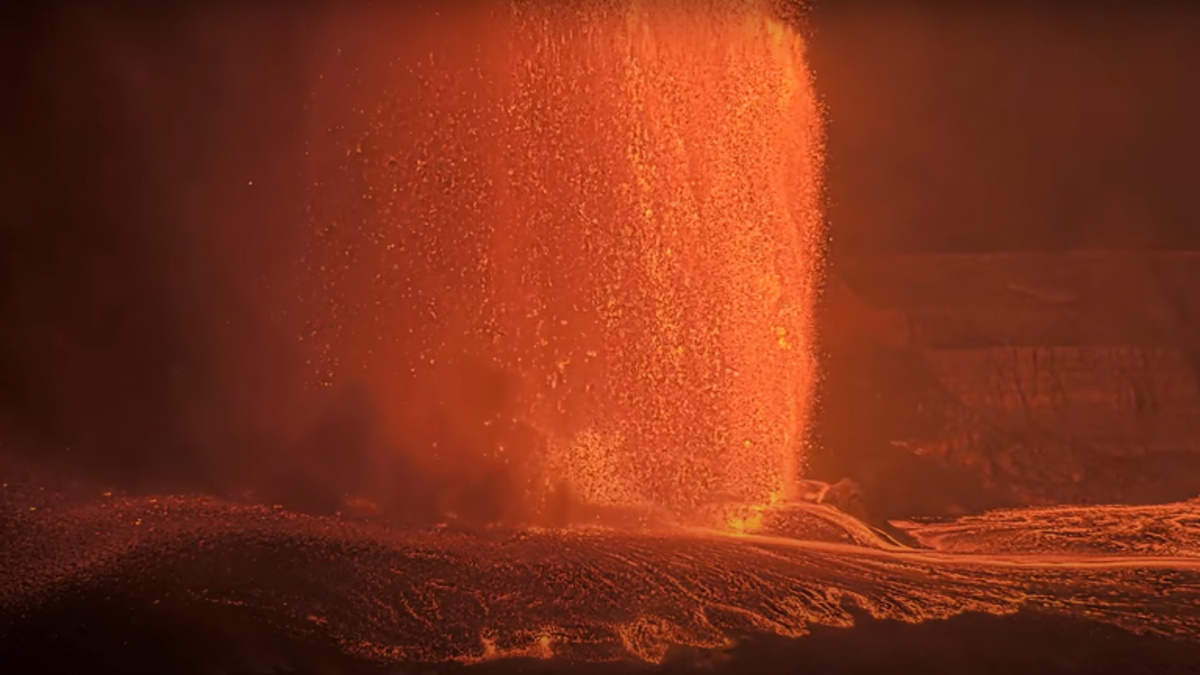
Kilauea Volcano Erupts, Launching Lava Over 300 Meters High, Creating Visual Spectacle at Hawai’i Volcanoes National Park
On Friday (20), Kilauea Volcano in Hawai’i erupted again, shooting jets of lava up to 305 meters high.
The activity began late Thursday night (19), around 11:30 PM local time, and quickly intensified. Information comes from the United States Geological Survey (USGS).
Images released by the USGS show glowing fountains erupting from the north vent of Kilauea. The eruption point is located within the Halema’uma’u caldera, a crater at the top of the volcano. By around 1:40 AM, some of these fountains exceeded 300 meters in height.
-
Survivor of 1966 SS Daniel J. Morrell Shipwreck in Lake Huron Recounts 38-Hour Ordeal in Extreme Cold

-
The Greatest Hoax in World Cup History? The Film That Denied Brazil’s 1958 Victory and Exposed How Fake Evidence Can Seem Convincing on TV
-
Fake South Korean Online Stores Offer Shopping Thrill Without Spending Money or Receiving Products
-
The War of Jenkins’ Ear: How a Severed Ear Sparked One of the 18th Century’s Most Unusual Conflicts


The force of the eruption created an impressive visual spectacle at Hawai’i Volcanoes National Park. The USGS shared a live stream showing real-time lava movement and the effects of volcanic activity.
Despite the intensity of the lava jets, the flow remained contained within the caldera. According to local authorities, there is currently no direct risk to nearby communities on the Big Island, the largest island in the Hawaiian archipelago.
The eruption also released a volcanic cloud that reached approximately 4,500 meters high. This cloud contains gases, rock fragments, and volcanic glass fibers, which can be hazardous to people downwind of the region.

Since December 2024, Kilauea has erupted 26 times. Most episodes have been brief, usually lasting less than a day, with several days in between activities.
Kilauea is one of the most active volcanoes in the world and remains under constant monitoring. Local authorities urge visitors to respect restricted areas and follow official updates to ensure everyone’s safety.
With information from Canal Tech.





-

-

-

-

-

9 people reacted to this.