Portuguese
  Spanish


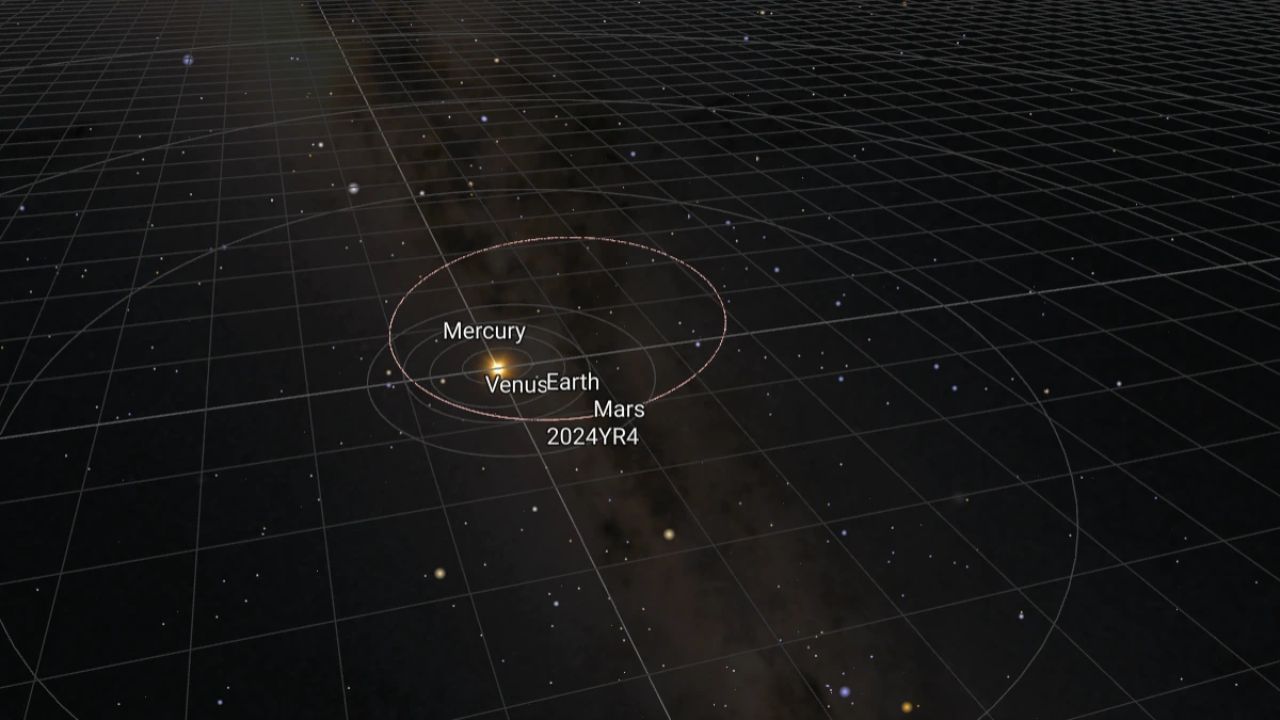

The Chance of Collision for Asteroid 2024 YR4 Increased from 1 in 83 to 1 in 43 in Less Than a Week. NASA and European Space Agency Experts Are Closely Monitoring Its Trajectory, But There is a Problem: It Could Simply Disappear from Radars in 2028 and Only Reappear in 2032 – a Year When It May (or May Not) Hit the Earth.
The idea of a giant asteroid heading towards Earth may seem like a movie scene, but this type of risk is real and has been studied many times. This time, 2024 YR4 has become the center of attention because, in just a few days, the probability of impact has risen significantly.
The new calculations from NASA and the European Space Agency indicate that the chance of collision is now 2.3%, which may seem low, but it raises important discussions about our ability to protect ourselves from such a cosmic event.
Would it Be a Disaster on the Level of Armageddon? Well, Not Really…
Whenever news about asteroids emerges, many people think of the movies Armageddon and Deep Impact. But contrary to what Hollywood depicted, blowing up an asteroid with a nuclear bomb is not a good idea.
-
Three teenagers transform cut cardboard into Japanese origami-style packaging that promises to retire styrofoam and bubble wrap, win a $12,500 prize, and target giants like Amazon, FedEx, and Home Depot after a robot motor arrived broken.

-
The large jar blender has a rival: Oster Ultra Power bets on 1,000 W, six stainless steel blades, and two portable cups with leak-proof lids.

-
Tesla injected an additional $250 million into the German factory, doubled the battery cell target, and opened its own production line for startups.

-
No more TV stuck on the wall: Samsung The Freestyle+, the new projector with over 400 lumens projects on walls, floors, and ceilings, bringing cinema to any corner of the house.




This is because, depending on the size and composition of the object, the explosion could generate a rain of smaller and equally dangerous fragments. In other words, instead of solving the problem, we would only be multiplying the number of impacts.
The truth is that if asteroid 2024 YR4 were truly heading towards Earth, we would need a much smarter approach to divert its trajectory.
Science Has Advanced: We Now Have Technology to Prevent Impact
Unlike what the movies show, we wouldn’t need a team of space miners to prevent a catastrophic impact. In 2022, NASA conducted the DART (Double Asteroid Redirection Test) mission, which proved that an asteroid’s orbit can be altered by the impact of a well-positioned spacecraft.
This technology is already considered one of the best options if a truly threatening object enters a collision course with Earth.
Additionally, the UN and the Advisory Group on Space Missions will discuss this topic in the coming months, seeking ways to further enhance our planetary defenses.
And What if We Lose Track of the Asteroid?
The biggest problem with 2024 YR4 is not its current chance of impact, but rather the fact that it could simply vanish from our radar starting in 2028. This happens because its elliptical trajectory will take it to a region of space where it will be impossible to monitor until 2032.
In other words, for four years, we won’t know exactly where it will be. And when it finally reappears, it may already be too late to react.
If an impact were to occur, calculations indicate that the possible locations impacted would be between the North Pacific, South America, Central Africa, and even Burma.