Portuguese
  Spanish


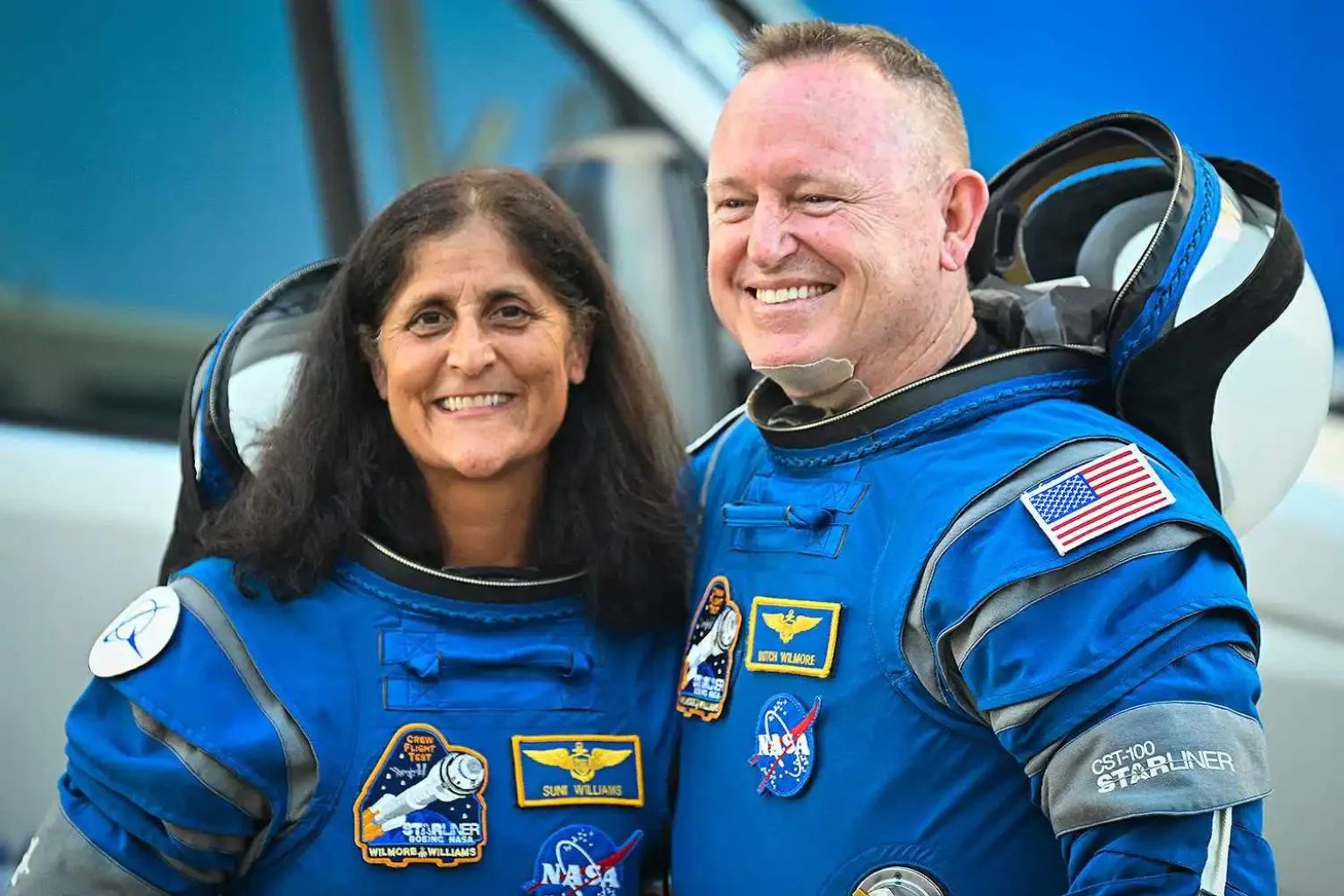

Astronauts spent 288 days on the ISS after an 8-day mission and returned with muscle loss, bone loss, and vision changes caused by microgravity.
According to the University of Florida, which monitored the astronauts before, during, and after the mission, prolonged stays in space profoundly alter the central nervous system, balance, mobility, and brain function, with effects that may take months or even years to reverse. What was initially an eight to fourteen-day mission turned into one of the most comprehensive involuntary experiments ever recorded on the limits of the human body in microgravity. On June 5, 2024, NASA astronauts Sunita Williams and Barry Wilmore boarded the Starliner Calypso capsule from Boeing, heading to the International Space Station. The mission aimed to validate the company’s crew transportation system.
During the approach to the station, failures in five of the 28 thrusters compromised the control of the spacecraft. After weeks of analysis, NASA decided it was not safe to use the capsule for the return.
The Starliner returned to Earth without a crew in September 2024. The astronauts remained in orbit.
-
Pennsylvania Mine Creates Ice in Summer Heat and Melts in Winter, Turning a Mountain Crevice into a Reverse Natural Refrigerator

-
China Accelerates Global Expansion of Robotics: From Smart Vacuums to Industrial and Humanoid Machines, Millions Exported to Over 150 Markets
-
Polar Air Mass to Hit Brazil: Temperatures to Plummet in Nine States, Near Freezing in the South with Frost Risk Until Monday
-
Chinese “dark factories” produce electric cars 24/7 with minimal human intervention, as Zeekr assembles 800 units daily, raising concerns in Brazil.




Prolonged stay on the ISS exposes the human body to 288 days of continuous microgravity
The International Space Station orbits at about 354 kilometers above sea level, completing an orbit around the Earth every 90 minutes.


For the astronauts, this orbit became home for 288 days, until their return on March 18, 2025, aboard a SpaceX Dragon capsule.
During this period, the human body was subjected to a continuous condition of weightlessness, profoundly altering fundamental physiological functions.
Microgravity eliminates the action of gravity and alters the functioning of the human body in multiple systems
On Earth, gravity constantly acts on the organism, influencing blood circulation, bone density, muscle strength, and balance.

In the absence of this force, there is an immediate redistribution of fluids to the upper part of the body. The total blood volume decreases by 10% to 15%, reducing the workload on the heart, which begins to lose muscle mass over time.
This process alters the functioning of various systems simultaneously, creating a physiological environment completely different from that on Earth.
Accelerated muscle loss in the ISS reduces leg strength and prevents supporting body weight
Without the need to support the body against gravity, the leg muscles enter an accelerated process of atrophy.
Astronauts can lose up to 20% of muscle strength in just a few weeks. In prolonged missions, this loss can reach even higher levels, compromising mobility upon returning to Earth.
After 288 days, astronauts required immediate physical support, as they could not stand without assistance.
Bone density loss in space occurs up to 12 times faster than in osteoporosis
The bones also suffer from the absence of mechanical load. Without gravitational stimulus, there is a continuous reduction in bone mineral density, with monthly rates between 1% and 2%. This rate can be up to 12 times higher than that observed in severe cases of osteoporosis on Earth.
This loss compromises the structural integrity of the skeleton and increases the recovery time needed after returning.
Fluid redistribution in the body alters intracranial pressure and impacts astronauts’ vision
Microgravity causes a shift of body fluids to the head, raising intracranial pressure. This phenomenon is associated with Spaceflight Associated Neuro-ocular Syndrome, which causes changes in the structure of the eye, flattening of the eyeball, and reduced visual capacity.

Studies indicate that a significant portion of astronauts experience visual changes during prolonged missions, with some cases persisting for years.
Daily exercises in the ISS reduce effects of microgravity, but do not prevent physical loss
To minimize the impacts of microgravity, astronauts follow a routine of approximately two hours of physical exercise daily.

Even with the use of advanced equipment that simulates resistance, muscle and bone loss continues to occur, albeit at a reduced rate. Microgravity alters fundamental physiological processes that cannot be fully compensated for by physical activity alone.
After returning, a structured physical rehabilitation process begins. The program includes strengthening exercises, cardiovascular recovery, and neuromotor reconditioning, with an initial duration of about 45 days.
For more complex functions, such as balance, cognition, and brain structure, the recovery time may extend for months or even years.
Prolonged exposure to space radiation increases risk of nervous system damage and future diseases
During their stay on the ISS, astronauts are exposed to high levels of cosmic radiation. This exposure occurs outside the full protection of the Earth’s magnetic field and can cause damage to the central nervous system, as well as increase the risk of developing cancer over a lifetime.
The long-term effects are still under study.
Starliner case becomes one of the most comprehensive studies on the limits of the human body in space
The prolonged stay of astronauts has generated a significant volume of scientific data on the effects of microgravity.
Collected information includes blood analyses, imaging tests, cognitive assessments, and continuous physiological monitoring.
This data is considered essential for planning future long-duration missions, including crewed trips to Mars.
The experience of 288 days on the ISS revealed important limitations of human physiology in weightless environments. In light of this, a central question arises for the future of space exploration.
In your view, will current technology be sufficient to protect the human body in even longer missions, or do new risks still need to be overcome?