






 Portuguese
  Spanish


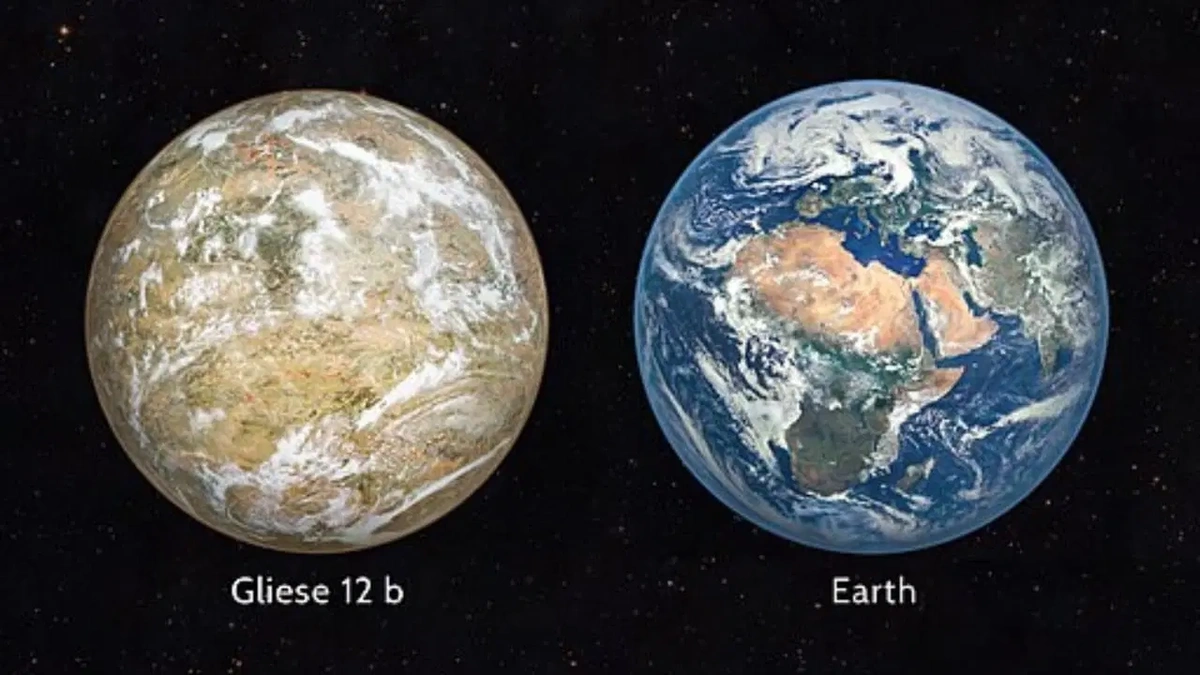


Astronomers Reveal New Data About Exoplanet With Potential Habitability
Scientists announced in May 2024 new evidence about an exoplanet orbiting a star just 40 light-years from Earth.
According to data from the Harvard-Smithsonian Center for Astrophysics and NASA, the Gliese 12b planet may present temperatures compatible with the presence of water in liquid form.
This data, therefore, rekindles interest in its possible habitability.
Based on records from the TESS satellite and the James Webb telescope, experts observed that the planet is similar in size to Earth.
Moreover, it completes an orbit around its star in just 12.8 days.
Being located at an ideal distance from the red dwarf it orbits, it is in the “habitable zone.”
This increases the chances of maintaining a stable atmosphere and liquid water on the surface.
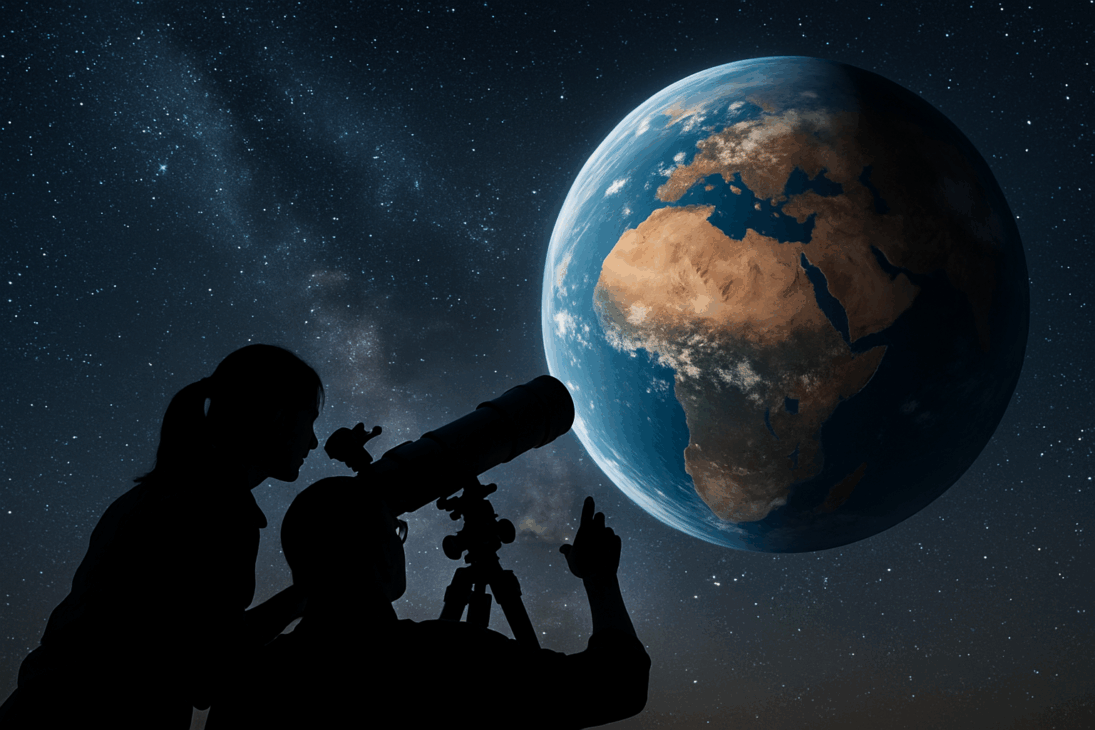
Planet Composition Allows Conditions Favorable to Life
According to data, Gliese 12b is not exposed to an aggressive star, unlike other planets with red dwarfs.
This means that the radiation received is much lower.
Furthermore, the estimated average temperature on the planet is around 42°C.
-
James Webb Telescope Uncovers Unexpected Clues on Mysterious Moon, Potentially Redefining Planetary Origins

-
$1.5 Billion Sleipnir Vessel Transforms Ocean into Floating Construction Site with 12 Hybrid Engines and Capacity to Lift 20,000 Tons

-
23 Years After Tragedy, Brazil’s Alcântara Space Center to Launch New Suborbital Rocket in 2026 with South Korean SEBIT Project Targeting Near-Space Tests
-
Entrepreneur Turns Neighbor’s Coffee Grounds Waste into Eco-Friendly Pellets, Earning Up to $40,000 Monthly in Brazil


If there is an atmosphere, it could act as a natural thermal regulator.
This thermal stability, as explained by scientists from the University of Tokyo, allows for the presence of water in liquid form.
In this way, Gliese 12b stands out from many other identified exoplanets.
Another important point is its proximity to Earth.
It is the closest planet to ours with characteristics considered potentially habitable and similar in size to Earth.
For this reason, it has become one of the main targets for studies on atmospheres outside the Solar System.
Modern Technologies Allow More Detailed Analyses
The advancement of instruments like TESS and the James Webb telescope has allowed for more accurate analyses of the planet’s mass, radius, and orbit.
This information was obtained through variations in light observed when the planet passes in front of its star.
The data reveal that Gliese 12b is about 1.1 times the size of Earth.
The composition and density are still under investigation.
Additionally, the Subaru Telescope, located in Hawaii, helped monitor the activity of the star that the planet orbits.
With this, astronomers concluded that the planet is not exposed to frequent solar bursts.
This condition favors the retention of a stable atmosphere over long periods.
For this reason, scientists are planning new spectroscopic studies.
These studies aim to identify elements such as water vapor, carbon dioxide, and methane.
These substances, in turn, could indicate ongoing biological or geological processes.
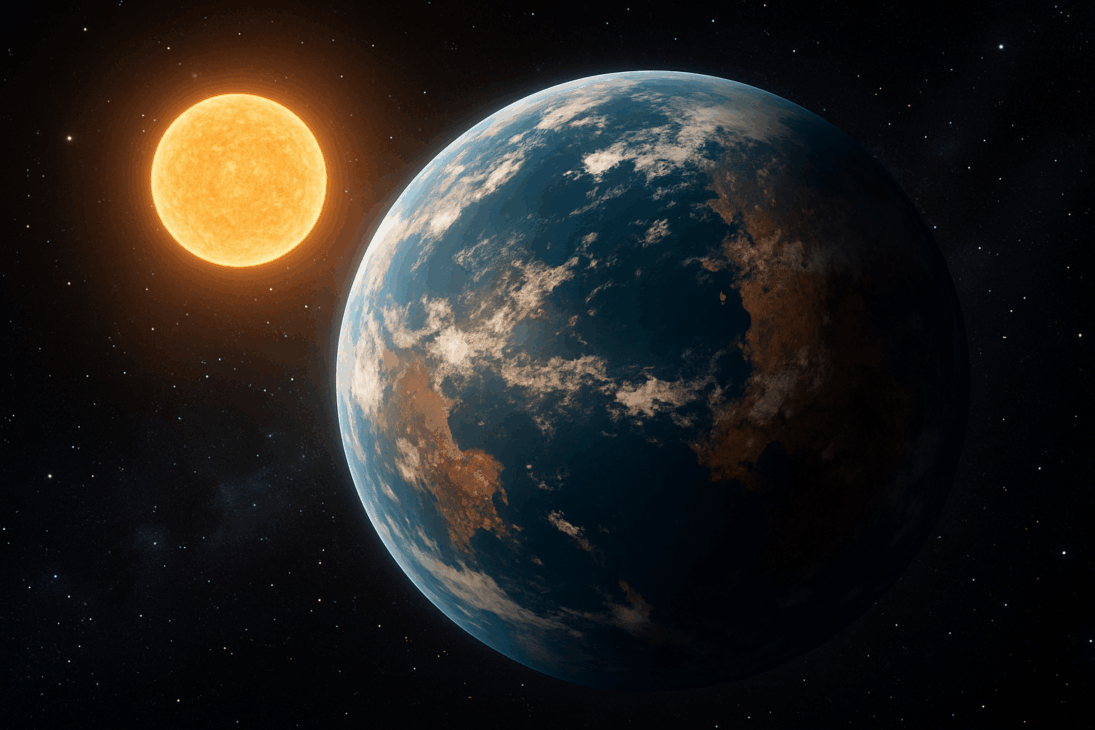
Research Continues to Confirm Habitability
Despite promising discoveries, it is still not possible to definitively state whether there is liquid water or a dense atmosphere on the planet.
However, according to Ryan MacDonald, an astrobiologist at NASA, Gliese 12b represents the best current chance to observe a planet similar to Earth.
The goal is to understand how a rocky world can maintain an atmosphere in a habitable zone nearby.
The discovery is important as it allows real-time monitoring of the atmospheric behavior of such a close planet.
Therefore, the teams from the Harvard Center for Astrophysics and the University of Tokyo will continue their observations.
These analyses will be conducted with the James Webb telescope throughout the second half of 2025.
The expectation is that this data will help identify concrete signs of habitability.
This information could help answer one of humanity’s oldest questions: are we alone in the universe?
Impact of the Discovery Reinforces Space Race
The information released reinforces the growing interest in astrobiology and the search for planets with potential for life.
Since the Kepler mission, conducted between 2009 and 2018, the number of identified exoplanets has increased.
With Gliese 12b, scientists now have a new parameter for comparison with Earth.
Unlike gas or extreme planets, this exoplanet can provide more objective answers about life beyond the Solar System.
Thus, the discovery goes beyond the collective imagination.
It directly contributes to studies on planetary evolution and solar systems.
The race for more precise data has already begun, and Gliese 12b leads this new phase of space exploration.


