






 Portuguese
  Spanish


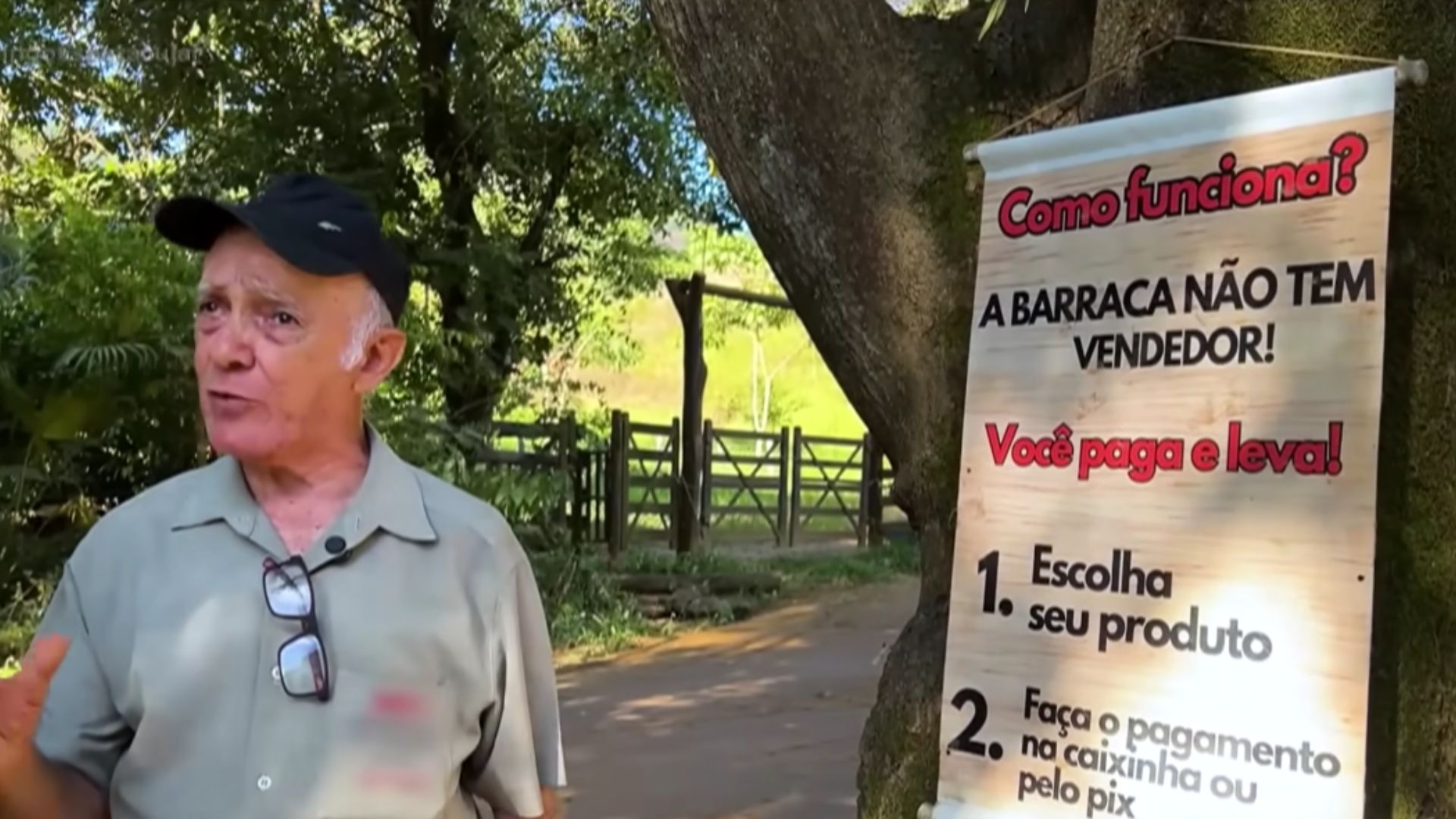

Vicente’s Stand is located in Taiom, 313 km from Belo Horizonte, and operates without a cashier, without staff, and without surveillance cameras. Mr. Vicente, 80 years old, opens at 7 am, goes about his business, and trusts that whoever takes a product will leave the money in the agreed place. In 7 years of operation, there has been only one recorded theft.
Mr. Vicente is 80 years old and every morning, promptly at 7 am, he opens the stand he set up on a little road in the interior of Minas Gerais, near the city of Taiom, 313 km from Belo Horizonte. When he opens, Mr. Vicente doesn’t stay. Those who arrive find the products displayed, check the price on the tag, and pay without anyone watching, without anyone charging, without surveillance cameras, without a card machine, and without automatic change. Just a can or a container to put the money in and leave. The only rule at Vicente’s Stand, according to the Domingo Espetacular report, is honesty.
The system has been working for 7 years. During this period, Mr. Vicente recorded a single case of theft, which occurred since 2019. Everything else was paid for. Customers from more than 180 cities in Brazil have passed by the stand and left their names in a notebook that Mrs. Maria Lúcia, Mr. Vicente’s wife, keeps on the counter for visitors to record where they came from. Vicente’s Stand has become the most famous tourist spot in Taiom, a city whose indigenous name means “hidden stone” and which, since Aureliano’s video went viral on social media, is no longer so hidden.
How Mr. Vicente got the idea for a stand without a seller
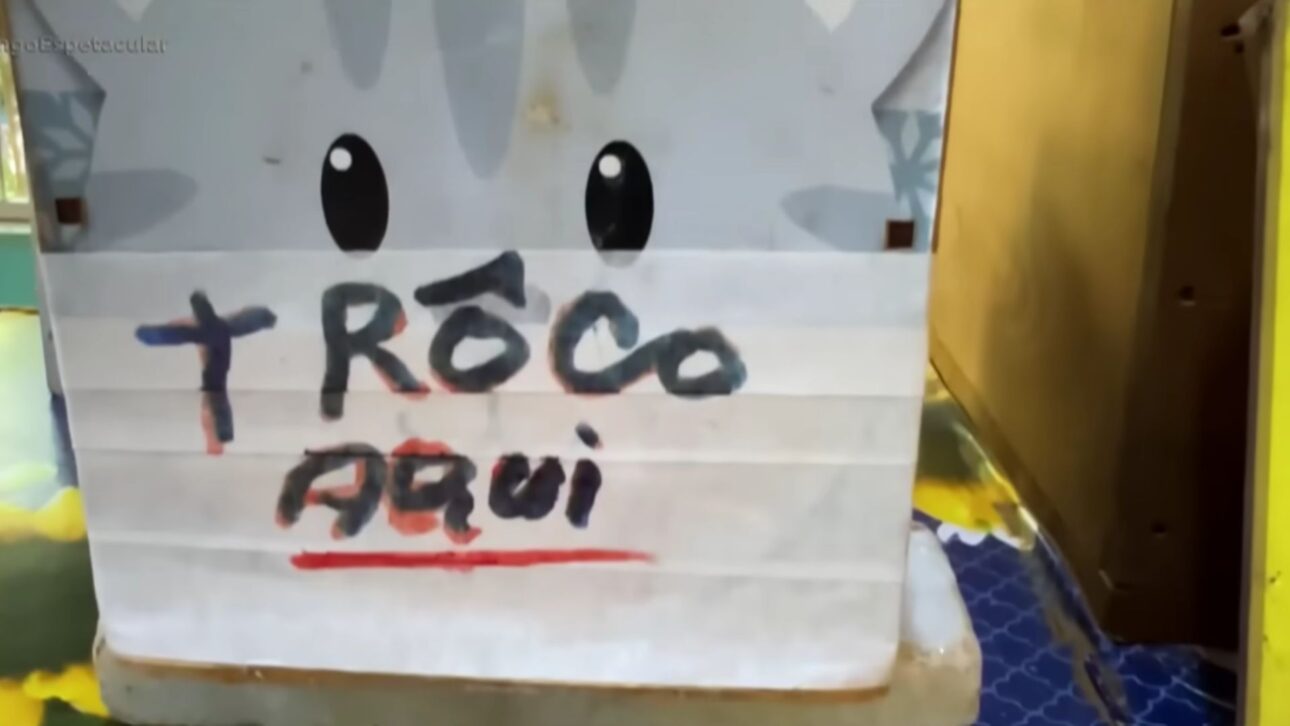
He didn’t know how to sell as a street vendor, couldn’t stand still in one spot waiting for customers, and didn’t want to hire employees. The solution he found was to place the products there, under the mango tree, and let people choose and pay on their own. “Who knows, it might work,” Mr. Vicente said to himself at the time, according to the account given to Domingo Espetacular. It did. Today, the stall is no longer improvised: it’s made of masonry, stocked daily, and with shelves organized by Mr. Vicente and Mrs. Maria Lúcia.
-
From Painting Houses in the U.S. to Producing Beyoncé and Paul McCartney Shows, Entrepreneur Opens Luxury Hotel in Brazil’s Trancoso with $8 Million Revenue Goal

-
Massive 109-Meter, 5,500-Ton Ship Built to Supply Energy in War Crossed the Atlantic, Powered Rio in the 1950s, and Was Sunk in Pará to Protect Tocantins Riverbank

-
Brazilian Domestic Worker Lived 55 Years Without a Salary, Had Welfare Benefits Controlled by Employer
-
Former PE Teacher Turns São Paulo Thrift Store into Online Sensation with 1 Million Followers, Now Earning $50,000 Monthly with Son and Plans to Expand Nationwide




Mr. Vicente’s business logic is simple: he doesn’t know how to stay still, working is what keeps him active, and a machine that stops rusts. “We are a wonderful machine that God created. This machine cannot stop,” Mr. Vicente told Domingo Espetacular. At 80 years old, Mr. Vicente insists on not being called old. “The difference is that the elderly have projects and ideas for execution. The old complain, have negative thoughts, and talk about being sick. The elderly don’t have doctors, the old have a bunch of doctors.” Mr. Vicente is, by his own definition, an elderly person with an ongoing project.
What’s in the stall and where each product comes from
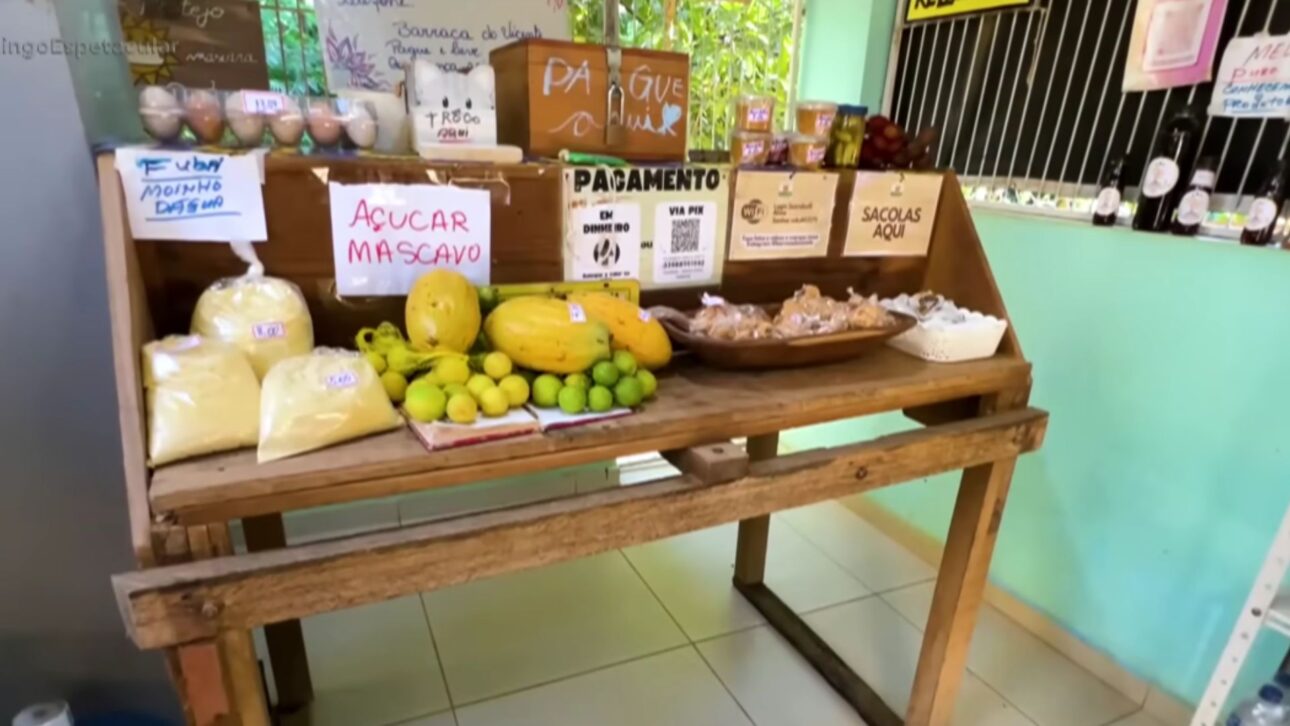
It’s a family and neighborhood project that has been built over 7 years. Mrs. Maria Lúcia produces peanut flour artisanally in the kitchen at home, which is at the back of the small shop. Mr. Vicente uses organic waste for composting and produces garden soil, which he also sells at the stall, having sold almost 2,000 kg of soil, according to Domingo Espetacular. External suppliers come from the surroundings.
Mr. Ronaldo brings honey. Mrs. Vânia brings butter, cheese, and cream cheese. Olga and Rubens supply fruits from their own land. Everyone is part of the trust network that sustains Vicente’s Stall, because if the stall didn’t have a cash register for customers, it also couldn’t have a formal contract with suppliers. Everything works on the same system: a given word and a fulfilled agreement. “No one ever let anyone down,” the suppliers told Domingo Espetacular. Mr. Vicente calls this model “fio do bigode,” the Minas expression for an agreement that doesn’t need paper because honor already serves as a contract.
Mr. Vicente recorded only one theft in seven years
The question everyone asks when they first encounter Vicente’s Stand is the same: but does anyone steal? Mr. Vicente answers directly: almost never. In seven years of operation, since 2019, the only recorded theft was one. Before that, zero. It’s not that Mr. Vicente never had suspicions, but the account of what comes in and goes out never showed significant deficits beyond this isolated episode. Mr. Vicente summarizes the stand’s honesty rate at 99%, generously attributing the 1% to the single recorded theft.
What scares Mr. Vicente’s stand the most are not the human customers. It’s the animals. A sign put up by Mr. Vicente warns: “Attention horse, bird, do not eat in the field.” The owner says that horses and birds are not respecting the stand’s boundaries, and he is building an additional structure to protect the bananas from the monkeys. In seven years, the only unpaid losses Mr. Vicente can list are due to nature, not customers. This says more about the stand than any formal trade statistic could.
The visitor’s book: 180 cities and a registry book


On one of the tables at Vicente’s Stand, Mrs. Maria Lúcia keeps a notebook. Those who pass by the little shop can write down where they came from. Over the 7 years of operation, Mr. Vicente and Mrs. Maria Lúcia have recorded entries from over 180 Brazilian cities, according to Domingo Espetacular. Taiom, which has less than 3,000 inhabitants and is located on a small road in the interior of Minas Gerais, has turned the stand without a seller into the main tourist attraction of the city.
After a video posted by Aureliano went viral on social media showing the stand operating without anyone to charge, people started asking where it was located. Mr. Vicente and Mrs. Maria Lúcia began receiving visitors from outside the region who came specifically to see the place. The registry book began to have pages from cities neither of them had visited. Mr. Vicente’s stand doesn’t just sell organic products: it also sells the experience of trusting in something most people thought no longer existed in Brazil.
The barter that still works in Taiom
Not all payments at Vicente’s Stand are made in cash. Fátima, a resident of a neighboring farm who regularly visits the little shop, trades products with Mr. Vicente. In one of the visits documented by Domingo Espetacular, she brought avocado and pickled cucumber and left with honey. Mr. Vicente calls this system by its old name: barter. The exchange works without a spreadsheet, without real-time calculated market equivalence, without a currency exchange app. Both parties reach an agreement and things change hands.
The bartering at Vicente’s Stall is neither nostalgia nor artistic performance. It is a practical option for those who do not have cash but have a product to offer, and it works because both sides trust each other. This exchange circuit between Mr. Vicente, Mrs. Maria Lúcia, neighboring suppliers, and customers who trade forms a small local economic ecosystem that operates outside the formal system without relying on any payment technology. Mr. Vicente didn’t need Pix, card machines, or apps to build a business model that has been working for 7 years.
What Vicente’s Stall Reveals About Trust
Isabel, a neighbor who regularly passes by Mr. Vicente’s stall, told Domingo Espetacular: “The world is so complicated that this is a hope for a better world.” The phrase sums up what made the stall go viral and continue generating interest years after the first video. In a context where distrust is the expected standard in commercial relations, Mr. Vicente built an entire business on the opposite premise, and the numbers show he was right.
Mrs. Maria Lúcia closes the stall at 5 PM. There is no employee to handle the cash register, no alarm to trigger, no camera to review the next day. Mr. Vicente and Mrs. Maria Lúcia check what came in and what stayed on the shelves and go to sleep knowing that, the next morning, Mr. Vicente will open at 7 AM again. In 7 years, this ritual has repeated without unpleasant surprises that would justify changing the model. Mr. Vicente’s stall is the physical proof that a gentleman’s agreement still works in Minas Gerais, as long as someone is willing to bet on it first.
A small shop that has been operating for 7 years without a cash register, without surveillance, and with only one theft recorded in the interior of Minas Gerais is an exception that proves the rule or proof that honesty still exists and works as a business model? Would you pay at a stall without a seller if you found one along the way? Leave your opinion in the comments.


